


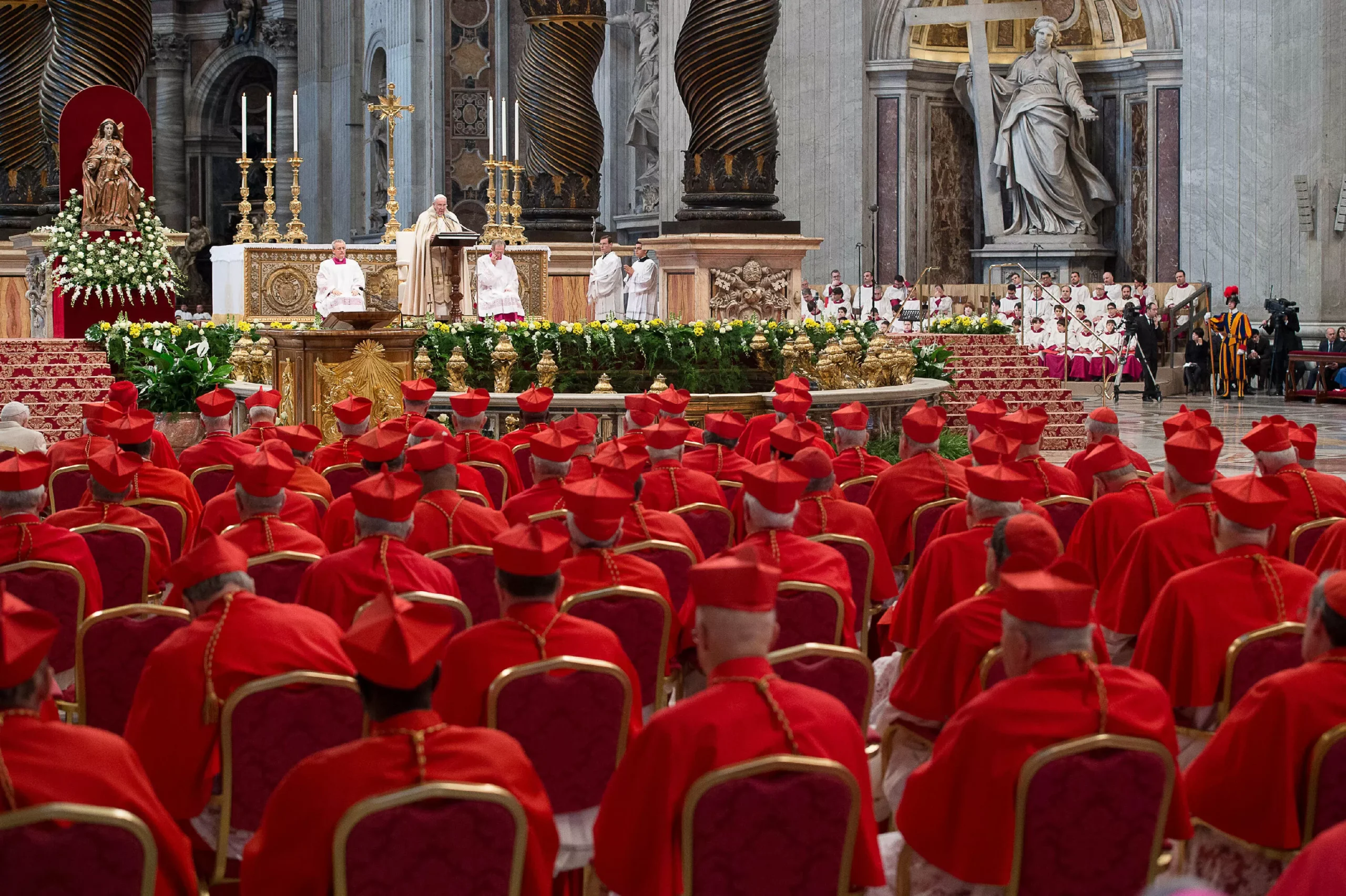
The College of Cardinals Listening to Pope Francis
Pope Francis, the leader of the Catholic Church, remains in a critical condition with kidney and lung issues, according to reports from the BBC. The Vatican has not given a prognosis due to the complexity of his clinical picture. On February 14th, he was admitted to Rome’s Gemelli Hospital and released a message on Sunday, thanking everyone for their prayers and support. He also asked for prayers for himself and entrusted everyone to the intercession of Mary.
As the world waits for updates on the Pope’s health, the College of Cardinals has been closely monitoring the situation. The College of Cardinals is a group of high-ranking clergy members who are responsible for electing the next Pope. They are also responsible for advising and assisting the Pope in his duties.
In the event of the Pope’s death, a series of carefully planned events will take place. Here’s what usually happens when any Pope dies, as well as the new rules Pope Francis has enacted during his papal tenure.
How do we find out about the Pope’s death?
Traditionally, it is the responsibility of a member of the Vatican called the camerlengo to confirm the Pope’s death. This high-ranking member of the Vatican would historically call out the Pope’s name three times to see if he responds before certifying his passing. However, nowadays, this is mainly a ceremonial act.
Once the camerlengo confirms the Pope’s death, he announces the news to the Cardinal Vicar for Rome. Additionally, the Pope’s signet Fisherman’s ring, which is used to seal papal documents, is destroyed and broken as a symbolic end to his reign. The papal desk is locked, the telephone is cut off, and the papal apartment is sealed.
The camerlengo, along with two other cardinals, will be in charge until a new Pope is elected. The current camerlengo is Irish-American Cardinal Kevin Joseph Farrell, who has held the position since 2019.
The blessing, mourning, and funeral
After the Pope’s death has been announced, a nine-day mourning period called the Novendiale begins. Italy usually also declares a national state of mourning. During this time, the Pope’s body is blessed and dressed in papal garments. It is then displayed in St. Peter’s Basilica for public viewing.
Pope Francis simplified the funeral rituals that usually happen when a Pope dies last year. Historically, the burial of the Pope required three coffins made of cypress, lead, and oak. His body had to be displayed on an elevated bier in St. Peter’s Basilica. However, Pope Francis made it possible for the Pope’s body to be displayed in a single wooden coffin.
According to the Vatican’s master of liturgical ceremonies, Monsignor Diego Ravelli, this change was made to emphasize that the Pope’s funeral is that of a shepherd and disciple of Christ, not a powerful man of this world.
During this time, the Vatican enters a stage called the sede vacante, meaning “the seat is vacant.” The College of Cardinals will vote for the next Pope, but they cannot make any new decisions until a new Pope has been chosen.
Where will the Pope be buried?
After the nine days of mourning have been observed, the Pope is buried. Popes are usually buried in the Vatican Grottoes, the crypts beneath St. Peter’s Basilica. However, Pope Francis has previously expressed his desire to be buried in the Santa Maria Maggiore Basilica in Rome, where six other Popes rest.
In conclusion, the College of Cardinals is closely monitoring Pope Francis’ health, and the world is on alert for any updates on his condition. In the event of his death, a series of carefully planned events will take place, and the College of Cardinals will be responsible for electing the next Pope. Pope Francis has also made changes to the traditional funeral rituals, emphasizing the Pope’s role as a shepherd and disciple of Christ. Let us continue to pray for Pope Francis’ recovery and for the guidance of the College of Cardinals during this critical time.
