


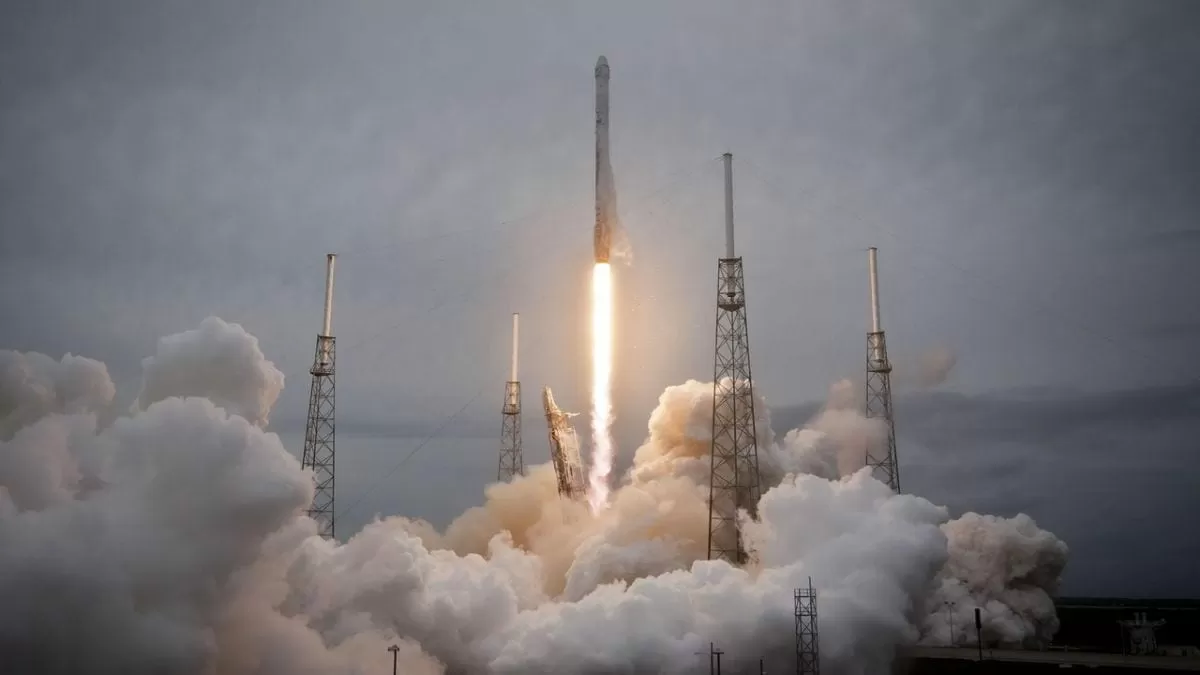
Amazon, the world’s largest online retailer, has taken a giant leap towards revolutionizing the way we access the internet. On July 30th, 2021, the company successfully launched 27 satellites as part of its ambitious Project Kuiper, a broadband constellation aimed at providing global internet coverage and advanced satellite connectivity. This move puts Amazon in direct competition with SpaceX’s Starlink, which has been dominating the satellite internet market.
The satellites were deployed into low Earth orbit via a United Launch Alliance (ULA) Atlas V rocket from Cape Canaveral Space Force Station in Florida. This marks the first of over 80 planned missions to establish a network of more than 3,200 satellites, providing high-speed internet access to even the most remote areas of the world.
The launch of these satellites is a significant milestone for Amazon, as it marks the company’s entry into the highly competitive space industry. With Project Kuiper, Amazon aims to bridge the digital divide and provide affordable, reliable, and high-speed internet to millions of people who are currently underserved or have no access to the internet at all.
The satellites, designed and built by Amazon’s subsidiary Blue Origin, are equipped with state-of-the-art technology, including Ka-band antennas and advanced phased array beamforming, to provide high-speed internet to users on the ground. These satellites will operate in low Earth orbit, which is closer to the Earth’s surface than traditional geostationary satellites, resulting in lower latency and faster internet speeds.
The launch of Project Kuiper has been in the works for several years, with Amazon investing billions of dollars into the project. The company has also been working closely with the Federal Communications Commission (FCC) to secure the necessary approvals for its satellite network. With the recent successful launch, Amazon is now one step closer to achieving its goal of providing global internet coverage.
One of the main competitors for Amazon’s Project Kuiper is SpaceX’s Starlink, which has been making headlines with its satellite internet service. However, Amazon’s network has some distinct advantages over Starlink. For starters, Project Kuiper plans to have more than three times the number of satellites in orbit compared to Starlink, which currently has around 1,700 satellites. This will result in better coverage and faster internet speeds for users.
Moreover, Amazon’s satellites are designed to operate in a lower orbit, which means they will have a shorter lifespan and will need to be replaced more frequently. This will result in a more efficient and up-to-date network, providing users with the latest technology and faster internet speeds.
Another advantage of Project Kuiper is its partnership with ULA, a joint venture between Boeing and Lockheed Martin. ULA has a proven track record of successful launches and is known for its reliability and efficiency. This partnership will ensure that Amazon’s satellites are deployed into orbit smoothly and on schedule.
The launch of Project Kuiper is not just a significant achievement for Amazon, but also for the space industry as a whole. It marks the beginning of a new era in satellite internet technology, with more companies entering the market and providing competition to traditional internet service providers. This will ultimately lead to more affordable and accessible internet for everyone.
In addition to providing internet access to remote areas, Project Kuiper will also benefit businesses, governments, and other organizations that require high-speed and reliable internet connectivity. With its advanced satellite technology, Project Kuiper can provide services such as cloud computing, data storage, and disaster response, making it a game-changer in the world of satellite communications.
Amazon’s commitment to bridging the digital divide and providing affordable internet access to all is commendable. With Project Kuiper, the company is not only expanding its business but also fulfilling its mission of making the world a more connected place. This launch is just the beginning, and we can expect to see more exciting developments from Amazon in the future.
In conclusion, the successful launch of 27 satellites as part of Project Kuiper is a significant achievement for Amazon and the space industry. With its advanced technology, global coverage, and partnership with ULA, Project Kuiper is set to challenge the dominance of SpaceX’s Starlink and revolutionize the way we access the internet. This is a step towards a more connected world, and we can’t wait to see what the future holds for Project Kuiper.
