


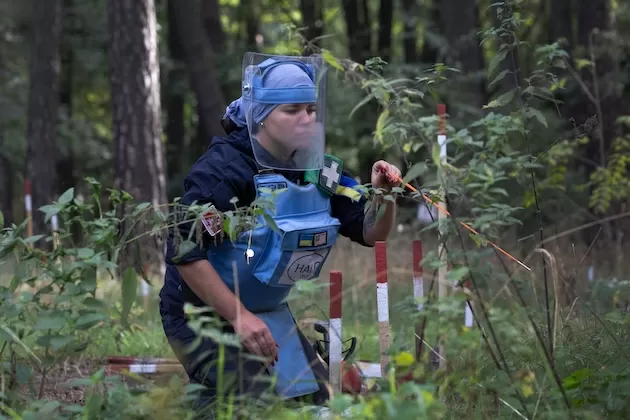
As a string of European states announce their withdrawals from the global treaty banning antipersonnel landmines, campaigners are sounding the alarm that decades of progress in fighting these deadly weapons could be undone. On April 16, Latvia’s parliament approved the country’s withdrawal from the Ottawa Convention, joining a growing list of countries including Estonia and Lithuania.
The Ottawa Convention, also known as the Mine Ban Treaty, was adopted in 1997 and has been signed by 164 countries. Its aim is to eliminate the use, production, and stockpiling of antipersonnel landmines, which have caused countless civilian casualties and hindered post-conflict reconstruction efforts. The treaty has been hailed as a major success in the fight against these indiscriminate weapons, with over 50 million stockpiled mines destroyed and thousands of square kilometers of land cleared.
However, the recent withdrawals by European states have raised concerns that this progress could be reversed. Campaigners warn that without the participation of key countries, the effectiveness of the treaty will be greatly diminished. The European Union, which has been a strong supporter of the Ottawa Convention, has also expressed its disappointment at these withdrawals and urged the countries to reconsider their decisions.
The decision by Latvia, Estonia, and Lithuania to withdraw from the treaty has been met with criticism from various organizations and individuals. Jody Williams, the Nobel Peace Prize laureate who led the International Campaign to Ban Landmines, called it a “shameful and dangerous move.” She emphasized that these countries have a moral and legal obligation to uphold the treaty and protect civilians from the devastating effects of landmines.
The reasons cited by these countries for their withdrawals vary. Some claim that the treaty is outdated and does not reflect the current security landscape, while others argue that they need to maintain a stockpile of landmines for defense purposes. However, these justifications have been met with skepticism and criticism. The Ottawa Convention allows for exceptions in certain circumstances, such as for demining or training purposes, and provides a framework for cooperation and assistance between states.
Moreover, the withdrawals by these European states send a dangerous message to other countries that may be considering joining the treaty. It undermines the global effort to eradicate landmines and could potentially lead to a domino effect, with more countries following suit. This would be a major setback for the international community’s efforts to protect civilians and promote peace and stability.
In addition to the potential humanitarian consequences, the withdrawals also have economic implications. Landmines not only cause harm to individuals but also hinder economic development and reconstruction efforts. The clearance of landmines is a costly and time-consuming process, and without the support and cooperation of all countries, it becomes even more challenging.
It is crucial for the international community to come together and reaffirm their commitment to the Ottawa Convention. The treaty has proven to be an effective tool in reducing the use and impact of landmines, and its continued success depends on the participation of all countries. The recent withdrawals by European states should serve as a wake-up call for the global community to strengthen their efforts in promoting the ban on landmines.
In conclusion, the withdrawals by Latvia, Estonia, and Lithuania from the Ottawa Convention are a cause for concern and should be reconsidered. The treaty has been a crucial step in the fight against landmines, and its impact cannot be underestimated. The international community must work together to ensure that the progress made in the past decades is not undone, and civilians are protected from the devastating effects of landmines. Let us not forget that behind the numbers and statistics are real people whose lives are at risk. It is our responsibility to ensure that they are not forgotten and that their safety and well-being are prioritized.
