

Soyuz MS-26 Safely Landed, Completing Successful Science Mission on the ISS
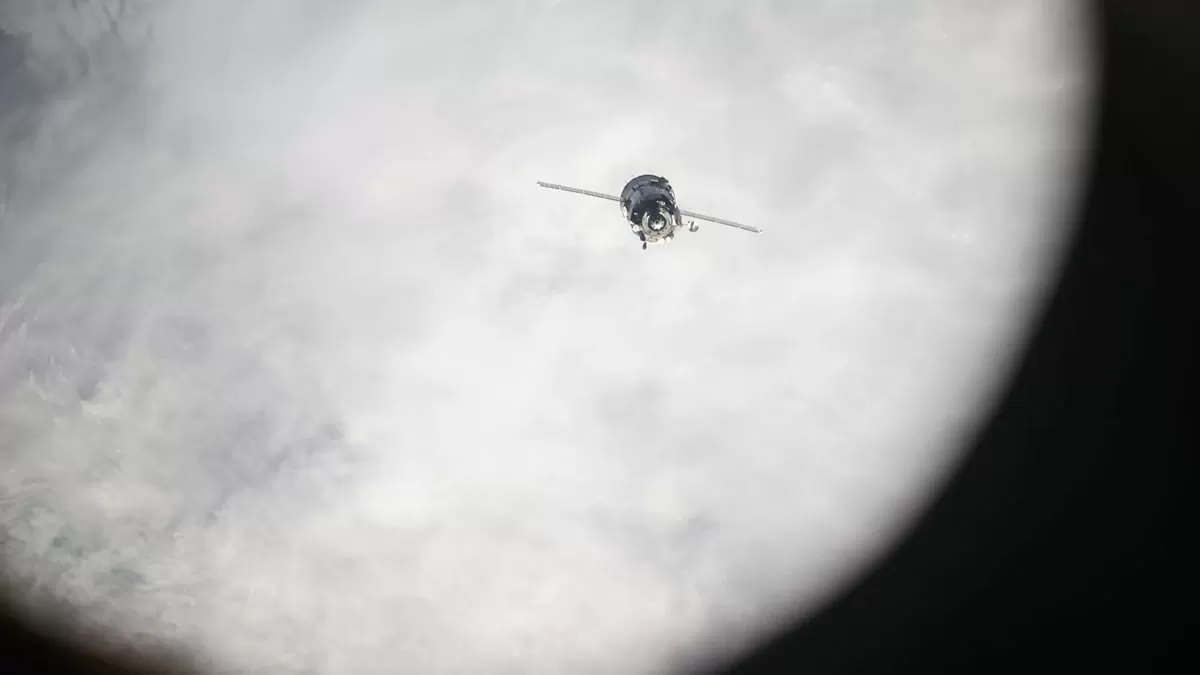
On April 19th, 2021, history was made as the Soyuz MS-26 spacecraft safely landed in Kazakhstan, bringing back NASA astronaut Don Pettit and two Russian cosmonauts. The three astronauts had spent a successful few months aboard the International Space Station (ISS), conducting a wide range of experiments that will contribute to future space exploration missions, specifically to the moon and Mars.
The Soyuz MS-26 spacecraft, carrying Oleg Artemyev, Anton Shkaplerov, and Don Pettit, landed in the vast steppes of Kazakhstan, marking the end of an eventful and productive mission aboard the ISS. As they emerged from the spacecraft, the astronauts were greeted with cheers and applause, reflecting the successful completion of their mission.
The primary goal of the crew was to conduct important scientific experiments aboard the ISS, and they did so with tremendous success. Their work covered a wide range of research areas, including 3D printing, water purification, fire behavior, and plant biology. These experiments were crucial in understanding the challenges that astronauts may face on future missions to the moon and Mars.
3D printing, a revolutionary technology that has the potential to transform space exploration, was one of the key areas of research conducted by the crew. By using a 3D printer aboard the ISS, the crew was able to manufacture tools, spare parts, and even clothing, demonstrating the potential of this technology to sustain long-term space missions.
Water purification is another essential aspect of space travel, and the crew of Soyuz MS-26 focused on developing advanced techniques to purify water. Their experiments were aimed at making the process more efficient and sustainable, allowing astronauts to recycle and reuse water during their missions. This is a vital step towards future space travel, where resources are limited and need to be conserved.
Fire behavior in microgravity was also a crucial area of research for the crew. By conducting experiments in a controlled environment aboard the ISS, they were able to understand how fire spreads and behaves differently in space, where there is no gravity to influence its movement. This knowledge will help in designing safer spacecraft for future missions.
Plant biology experiments were also carried out by the crew, as plants are essential for sustaining life on long-duration space missions. The crew successfully grew and harvested plants aboard the ISS, providing valuable insights into how plants behave in microgravity, and how they can be utilized for food and oxygen production in space.
The success of the Soyuz MS-26 mission is a testament to the collaboration and partnership between NASA and the Russian space agency, Roscosmos. This partnership has been ongoing for decades and has resulted in numerous successful missions, including the historic Apollo-Soyuz Test Project in 1975.
The safe return of the Soyuz MS-26 crew marks the completion of yet another successful mission, and their contributions towards future space exploration goals cannot be overstated. Their research and experiments aboard the ISS will lay the foundation for future missions to the moon and Mars, as we continue to push the boundaries of human exploration and discovery in space.
The crew of Soyuz MS-26, along with all the astronauts aboard the ISS, have inspired the world with their dedication, courage, and commitment to scientific research. They have shown us that there are no limits to what we can achieve when we work together towards a common goal.
As we celebrate the safe return of the Soyuz MS-26 crew, let us also look towards the future with hope and excitement, knowing that their efforts have brought us one step closer to reaching new frontiers in space. The success of this mission is a reminder that with determination and perseverance, we can achieve the impossible and continue to push the boundaries of human exploration.
