

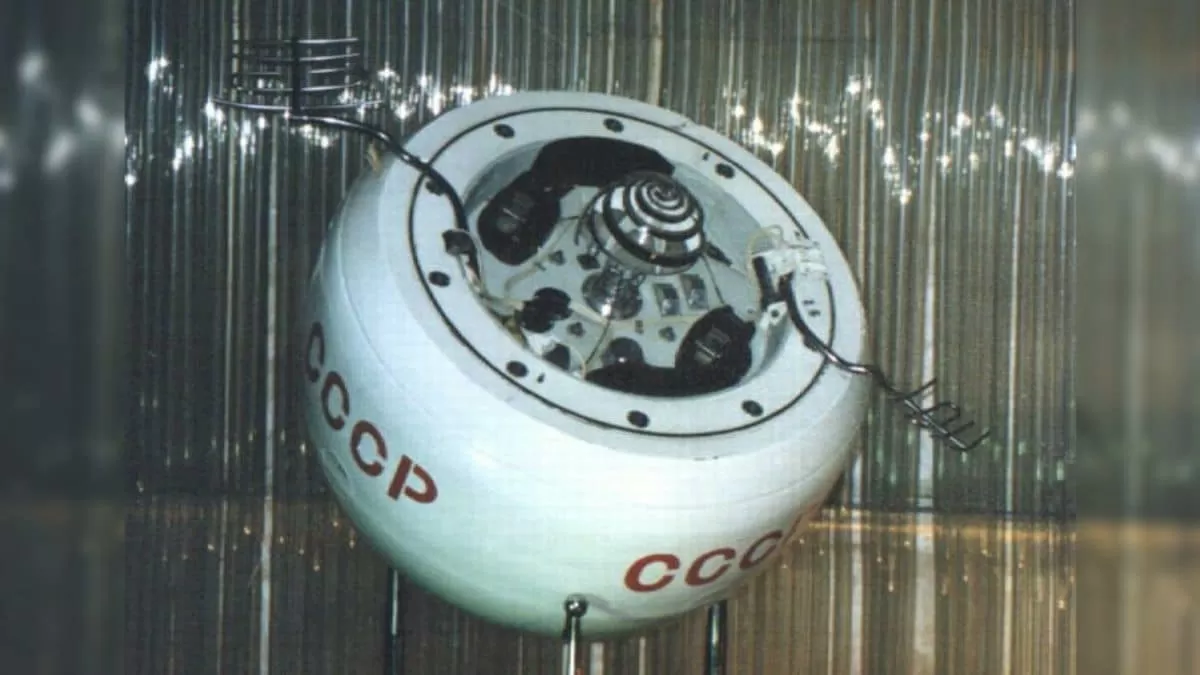
Kosmos 482, the Soviet spacecraft that captured the curiosity and fascination of the world when it was launched in 1972, is expected to make its final journey back to Earth in the coming years. After a successful mission to Venus, this resilient spacecraft will re-enter the Earth’s atmosphere in the month of May in 2025. Scientists have been closely monitoring its trajectory and predict that it has a high chance of landing intact.
Designed to withstand extreme conditions, Kosmos 482 has defied expectations and continued to function long after its planned mission was completed. This spacecraft is a testament to the incredible engineering and technology of its time, and its re-entry will provide valuable insights and data to the scientific community.
Kosmos 482 was a part of the Venera program, a series of Soviet unmanned space missions to explore Venus. It was launched on March 31, 1972, from Baikonur Cosmodrome in Kazakhstan. Its mission was to study the atmosphere and surface of Venus and search for signs of life. The spacecraft was equipped with advanced instruments and cameras to gather vital information about the planet’s environment and composition.
After a successful journey to Venus, Kosmos 482 continued to orbit the planet and send back data for several months. However, like all spacecraft, its mission came to an end eventually. But what sets Kosmos 482 apart is its resilience. Even after its mission was completed, it continued to orbit the planet for years, gathering valuable data and making unexpected discoveries.
Now, after almost 50 years in space, Kosmos 482 is making its final journey back to Earth. Scientists have been tracking its trajectory and predict that it will re-enter the Earth’s atmosphere around May 10, 2025. The exact date and location of its re-entry cannot be determined yet, but it is expected to land in an oceanic area, away from any human settlement.
The re-entry of spacecraft into the Earth’s atmosphere is not a rare occurrence. In fact, it happens almost every day, with most of the debris burning up in the atmosphere and never reaching the Earth’s surface. However, the case of Kosmos 482 is unique and has attracted a lot of attention due to its successful mission and its survival in extreme conditions.
Scientists are eagerly awaiting the re-entry of Kosmos 482 as it will provide an opportunity to study how a spacecraft designed in the 1970s holds up after years of exposure to radiation, extreme temperatures, and other harsh conditions in space. It will also help in understanding the durability and longevity of space technology, providing valuable insights for future missions.
While it is natural for some to express concerns about the impact of Kosmos 482’s re-entry on human life, experts assure that the risk is extremely low. Since most of the Earth’s surface is covered with water, the chances of it hitting a populated area are slim. Even if it does, the spacecraft is not expected to cause any significant damage.
In fact, scientists are hopeful that Kosmos 482 will land intact, providing a rare opportunity to study a spacecraft that has journeyed through space and explored another planet. The spacecraft could also potentially hold valuable information that could help in the development of future technologies for space exploration.
The re-entry of Kosmos 482 is a significant event in the history of space exploration. It serves as a reminder of the incredible feats that can be achieved through human ingenuity and determination. And as we look to the future of space travel, Kosmos 482 will continue to inspire and pave the way for new discoveries and adventures in the vast unknown of the universe.
In conclusion, the re-entry of Kosmos 482 is a highly anticipated event that will provide a wealth of knowledge and insights for scientists and space enthusiasts alike. It is a testament to human innovation and persistence, and its story will continue to be a source of inspiration for generations to come. This spacecraft has survived space and is now set to make its final journey home, leaving behind a legacy that will live on for years to come.
