


Nigel Farage, the leader of Reform UK, has once again made headlines with his latest promises of spending commitments. However, his lack of clarity on how he plans to fund these commitments has raised concerns and drawn comparisons to the failed economic policies of former Prime Minister Liz Truss.
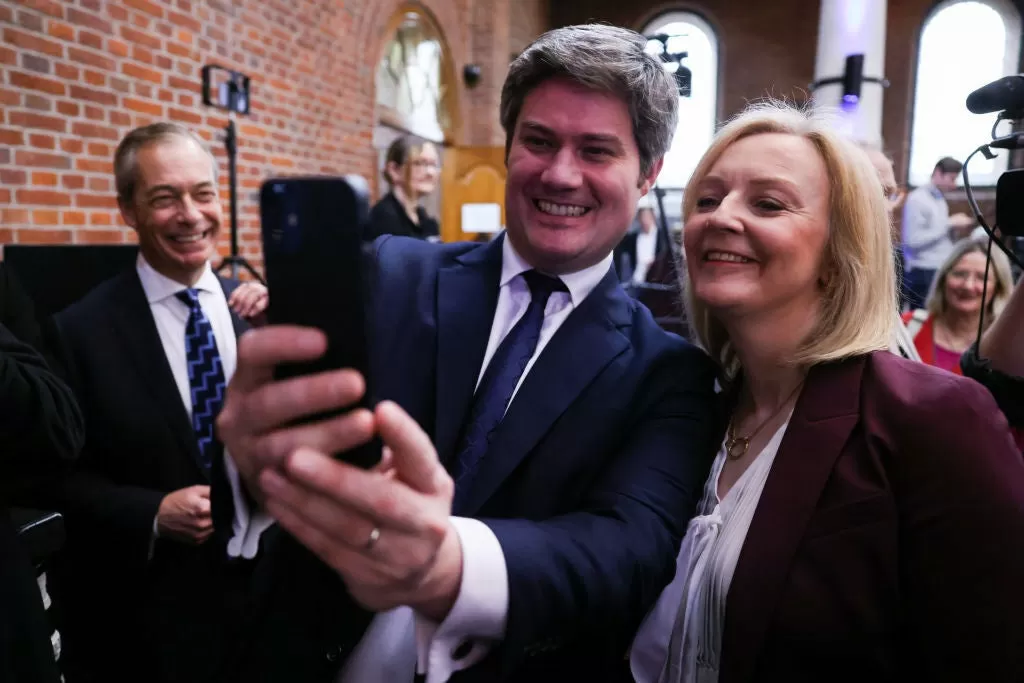
At the launch of Popular Conservatism last year, Farage was seen looking on as Liz Truss posed for a selfie. Little did he know that he would soon be accused of “Trussonomics on steroids” for his own spending plans.
In his speech, Farage announced that his party would bring back winter fuel payments for every pensioner, scrap the two-child benefit cap, and stop anyone earning less than £20,000 a year from paying tax. These pledges, he claimed, would be funded by scrapping all Net Zero commitments and cutting waste.
However, Stuart Adam, a senior economist at the Institute for Fiscal Studies, has estimated that just the tax pledge alone could cost up to £80 billion. This has raised concerns about the feasibility of Farage’s plans and the potential impact on the economy.
When questioned about the cost of his proposals, Farage responded by saying, “I accept that it’s expensive, but I genuinely believe that we can pay for it because we’re not ideologically tied to the same ideas upon which we believe the Conservative and Labour governments have gone so wrong.”
But Farage’s political opponents were quick to point out the similarities between his promises and Truss’s failed economic policies. Truss, who only lasted 49 days as prime minister, had also made unfunded tax cuts of £45 billion, which ultimately crashed the economy.
Liberal Democrat leader Ed Davey stated, “Nigel Farage praised the disastrous Truss mini-budget, and now he wants to repeat it with huge unfunded spending pledges and only vague promises of fantasy savings. It’s Trussonomics on steroids.”
He went on to say, “We all remember far too well what that means: crashing the economy and sending interest rates soaring. It’s even more ludicrous coming from a man who is licking the boots of Donald Trump as his trade war does such terrible damage to our economy.”
Labour chair Ellie Reeves also criticized Farage’s proposals, saying, “There’s nothing new about what Nigel Farage said today: the tens of billions of pounds of fantasy promises he made this morning are exactly how Liz Truss crashed the economy, devastating the finances of families across the country.”
She added, “Those families don’t need to be told what the consequences would be of this nonsense. They live through it every month through the higher mortgages, higher rents, higher prices, and higher bills inflicted upon them by the last government.”
Reeves also highlighted the progress made by the current government, stating, “NHS waiting lists are falling, the economy is growing, wages are rising faster than prices and we’ve had four interest rate cuts, along with three major trade deals that will put more money in working people’s pockets. All Reform offer is a return to the chaos of Liz Truss.”
Even within his own party, Farage’s plans have been met with skepticism. Tory leader Kemi Badenoch took to social media to express her doubts, saying, “I was elected to tell the truth. So I only announce policies that are costed, clear, or save money—anything else is a lie.”
She continued, “Our country can turn itself around, but not with empty promises. [Farage’s] conference is a reminder that only Conservatives offer economic competence.”
It is clear that Farage’s promises have not been well-received by his political opponents, who have raised valid concerns about the feasibility and potential consequences of his plans. The comparisons to Truss’s failed policies only add to the doubts surrounding Farage’s economic proposals.
In the midst of all this, it is important to remember that the economy is a delicate and complex system, and any promises made without proper planning and consideration can have disastrous consequences. It is crucial for political leaders to be transparent and responsible when making economic commitments, as the well-being of the country and its citizens is at stake.
As the political landscape continues to shift and evolve, it is important for voters to carefully consider the promises made by their leaders and hold them accountable for their actions. Only then can we ensure a stable and prosperous future for our country.
