


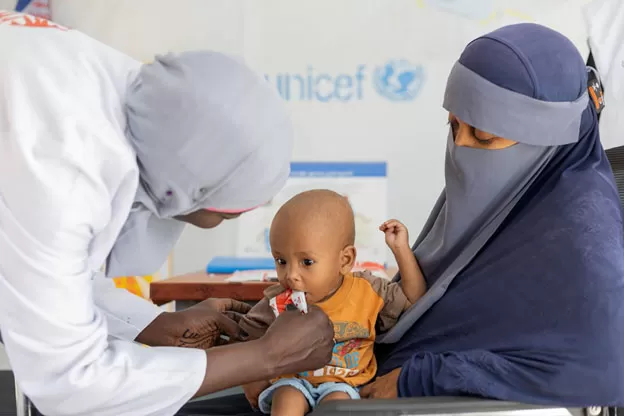
Over the past year, the food security situation in Sudan has taken a drastic turn for the worst. The ongoing Sudanese Civil War has compounded the issue, leaving millions of civilians facing alarming levels of food insecurity and at risk of experiencing famine. Humanitarian experts have described the situation in Sudan as the worst hunger crisis the country has ever faced.
The United Nations Food and Agriculture Organization (FAO) estimates that over 9.3 million people in Sudan are currently facing severe food shortages, with 2.3 million of them being children. This is a staggering number, and it is only expected to increase if immediate action is not taken.
The root cause of this dire situation can be traced back to the ongoing conflict in Sudan. The civil war has been raging for years, displacing millions of people and disrupting the country’s agricultural production. As a result, many farmers have been unable to tend to their crops, leading to a significant decrease in food production.
Furthermore, the conflict has also hindered the delivery of humanitarian aid to those in need. Many areas in Sudan are inaccessible due to the ongoing violence, making it challenging for aid organizations to reach those who are most vulnerable. This has only exacerbated the food crisis, leaving many families without access to basic necessities.
The impact of this food crisis is devastating. Families are being forced to make difficult decisions, such as selling their belongings or skipping meals, just to survive. Children are particularly vulnerable, with many suffering from malnutrition and its long-term effects on their physical and mental development.
The situation is especially dire in the states of South Kordofan, Blue Nile, and Darfur, where the conflict has been most intense. In these areas, food insecurity has reached critical levels, and famine is a real possibility if immediate action is not taken.
Thankfully, the international community has not turned a blind eye to the crisis in Sudan. Humanitarian organizations, such as the World Food Programme (WFP) and UNICEF, have been working tirelessly to provide food assistance and other essential services to those in need. However, their efforts are often hindered by the ongoing conflict and lack of resources.
In addition to providing immediate aid, there is a need for long-term solutions to address the root causes of the food crisis in Sudan. This includes promoting peace and stability in the country, as well as investing in sustainable agriculture and infrastructure to improve food production and distribution.
The Sudanese government also has a crucial role to play in addressing the food crisis. They must prioritize the needs of their people and work towards finding a peaceful resolution to the ongoing conflict. Furthermore, they must ensure that humanitarian aid reaches those who need it the most, regardless of their location or political affiliation.
As individuals, we can also make a difference by supporting organizations that are working to alleviate the food crisis in Sudan. Every donation, no matter how small, can make a significant impact on the lives of those affected by the crisis.
In conclusion, the food security situation in Sudan is dire, and urgent action is needed to prevent a full-blown famine. The ongoing conflict has only worsened the situation, leaving millions of people at risk of starvation. However, with the support of the international community and the commitment of the Sudanese government, we can work towards a brighter future for the people of Sudan. Let us not turn a blind eye to their suffering and do our part to help those in need. Together, we can make a difference and bring hope to the people of Sudan.
