


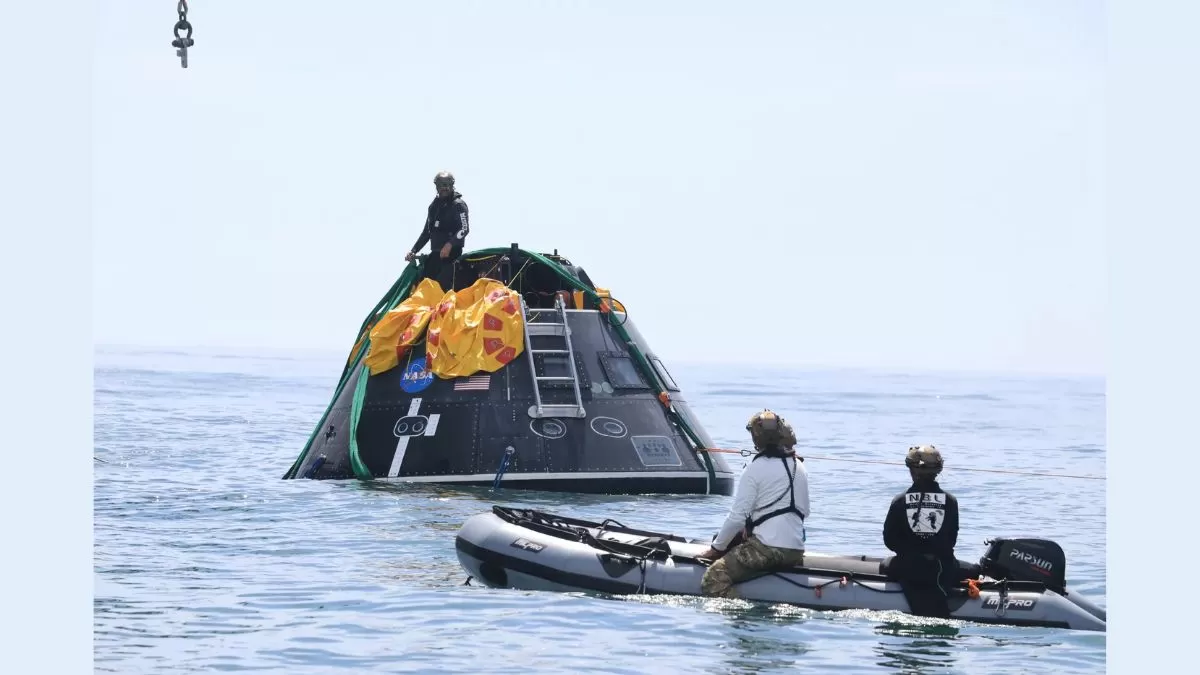
NASA and the U.S. Department of Defense recently joined forces to conduct a series of emergency rescue simulations, in preparation for the upcoming Artemis II mission. The exercises, which took place off the coast of Florida, aimed to rehearse astronaut recovery procedures in the event of a launch abort scenario.
The Artemis II mission, set to launch in 2023, is a major step towards NASA’s goal of sending humans back to the Moon and eventually to Mars. As preparations for this groundbreaking mission continue, it is crucial to ensure the safety of the crew members involved. These joint emergency rescue simulations are just one example of the extensive measures being taken to mitigate any risks and ensure a successful mission.
The drills involved the Orion test capsule, a spacecraft specifically designed for deep space missions, and a team of military rescue personnel. The Orion capsule, which will be used for the Artemis II mission, was equipped with mannequins to represent the crew members. This allowed for a realistic simulation of potential emergency scenarios, providing valuable training for both NASA and the military personnel involved.
The exercises were focused on practicing rescue procedures in the event of a launch abort scenario, where the spacecraft would need to be safely recovered and the crew members evacuated. This is a critical aspect of mission planning, as launch aborts can occur due to a variety of factors such as technical malfunctions or weather conditions. By rehearsing these procedures, both NASA and the military are enhancing their preparedness to handle any potential challenges that may arise during the mission.
The drills were carried out off the coast of Florida, which is home to NASA’s Kennedy Space Center and Cape Canaveral Air Force Station. This location was chosen because it is the primary launch site for NASA’s human spaceflight missions and is equipped with the necessary facilities and resources for these simulations. The proximity to the Atlantic Ocean also allows for realistic recovery scenarios, as the spacecraft would land in the water in the event of a launch abort.
The collaboration between NASA and the U.S. Department of Defense highlights the importance of interagency cooperation in space exploration. Both organizations bring unique expertise and resources to the table, and by working together, they are able to enhance the safety and success of missions like Artemis II. This partnership also reflects the broader trend of increased cooperation between NASA and the military, as the two have been working closely together on various projects in recent years.
The success of these emergency rescue simulations is a testament to the expertise and dedication of the teams involved. The drills were meticulously planned and executed, with each step carefully choreographed to ensure the safety of the participants and the success of the mission. The military rescue teams, in particular, played a crucial role in the simulations, showcasing their readiness and capabilities in emergency situations.
NASA’s Artemis program is not only focused on sending humans back to the Moon, but also on developing the necessary technologies and capabilities for future deep space missions. These joint emergency rescue simulations are a prime example of the agency’s commitment to safety and preparedness in its exploration efforts. By continuously improving and refining its procedures, NASA is setting a high standard for safety in space exploration.
In conclusion, the recent joint emergency rescue simulations carried out by NASA and the U.S. Department of Defense for the Artemis II mission demonstrate the agencies’ commitment to the safety and success of their missions. The drills, which involved the Orion test capsule, mannequins, and military rescue teams, were a valuable training exercise that will enhance the preparedness of both organizations for any potential emergency scenarios. As we look towards the future of space exploration, partnerships like this one will continue to play a crucial role in pushing the boundaries of human exploration and discovery.
