


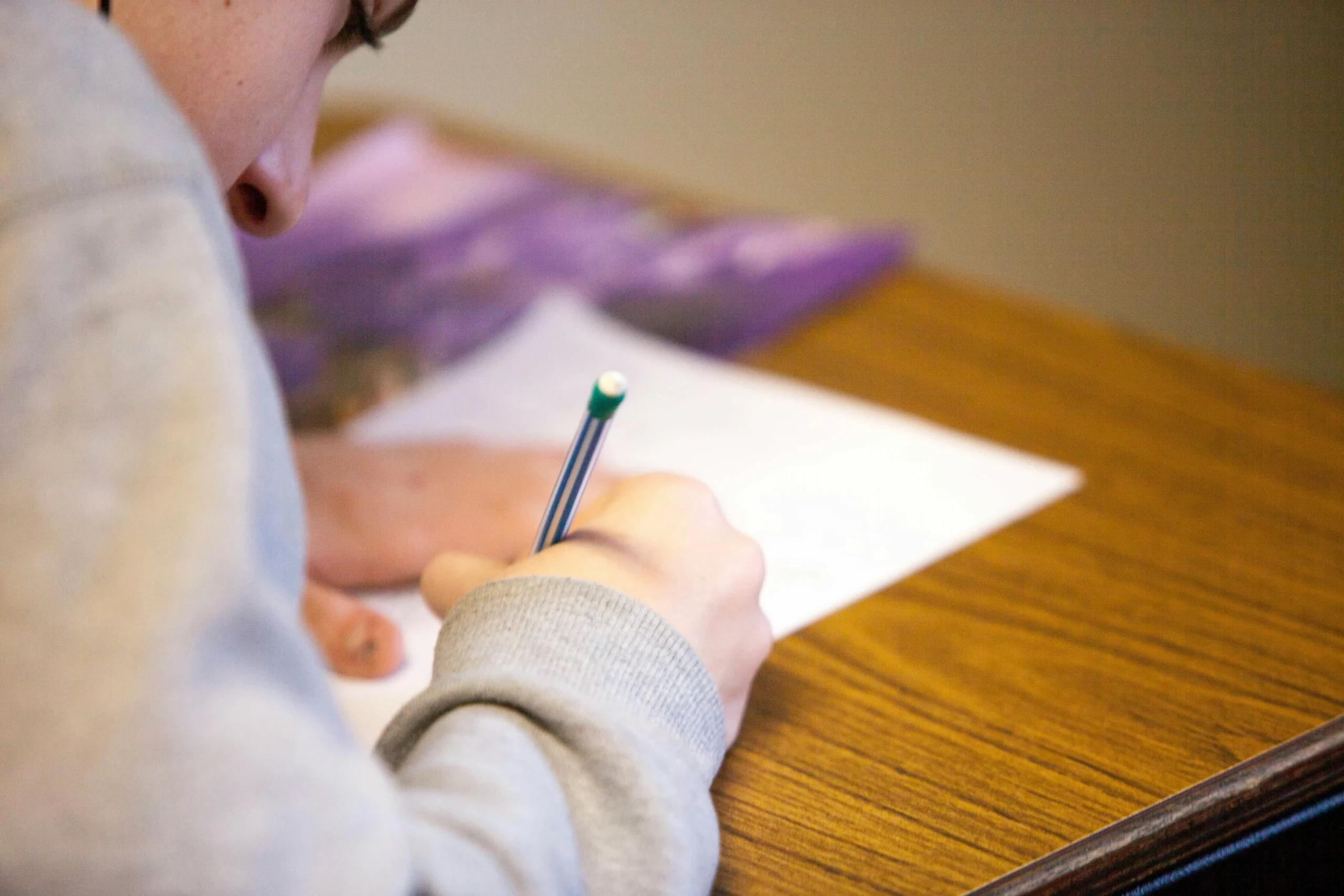
Children and teens in England are facing increasing struggles as a result of the country’s school exam system, according to a mental health charity. YoungMinds has warned that exam stress is just one of many factors contributing to record numbers of young people seeking mental health support.
In a survey of 1,000 15-18-year-olds who were preparing to take their GCSE or A-Level exams this summer, 63% reported finding it difficult to cope in the lead up to and during their exams. Shockingly, 13% of these young people had suicidal thoughts and 13% had self-harmed. More than half (56%) also reported having trouble sleeping.
Among those who were struggling, 61% experienced anxiety and 40% reported a worsening of their mental health. Additionally, 30% skipped meals and 26% had panic attacks. These alarming statistics highlight the detrimental impact that exams can have on the mental well-being of young people.
But it’s not just teenagers who are affected. In a separate survey by YoungMinds, children aged 10-11 who were preparing to take their year 6 SATs also reported similar struggles. Over half (56%) of the children said that sitting the tests was the first time they had ever worried about their abilities. And the pressure of these exams had a negative impact on their mental health, with 28% reporting feeling bad about themselves and 35% saying the exams made them feel ill.
It’s clear that the exam system in England is taking a toll on the mental health of young people. But what about other countries in the UK? How do their exam systems compare?
According to the Good School Guide, England is the only country in the UK where children take SATs. These Standard Assessment Tests, which focus on English and Maths, are taken in year 6. Some schools also have them in year 2, but this is at the discretion of the school and local authority. In addition to SATs, teens in England also sit their GCSEs and A-Levels.
In Wales, SATs used to be taken but have since been phased out and replaced with personalized assessments in reading and numeracy. There are no formal exams in Wales until teens take their GCSEs and then A-Levels.
In Northern Ireland, skills are assessed using Levels of Progression (LoP) at the end of key stage 1, 2, and 3. There are no exams until secondary school, when teens take their GCSEs and then have the option to sit A-Levels.
And in Scotland, children have assessments throughout school, but these are not formal tests like SATs. They don’t have to revise or prepare for these assessments, called National Standardised Assessments for Scotland (NSA), and there is no pass or fail. These assessments are carried out as part of everyday learning. From the age of 14 onwards, Scottish teens then take National 4s and 5s (similar to GCSEs) and then Highers and Advanced Highers (like AS and A-Levels).
It’s clear that the exam system in England is unique compared to the rest of the UK. And with the increasing concerns about the impact of exams on young people’s mental health, it’s worth considering whether the system needs to change.
According to YoungMinds’ research, in collaboration with More Than A Score, young people overwhelmingly want to see changes made to the exam system. Almost three-quarters (74%) of 15-18-year-olds believe that exams should be reformed to improve mental health.
Paddy, 20, shared his own experience of how taking his A-Levels exacerbated his mental health condition. He still has nightmares about it to this day. “From the start of year 13, I found it difficult to think about anything other than exams,” he said. “At school, I would hardly eat anything as I was so focused on studying. The exams massively heightened my OCD. It seemed to know these exams were incredibly important to me, and it went on the attack.”
Paddy also shared how the pressure of exams caused him to have a complete breakdown the night before one exam. “The pressure was enormous, and I felt like I was drowning in a sea of pressure,” he said. “Two years after finishing my exams, I still have nightmares about them, imagining I am back in the exam hall.”
YoungMinds’ Missing
