


SpaceX, the aerospace company founded by Elon Musk, has once again made headlines with its rapid expansion of the Starlink satellite constellation. On June 28, 2025, the company successfully launched two Falcon 9 rockets, delivering a total of 53 satellites to orbit. This brings the total number of active units in the Starlink constellation to an impressive 7,900, solidifying SpaceX’s lead in global low Earth orbit (LEO) broadband service.
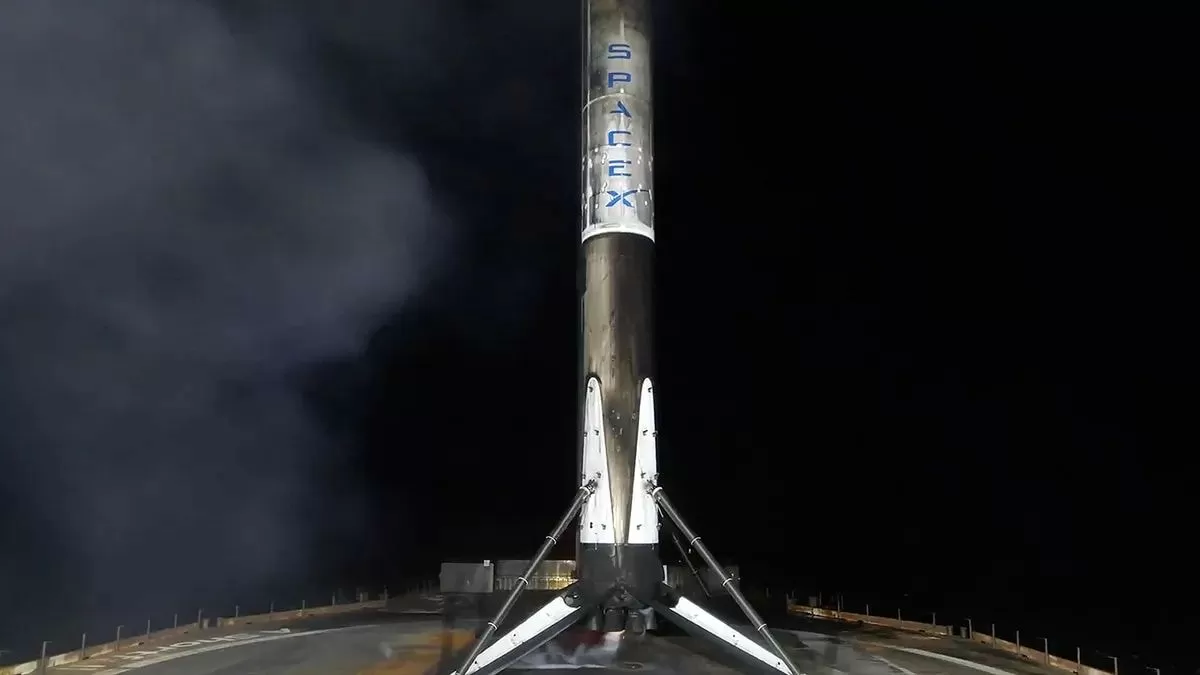
The two Falcon 9 launches were a testament to SpaceX’s commitment to innovation and efficiency. Not only did the rockets deliver a large number of satellites to orbit, but they also marked a significant milestone for the company’s reusable booster program. The boosters, which have been previously flown four and seven times, respectively, successfully landed for the fifth and eighth time. This achievement further proves the viability and cost-effectiveness of SpaceX’s reusable rocket technology.
The Starlink constellation, which aims to provide high-speed internet access to remote and underserved areas, has been a major focus for SpaceX in recent years. With the addition of 53 new satellites, the company has significantly expanded its coverage and capacity, bringing it one step closer to achieving its goal of global internet connectivity. This is especially crucial in today’s digital age, where reliable internet access is essential for education, communication, and economic growth.
But SpaceX’s ambitions go beyond just providing internet access. The company also has plans to use the Starlink constellation for other purposes, such as Earth observation and remote sensing. This could have a significant impact on various industries, including agriculture, disaster management, and climate monitoring. With its growing number of satellites, SpaceX is well on its way to revolutionizing the way we use and access data from space.
The success of the two Falcon 9 launches is a testament to SpaceX’s dedication to pushing the boundaries of space technology. The company has been a pioneer in the development of reusable rockets, which has significantly reduced the cost of space launches. This has opened up opportunities for more frequent and affordable space missions, paving the way for a new era of space exploration and commercialization.
Moreover, SpaceX’s achievements have not gone unnoticed by its competitors. The company’s rapid expansion and technological advancements have put it ahead of other players in the space industry, including traditional aerospace giants. This has sparked a new wave of competition and innovation, driving the industry forward and ultimately benefiting consumers.
But SpaceX’s success is not just limited to its technological advancements. The company has also made significant strides in sustainability and environmental responsibility. By reusing its rockets, SpaceX has significantly reduced the amount of space debris and carbon emissions associated with space launches. This is a crucial step towards ensuring the sustainability of space activities and preserving our planet for future generations.
As SpaceX continues to make strides in the space industry, it is also making a significant impact on the economy. The company’s rapid expansion has created numerous job opportunities and boosted the local economies of the communities where its launch sites are located. This is a testament to SpaceX’s commitment to not only advancing space technology but also contributing to the growth and development of society.
In conclusion, SpaceX’s two Falcon 9 launches on June 28, 2025, were a resounding success, further solidifying the company’s position as a leader in the space industry. With its rapidly expanding Starlink constellation, innovative reusable rockets, and commitment to sustainability, SpaceX is paving the way for a more connected, sustainable, and technologically advanced future. As we look towards the stars, we can be confident that SpaceX will continue to push the boundaries and inspire us with its groundbreaking achievements.
