


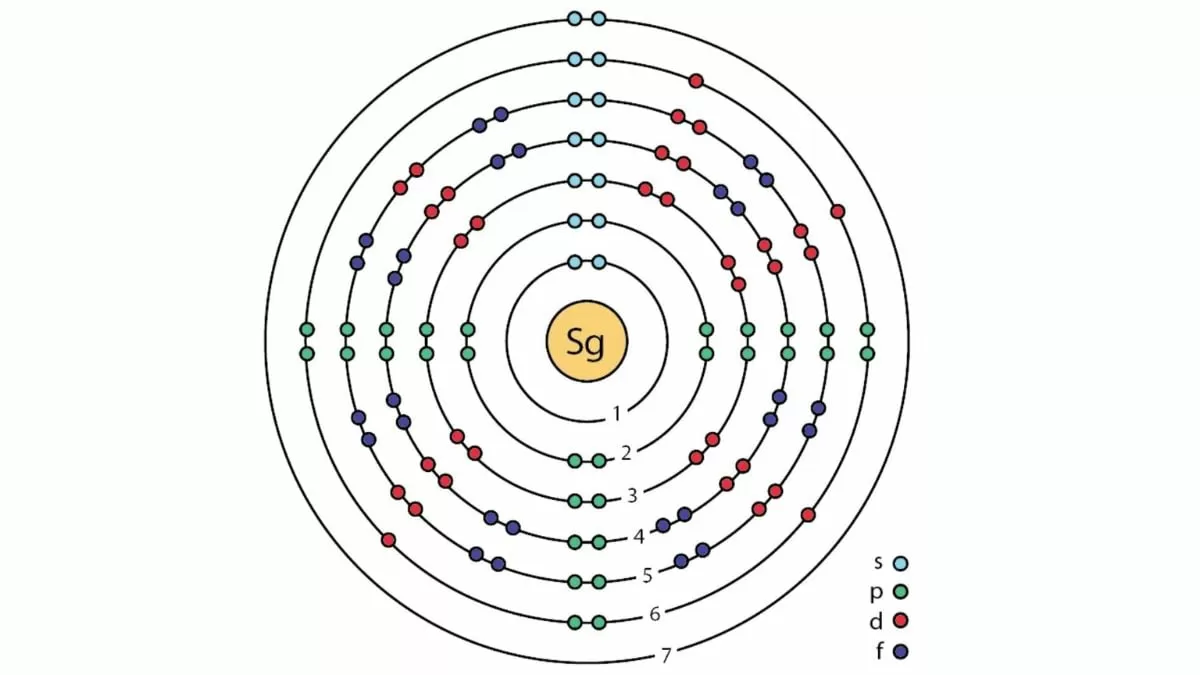
In a groundbreaking discovery, scientists at the GSI Helmholtz Centre for Heavy Ion Research have unearthed a new element, 257Sg, that could revolutionize our understanding of nuclear stability. This discovery not only sheds light on the behavior of heavy elements, but also introduces the first ever K-isomer of seaborgium, further pushing the boundaries of what is known about nuclear physics.
The team at GSI has been at the forefront of research on the heaviest elements for decades, and their latest breakthrough is a testament to their unwavering dedication and perseverance. After a series of meticulous experiments, they were able to successfully produce and detect 257Sg, the 107th element on the periodic table. This element has an atomic number of 107, making it one of the heaviest elements ever created.
What makes this discovery even more remarkable is the fact that it challenges existing theories of nuclear fission. Traditionally, it was believed that superheavy elements like 257Sg are highly unstable and undergo spontaneous fission, breaking apart into smaller, more stable nuclei. However, the GSI scientists were able to observe that 257Sg does not follow this predicted pattern. Instead, it has an unexpectedly long half-life, suggesting that it is more stable than previously thought.
But that’s not all. The GSI team also found that 257Sg has an isomer, which is a rare form of an element that has the same number of protons but a different arrangement of energy levels in its nucleus. This is the first time that a seaborgium isomer, specifically the K-isomer, has been discovered. This finding opens up a whole new realm of possibilities for studying the behavior of superheavy elements, as well as the potential applications of these elements.
The discovery of 257Sg and its isomer has not only pushed the boundaries of nuclear physics, but it also has significant implications for the synthesis of other superheavy elements. One such element is 256Sg, which is predicted to be even more stable than 257Sg and could potentially be produced in future experiments. The GSI team’s findings provide valuable insights and guidelines for future research in this area, and may lead to the synthesis of even heavier elements that were previously thought to be beyond our reach.
This discovery also has cosmological implications, as superheavy elements are believed to have played a crucial role in the formation of the universe. The ability to create and study these elements in a controlled environment allows us to gain a deeper understanding of the universe and its origins.
The GSI scientists have once again proven that curiosity, determination, and cutting-edge technology can lead to groundbreaking discoveries that challenge our understanding of the world around us. Their discovery of 257Sg and its isomer is a testament to the potential of scientific research and the relentless pursuit of knowledge.
This remarkable achievement by the GSI team has not gone unnoticed by the scientific community. Many experts in the field have already hailed this discovery as a major breakthrough and are eagerly awaiting further research on heavy and superheavy elements.
The discovery of 257Sg and its isomer has the potential to open up new avenues of research and unlock the secrets of nuclear stability. It serves as a reminder that the world of science is constantly evolving, and there is still so much we have yet to discover and understand. We can only imagine what new insights and advancements the future holds for us, but one thing is certain – the discovery of 257Sg marks a significant step forward in the journey towards a deeper understanding of the universe.
