

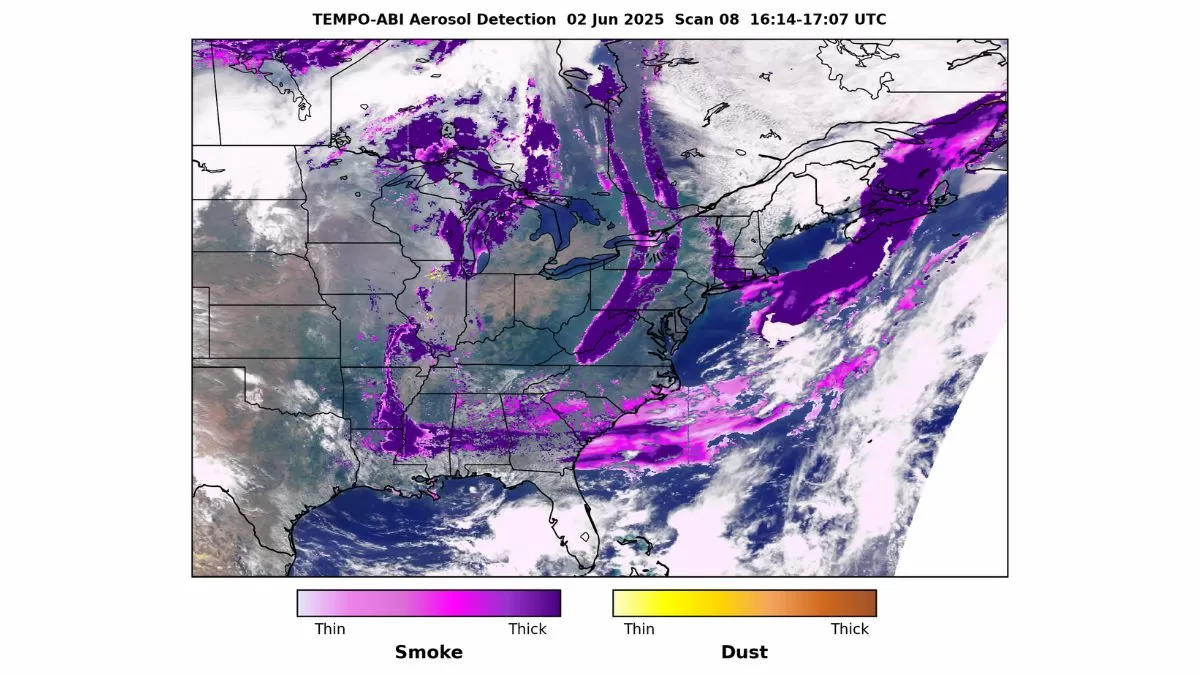
TEMPO, a collaborative space mission by NASA, NOAA, and the Smithsonian Astrophysical Observatory, is revolutionizing the way we track air quality across North America. Launched in 2023, TEMPO has been providing hourly, high-resolution pollution data from space, which has been instrumental in aiding researchers, health officials, and the general public in understanding and addressing air quality issues.
Air pollution is a major global concern, and it has severe impacts on human health and the environment. According to the World Health Organization, around 7 million people die prematurely every year due to exposure to air pollution. In North America, air pollution is a growing problem, with urban centers and industrial areas being the most affected. The need for accurate and timely data on air quality has never been more crucial.
This is where TEMPO comes in. Short for Tropospheric Emissions: Monitoring of Pollution, TEMPO is a state-of-the-art instrument that is mounted on a geostationary satellite. It measures air quality in real-time, providing hourly updates on pollution levels across the entire continent. This is a significant improvement from previous methods of monitoring, which relied on ground-based sensors and provided data on a daily or weekly basis.
TEMPO is a result of a joint effort between NASA, NOAA, and the Smithsonian Astrophysical Observatory. Each of these institutions brings unique expertise and resources to the mission, making it a truly collaborative effort. NASA is responsible for the overall management of the mission, while NOAA provides the satellite platform and the ground system for data processing. The Smithsonian Astrophysical Observatory contributes its expertise in atmospheric science and data analysis.
The impact of TEMPO has been far-reaching. The data it provides has been instrumental in advancing our understanding of air pollution and its effects on human health and the environment. Researchers have been able to identify pollution hotspots, track the movement of pollutants, and study the impacts of different sources of pollution. This has led to a better understanding of the causes of air pollution and has helped in the development of effective strategies to address it.
Health officials have also benefited greatly from TEMPO’s data. With real-time information on pollution levels, they can issue timely warnings and advisories to the public, especially for vulnerable populations such as children, the elderly, and people with respiratory conditions. This has helped in reducing the health risks associated with exposure to polluted air.
The general public has also been able to access TEMPO’s data through various platforms, including mobile applications and websites. This has empowered individuals to make informed decisions about their daily activities, such as choosing the best times and routes for outdoor activities. It has also raised awareness about air quality issues and the need for collective action to address them.
TEMPO’s impact goes beyond North America. Its data has been shared with international organizations and agencies, providing a more comprehensive understanding of air quality on a global scale. This has been particularly useful in addressing transboundary air pollution, where pollutants from one country can affect the air quality of neighboring countries.
In addition to its scientific and societal impact, TEMPO has also been a technological feat. Its high-resolution measurements, which cover an area of 110 million square kilometers, are made possible by advanced spectrometers and detectors. These instruments can detect even the smallest traces of pollutants in the atmosphere, providing a level of accuracy and precision that was not possible before.
Looking ahead, TEMPO is expected to continue its mission until at least 2030, providing valuable data for years to come. Its success has also paved the way for future collaborations between NASA, NOAA, and the Smithsonian Astrophysical Observatory in addressing other environmental challenges.
In conclusion, TEMPO has been a game-changer in the field of air quality monitoring. Its real-time, high-resolution data has transformed our understanding of air pollution and its impacts, and has been crucial in informing policy decisions and public health measures. With its continued efforts, TEMPO is set to make a significant contribution towards improving air quality and safeguarding the health and well-being of people across North America and beyond.
