


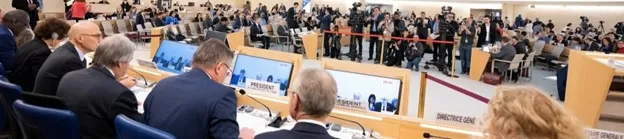
The United Nations Human Rights Council (HRC) has always been at the forefront of promoting and protecting human rights around the world. However, recent developments have raised concerns about the council’s ability to effectively carry out its mandate due to funding constraints.
The HRC has expressed deep concern at the announcement made by the UN High Commissioner for Human Rights, Michelle Bachelet, that certain activities mandated by the council cannot be delivered due to a lack of funding. This news has sparked debates among member states and human rights organizations, raising questions about the council’s efficiency and effectiveness in fulfilling its responsibilities.
Among the activities that the commissioner has highlighted as being affected by the funding shortage are investigations into human rights violations, monitoring and reporting on human rights situations in various countries, and capacity building for national human rights institutions. These activities are crucial in identifying and addressing human rights abuses, ensuring accountability and promoting human rights globally.
The HRC has sought clarity from the High Commissioner on why these specific activities have been singled out and how this funding shortage will impact the council’s ability to fulfill its mandate. The council has emphasized the importance of these activities and their contribution to promoting and protecting human rights, which are fundamental to the dignity and well-being of all individuals.
The funding shortage faced by the HRC is a matter of great concern for all those who support and believe in the work of the council. The HRC relies solely on voluntary contributions from member states, and unfortunately, the amount of funding received has not been enough to cover all the activities mandated by the council. This has resulted in a significant gap between the resources required and those available, thus hindering the council’s ability to effectively carry out its responsibilities.
It is disheartening to see that despite the crucial role played by the HRC, it continues to face funding constraints. Human rights violations and abuses are prevalent in many parts of the world, and it is essential for the council to have adequate resources to address these issues effectively. The HRC is a vital mechanism for ensuring that human rights are respected, protected, and fulfilled, and it is the responsibility of all member states to ensure that it is adequately funded to carry out its mandate.
In light of these funding challenges, it is imperative for member states to step up and increase their contributions to the HRC. It is also vital for donor countries and organizations to provide necessary support to the council, especially in times of financial constraints. The HRC has been successful in promoting human rights globally, and it is in the interest of all nations to ensure its continued success.
Furthermore, it is essential to explore alternative sources of funding to support the work of the council. The private sector, non-governmental organizations, and civil society can also play a crucial role in providing resources to the HRC. By diversifying its sources of funding, the council can reduce its dependence on voluntary contributions from member states and ensure that its mandate is fulfilled without any financial constraints.
In conclusion, the United Nations Human Rights Council plays a vital role in promoting and protecting human rights globally. The current funding shortage is a matter of great concern and has raised questions about the council’s ability to effectively carry out its mandate. It is the responsibility of all member states to ensure that the council is adequately funded, and alternative sources of funding should also be explored. Let us all work together to ensure that the HRC can continue its crucial work in promoting and protecting human rights for all individuals, everywhere.
