


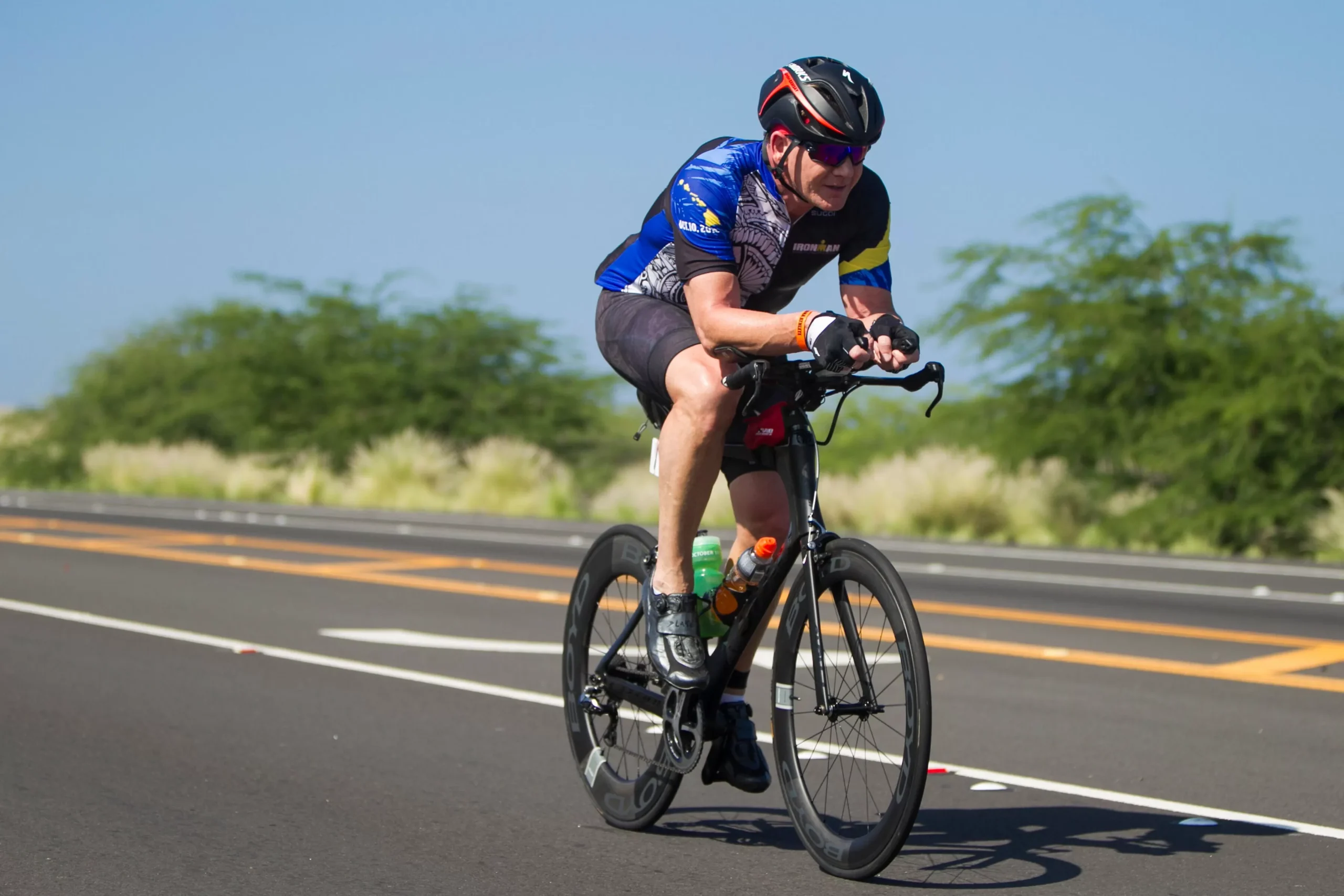
Gordon Ramsay, the famously tough TV icon and multi-Michelin-starred chef, has once again proven that he is not just a master in the kitchen, but also a force to be reckoned with in the world of sports. In 2015, Ramsay took on the ultimate challenge – the Ironman World Championship – and emerged victorious, despite facing a brutal cycling accident the year before.
The emotional moment of Ramsay crossing the finish line was captured in an Instagram post, where he shared a clip of him kissing his wife Tana. In the caption, he wrote, “It’s taken a lot of hard work and training to get me back to where I am today, and it was all for this.” This achievement is a testament to Ramsay’s determination and resilience, as he overcame a serious injury to complete one of the most grueling endurance races in the world.
Ramsay’s injury, which left him hospitalized, was severe enough to leave him “shaken” and “lucky to be standing here.” But with hard work and dedication, he was able to bounce back and achieve his goal of completing the Ironman. This serves as an inspiration to all of us, showing that with determination and perseverance, anything is possible.
In an interview with HuffPost UK, experts shared their insights on how to manage injuries and return to sports. Dr. Caryn McAllister, a specialist in neurological rehabilitation, emphasized the importance of giving the body enough time to heal before returning to intense physical activities. In Ramsay’s case, his injury involved a lot of tissue damage, which required a longer healing time.
Dr. Elizabeth Gardner, team physician for Yale Athletics, highlighted three key factors to consider when returning to sports after an injury. The first is the physical recovery of the injured area, which can be assessed by a physician or physical therapist. The second is the overall conditioning of the body, as an extended period of inactivity can affect the body’s ability to handle intense training. And lastly, the mental readiness, which is often overlooked but plays a crucial role in returning to sports.
Following his accident, Ramsay had to overcome not just physical but also mental barriers to get back on his bike and train for the Ironman. This is a common struggle for many athletes, and it can take time to build back the confidence and trust in one’s body. Seeking the help of a sports psychologist or taking a slow and methodical approach to training can be beneficial in overcoming these mental hurdles.
When it comes to returning to running after an injury, Dr. McAllister’s advice is simple – listen to your physical therapist. Every injury and recovery process is unique, and it is essential to follow professional advice to avoid further damage. Dr. Gardner also stressed the importance of having a good plan in place, starting with slow and low-intensity training and gradually increasing the intensity as the body allows.
It is crucial to remember that sports are meant to be enjoyable and not just about pushing our bodies to the limit. If an injury prevents us from returning to our previous activity, it is essential to find a new activity that is both fun and safe. This can help us stay active and motivated while allowing our bodies to heal and recover.
In conclusion, Gordon Ramsay’s journey to the Ironman World Championship in 2015 is a testament to his determination, resilience, and hard work. Despite facing a brutal cycling accident, he was able to overcome his injuries and achieve his goal of completing the Ironman. His story serves as an inspiration to all of us, showing that with determination, perseverance, and a good plan in place, we can overcome any obstacle and achieve our goals. So let us all take a page from Ramsay’s book and never give up on our dreams, no matter how challenging they may seem.
