


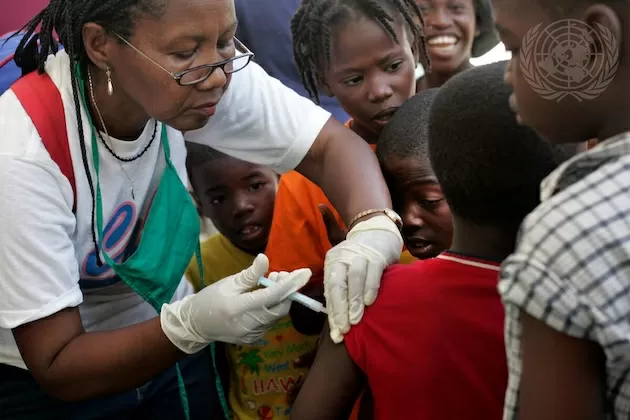
The latest data released by the World Health Organization (WHO) and the United Nations Children’s Fund (UNICEF) paints a concerning picture. It reveals that the world is off track to meet the targets set by the Immunization Agenda 2030 (IA2030) to achieve 90 percent global immunization coverage for essential childhood vaccines and halve the number of unvaccinated children by 2030.
Immunization is one of the most powerful and cost-effective tools to prevent diseases and save lives. It is estimated that globally, vaccines save between 2-3 million lives every year. However, despite this, millions of children around the world still lack access to life-saving vaccines, leaving them vulnerable to deadly but preventable diseases.
According to the latest data, only 85 percent of children worldwide received the recommended three doses of diphtheria-tetanus-pertussis (DTP3) vaccine in 2019. This falls short of the IA2030 target of 90 percent coverage. Furthermore, around 14 million children did not receive the measles vaccine in 2019, putting them at risk of contracting this highly contagious and potentially fatal disease.
The consequences of low immunization coverage are severe and can be seen in the recent outbreaks of measles in several countries. In 2019, the number of reported measles cases was the highest it has been in over two decades, with over 869,770 cases reported globally. This is a clear indication that despite the availability of vaccines, many children are still missing out on protection against preventable diseases.
One of the main reasons for the low immunization coverage is the lack of access to vaccines. This is especially true for children living in low-income countries, conflict-affected areas, and marginalized communities. These children often lack access to basic healthcare services, including immunization, due to various barriers such as poverty, weak health systems, and lack of education.
Another major obstacle in achieving the IA2030 targets is vaccine hesitancy. This refers to the reluctance or refusal of individuals to vaccinate themselves or their children despite the availability of safe and effective vaccines. This is often fueled by misinformation about vaccines, leading to skepticism and fear. Vaccine hesitancy not only puts the unvaccinated individuals at risk but also threatens the overall immunization coverage and the achievement of public health goals.
The IA2030 was launched in 2020 as a global strategy to provide a roadmap for countries to achieve universal immunization coverage and address the gaps in vaccine access. It sets ambitious targets to ensure that everyone, everywhere receives the lifesaving vaccines they need by 2030. The strategy focuses on strengthening immunization systems, addressing barriers to access, and building trust in vaccines.
To reach the IA2030 targets, there needs to be a collective effort from governments, healthcare professionals, and communities. Governments must prioritize and invest in immunization programs, ensuring that vaccines are accessible and affordable for all. This includes strengthening healthcare systems, training healthcare workers, and implementing innovative strategies to reach remote and underserved communities.
Healthcare professionals play a crucial role in building trust in vaccines and addressing vaccine hesitancy. They must have the necessary knowledge and skills to communicate effectively with parents and caregivers about the benefits and safety of vaccines. It is also essential to engage with communities and religious and cultural leaders to dispel myths and misconceptions about vaccines and address their concerns.
Communities also have a vital role in ensuring that every child is vaccinated. Parents and caregivers must prioritize their children’s health and make sure that they receive all recommended vaccines. They can also play a role in advocating for immunization in their communities and contributing to raising awareness about the importance of vaccines.
The latest data may be disheartening, but it should serve as a wake-up call to governments, organizations, and individuals. We cannot afford to let millions of children remain vulnerable to deadly diseases when we have the means to protect them. The IA2030 targets are achievable, but it will require a collective effort and commitment from all stakeholders.
As we look towards the future, let us remember that every child deserves a healthy and happy life. We must work together to ensure that no child is left behind in the race towards universal immunization coverage. Let us strive to meet and exceed the IA2030 targets, and in doing so, we will not only save lives but also contribute to a healthier and more prosperous world for all.
