

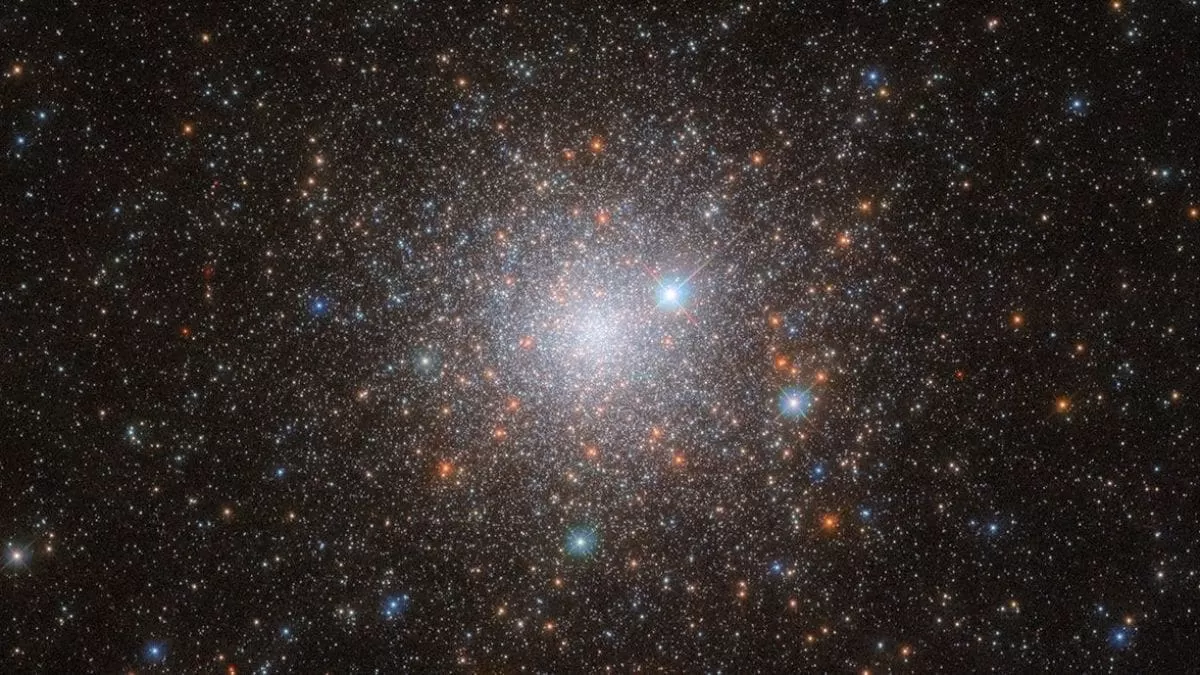
NASA/ESA’s Hubble Space Telescope has once again captured a breathtaking image, this time of a massive galaxy cluster known as Abell 209. Located 2.8 billion light-years away in the constellation of Cetus, this golden cluster is home to over 100 galaxies, making it a true marvel of the universe. But what lies beneath the stunning view of these galaxies is an invisible web of hot gas and dark matter, revealing the intricate and mysterious nature of our universe.
The Hubble Space Telescope, which has been orbiting Earth for over 30 years, has been instrumental in capturing some of the most stunning and awe-inspiring images of our cosmos. Its latest image of Abell 209 is no exception, showcasing the power and capabilities of this incredible telescope. The image, released by NASA/ESA, is a result of years of observation and data collection, providing us with a glimpse into the depths of our universe.
At the center of this image lies Abell 209, a galaxy cluster that stretches over 3 million light-years across. This massive cluster is made up of over 100 galaxies, each with its own unique characteristics and mysteries waiting to be uncovered. But the true beauty of this image lies in what lies beyond the visible galaxies.
Using a phenomenon known as gravitational lensing, Hubble has revealed the presence of an invisible web of hot gas and dark matter. Gravitational lensing occurs when the gravitational pull of a massive object, such as a galaxy cluster, bends and magnifies the light from objects behind it. In this case, the curved arcs of light seen in the image are actually the distorted images of galaxies located behind Abell 209, giving us a glimpse of the hidden web of hot gas and dark matter.
This discovery has shed new light on the nature of galaxy clusters and the role of dark matter in shaping our universe. Dark matter, which makes up about 85% of the total matter in the universe, has long been a mystery to astronomers. Its presence can only be inferred through its gravitational effects on visible matter, making it a difficult subject to study. However, with the help of Hubble’s powerful lenses, we are now able to see the impact of dark matter on the light from distant galaxies, providing us with valuable insights into its properties and distribution.
The stunning image of Abell 209 also serves as a reminder of the immense size and complexity of our universe. The fact that this cluster is located 2.8 billion light-years away means that the light we see in this image has traveled for 2.8 billion years before reaching our telescopes. This means that we are essentially looking back in time, witnessing the cluster as it appeared 2.8 billion years ago. It’s a humbling thought that makes us realize just how small we are in the grand scheme of things.
This new image from Hubble also highlights the importance of continued exploration and research in the field of astronomy. With each new discovery, we are able to gain a better understanding of our universe and our place within it. The Hubble Space Telescope has continuously pushed the boundaries of what we thought was possible and has provided us with a wealth of knowledge about our cosmos. With new and advanced telescopes being developed, we can only imagine the incredible images and discoveries that await us in the future.
In conclusion, the latest image of Abell 209 captured by NASA/ESA’s Hubble Space Telescope is a testament to the wonders and mysteries of our universe. It showcases the beauty and complexity of a massive galaxy cluster, while also revealing the invisible web of hot gas and dark matter that lies beneath. This image serves as a reminder of the vastness and intricacy of our universe, and the importance of continued exploration and research in unraveling its mysteries. With each new discovery, we are one step closer to unlocking the secrets of our universe and expanding our knowledge of the unknown.
