


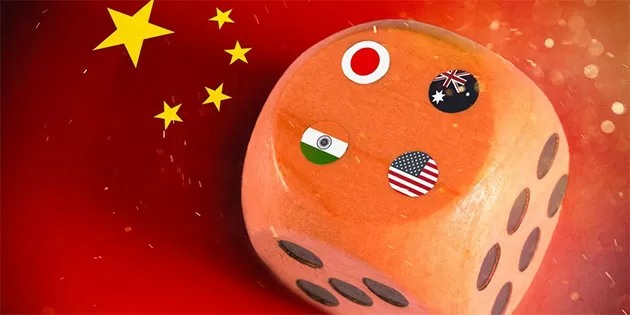
On 1 July, the foreign ministers of the Quad – Australia, India, Japan and the US – came together for their second meeting of the year in Washington, DC. This meeting, just like the first one held earlier this year, was a significant event that showcased the importance of the Quad in today’s world.
The Quad, also known as the Quadrilateral Security Dialogue, is a strategic forum that was formed in 2007 with the aim of promoting cooperation and maintaining peace and stability in the Indo-Pacific region. The four countries involved in this forum share common values of democracy, freedom, and the rule of law, and are committed to upholding these values in the region.
The first meeting of the Quad this year, held just hours after the inauguration of President Donald Trump, was a clear indication of the forum’s importance to the new US administration. It was a reaffirmation of the US’s commitment to the Indo-Pacific region and its allies, and a signal of the country’s strong stance against any threats to regional security.
The second meeting, held in Washington, DC, was equally significant. It was a testament to the fact that the Quad is not just a one-time event, but a long-term strategic partnership that is here to stay. The fact that the meeting was held in the US capital, the seat of power and influence, further highlights the importance of the Quad in today’s world.
During the meeting, the foreign ministers discussed a wide range of issues, including maritime security, counterterrorism, and economic cooperation. They also emphasized the need for a free, open, and inclusive Indo-Pacific region, where all countries can thrive and prosper. This is a clear message to other countries in the region that the Quad is not a threat, but a force for good, promoting peace and stability.
One of the key outcomes of the meeting was the signing of a joint statement, which outlined the Quad’s shared vision and commitment to the region. The statement reaffirmed the Quad’s commitment to upholding international law, freedom of navigation and overflight, and peaceful resolution of disputes. It also highlighted the importance of ASEAN centrality in the region and the need for closer cooperation with other like-minded countries.
The Quad also discussed the ongoing COVID-19 pandemic and its impact on the region. The foreign ministers acknowledged the need for global cooperation and solidarity in the fight against the virus and reaffirmed their commitment to providing support to countries in need. This is a clear demonstration of the Quad’s humanitarian values and its willingness to work together for the greater good.
The meeting also provided an opportunity for the four countries to strengthen their bilateral relationships. The foreign ministers held bilateral talks on the sidelines of the meeting, discussing issues of mutual interest and exploring ways to enhance cooperation in various areas. This further highlights the Quad’s role in promoting not just regional but also global stability and prosperity.
The Quad’s second meeting this year has once again showcased the forum’s significance in today’s world. It is a clear message to the region and the world that the four countries are committed to working together to promote peace, stability, and prosperity in the Indo-Pacific. The Quad is not just a strategic forum; it is a symbol of the strong bonds of friendship and cooperation between Australia, India, Japan, and the US.
In conclusion, the Quad’s second meeting this year in Washington, DC, has reaffirmed the forum’s importance and its commitment to the region. It has sent a strong message to the world that the Quad is here to stay and will continue to play a crucial role in promoting peace, stability, and prosperity in the Indo-Pacific. The four countries have once again demonstrated their strong partnership and their shared vision for a better world.
