


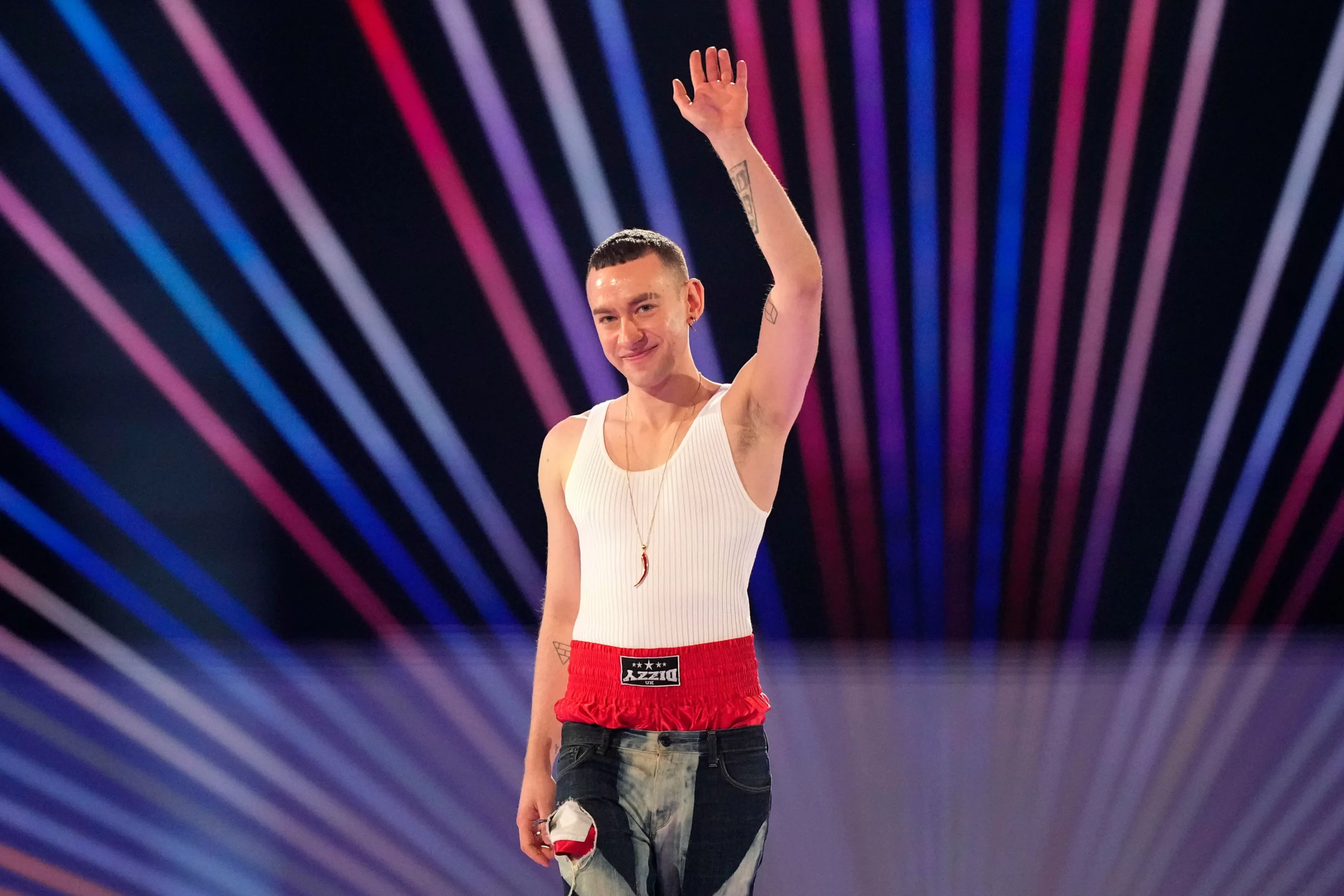
Olly Alexander, the former frontman of Years & Years, has had a change of heart when it comes to his experience at the Eurovision Song Contest. In an interview with Tatler, he opened up about his journey at the competition and how it has shaped him as an artist.
Last year, Olly represented the UK at Eurovision with his original song “Dizzy”. However, the competition was marred with controversy due to the ongoing conflict in Gaza and calls for Israel to be expelled from the contest. As someone who had previously expressed support for the people of Palestine, Olly faced pressure from various groups, including Queers For Palestine, to withdraw from the competition.
Despite the challenges, Olly decided to go ahead with his performance and finished in 18th place out of 25 acts in the final. He also received zero points from Eurovision viewers, a position that Remember Monday also found themselves in the following year when they represented the UK.
Reflecting on his experience, Olly described it as “brutal” and advised future acts representing the UK to “get yourself a really good therapist, because you’ll have a lot to talk about, for years!” However, in his recent interview with Tatler, he spoke more positively about his Eurovision journey.
“Now that I’ve had a bit of time away, I’m so proud I got to do it,” he said. He also acknowledged that it was a stressful and vulnerable experience, but one that he will always cherish. “Everyone said, ‘You’re going to bring it home, Olly’. I knew I wouldn’t. I’ve never had so much pressure put on a song. People are brutal anyway, but because we’re in a competition, people are really going for you. I was like, ‘God, I’m just trying to give people a fun time!’.”
Despite the initial doubts and pressure, Olly’s first solo tour after Eurovision served as a reminder of the love and support he has from his fans. “It really reminded me that live music is so amazing, getting to sing your songs with people who are singing along is the coolest thing ever,” he shared.
The controversy surrounding Israel’s participation in Eurovision is not new. In recent years, there have been calls for a boycott of the event as long as Israel remains a part of it. In fact, in the lead-up to Eurovision 2025, many performers associated with the contest, including reigning winner Nemo from Switzerland, urged organisers to ban Israel completely, similar to how Russia had been excluded since its invasion of Ukraine in 2022.
The issue of Israel’s participation was also raised by national broadcasters from Iceland, Ireland, Slovenia, and Spain in the months leading up to Eurovision 2026. In response, organisers held a meeting with participating national broadcasters in London last month to discuss various issues, including whether Israel should be invited back in 2026. It was decided that the situation would be reassessed in the autumn.
Despite the ongoing controversy, Olly’s experience at Eurovision has taught him valuable lessons and has made him a stronger artist. He also believes that the competition has the power to bring people together through the love of music. “I’m grateful for the opportunity to have been a part of it and to have shared my music with the world,” he said.
In the end, Olly’s message to future acts representing the UK at Eurovision is to embrace the experience and not let the pressure get to them. “Just have fun and enjoy the moment. It’s a once-in-a-lifetime opportunity, and you never know what could happen,” he advised.
As we look towards Eurovision 2024, we can only hope that the competition will continue to unite people through the power of music. And who knows, maybe we’ll see Olly Alexander back on the Eurovision stage, this time with a winning performance.
