


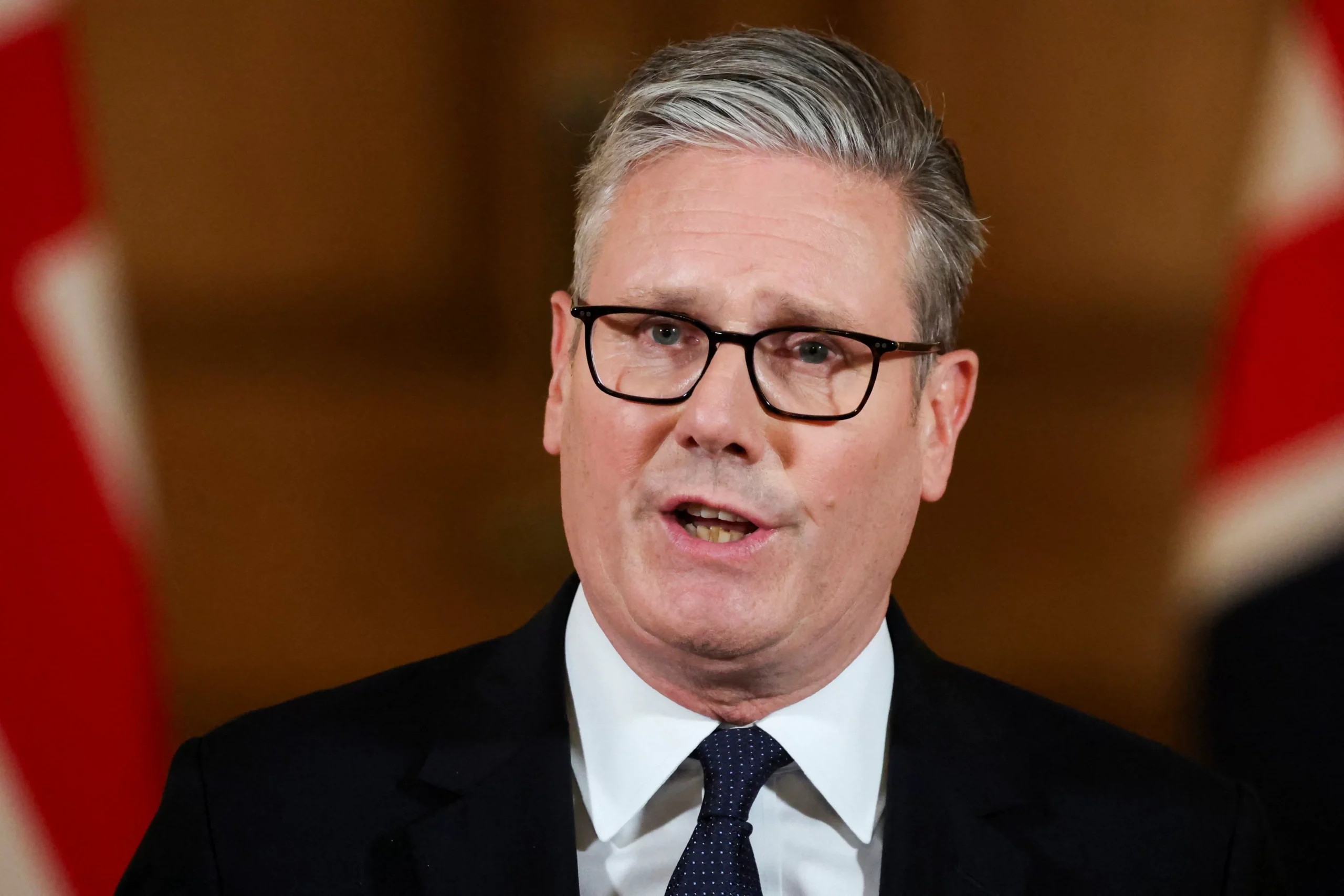
On Tuesday, Keir Starmer made a groundbreaking announcement that the UK will officially recognize Palestine as a state in September. This is a major policy shift for the UK and has been met with both praise and criticism. But just how significant is this moment and how have Britain’s allies reacted? Let’s take a closer look at what this decision means and what we can expect in the coming months.
First and foremost, what exactly has happened? Starmer has declared his intention to recognize Palestine as a state in September, before the UN’s General Assembly. However, he has also made it clear that this decision is contingent upon certain conditions being met by Israel. These conditions include taking substantive steps to end the appalling situation in Gaza, reaching a ceasefire, and committing to a long-term peace process with a two-state solution.
But what does it mean to recognize Palestine as a state? Currently, out of the 193 member states of the United Nations, 147 already recognize Palestine as a state, including more than a dozen in Europe. However, France, China, and Russia are the only other permanent members of the UN Security Council to have taken this diplomatic step. According to the Montevideo Convention of 1933, in order to be recognized as a state, Palestine must have a permanent population, a defined territory, an effective government, and international relations and formal diplomatic processes. While there may be debates about what borders will define the territory, this move is largely symbolic and lends legitimacy to the Palestinians’ right to their land and undermines Israel’s ongoing efforts to remove them from the region.
Palestinians have been fighting for an independent state since Israel’s occupation in the 1967 Six-Day War. However, Israel has consistently refused to give in to this demand, claiming it would reward the Hamas militants responsible for the October 7, 2023 massacre in which 1,200 people were killed and 250 were taken hostage. While 50 hostages are still being held, it is believed that 20 of them are still alive.
So why has the UK government only decided to take action now? The UK has been under pressure from both domestic and international sources to formally recognize Palestine as a state. This pressure reached new heights in recent weeks as concerns over mass starvation in Gaza have grown. More than 250 MPs, including many from the Labour party, signed a letter calling on Starmer to commit to recognizing Palestine as a state. Additionally, up to seven cabinet ministers reportedly joined these calls. Starmer’s close ally, Emmanuel Macron, also announced France’s plan to recognize Palestine last week, making it the first G7 country to do so. Initially, Starmer refused, stating that it must be part of a wider plan for peace. However, he has now made it clear that this decision is not a U-turn to appease angry MPs, but rather a long-standing policy of the Labour party.
While this decision has been met with praise from many, there has also been some backlash. Israel has unsurprisingly condemned the announcement, stating that it constitutes a reward for Hamas and harms efforts to achieve a ceasefire in Gaza. Israeli Prime Minister Benjamin Netanyahu went so far as to say that Starmer is rewarding terrorism and punishing its victims. Emily Damari, a British-Israeli who was held hostage by Hamas for over 15 months, also condemned Starmer for the move, stating that it is a moral failure. However, Transport Secretary Heidi Alexander has made it clear that this decision is not about appeasing Hamas, but rather about recognizing the Palestinian people. She also stated that the timing gives Israel eight weeks to respond.
So, is this decision too little, too late? While some have criticized the UK for consistently acting too little, too late when it comes to protecting Palestinians in the Middle East, many have still welcomed this recognition. Labour MP and Foreign Affairs Committee Chair, Emily Thornberry, called it a historic moment and great news. Liberal Democrat Ed Davey also praised the decision but called for Starmer to recognize Palestine right away rather than using it as a bargaining chip. However, there are also those who feel that the conditions set out by Starmer should not be used as an alternative to recognizing Palestinian statehood. The actual impact of this decision remains to be seen, as the UK is not as powerful as it once was. However, there is a potential for a domino effect, as the UK is a close ally of the US. Even President Donald Trump acknowledged
