


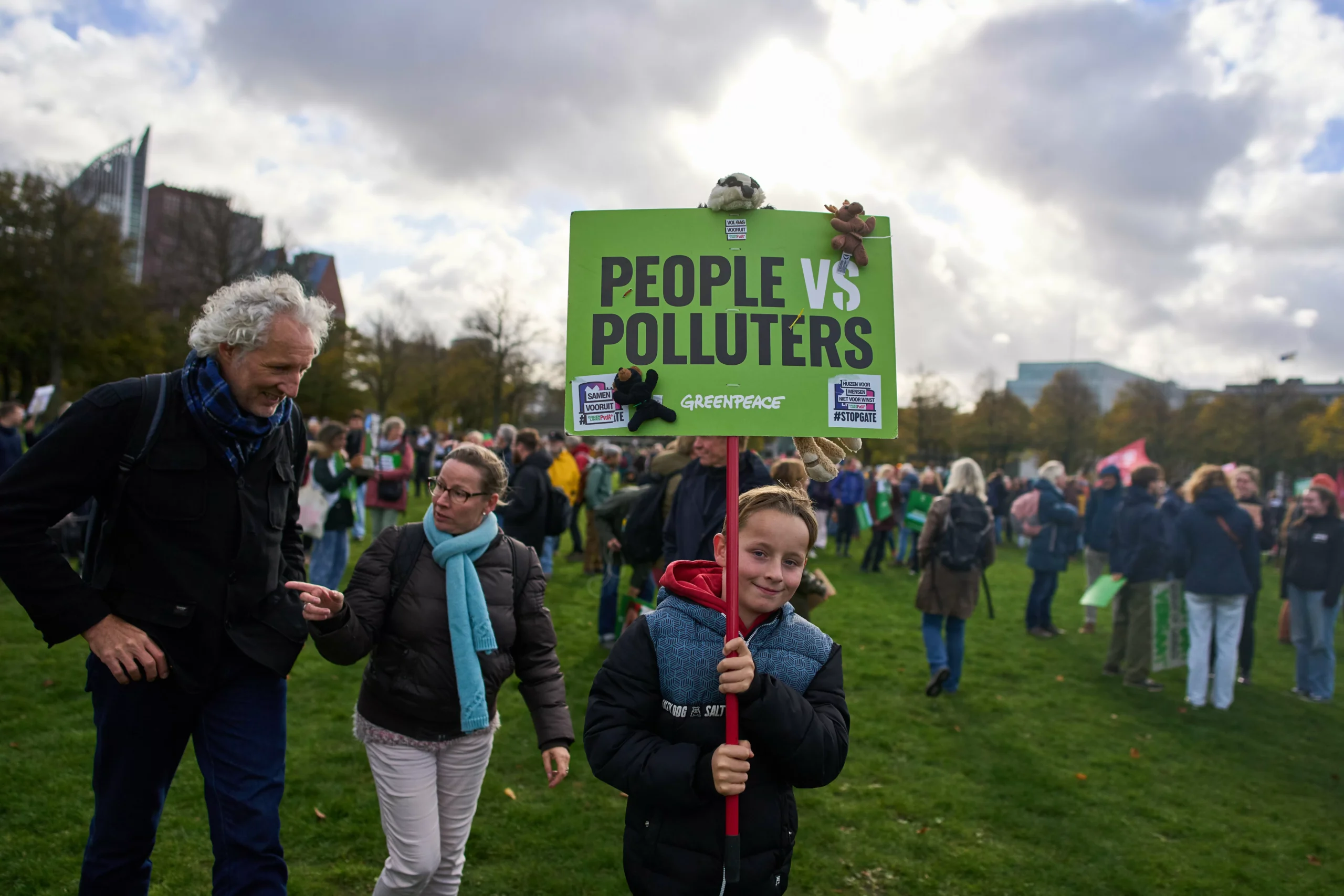
Tens of thousands of people took to the streets of The Hague, Netherlands on Sunday, October 26, 2025, just days before the general election in the country. They were calling for tougher action against climate change, a pressing issue that has been at the forefront of global concerns for years. This demonstration was a powerful display of the public’s growing urgency for immediate and effective measures to combat the climate crisis.
The timing of this demonstration was significant, as the government was about to face a major test of its ability to deliver on its promises for climate action. The much-awaited Carbon Budget Delivery Plan was set to be released the following week, and it was a crucial moment for a government that has so far failed to make a significant impact on climate action. This has left many voters disillusioned and frustrated, and has led to a surge in support for the Green Party.
In fact, the Green Party has seen a record increase in polling numbers, with the latest poll showing a support of up to 17%. In addition, one poll even puts them neck and neck with the ruling Labour party. This surge in support is reflected in the party’s growing membership, with thousands of new members joining each day in the past few days.
There are several reasons why voters are turning to the Green Party at this particular moment. The current Labour government has not lived up to its promises, causing disappointment and betrayal among its voters. From attempts to cut support for pensioners and disabled people to its complicity in the genocide in Gaza, the government has failed to deliver on its commitments. Meanwhile, the Reform party has been gaining momentum in the polls, dominating political conversations with their toxic proposals, such as ICE-style mass deportations. Instead of standing up to this dangerous rhetoric, the Labour party has been mimicking it, much to the dismay of millions of people.
In contrast, the Green Party has never been louder or prouder about its values, principles, and vision for the country. While the wealth of billionaires continues to surge, the party is pushing for a wealth tax to tackle inequality and rebuild public services. They are also advocating for bringing water back into public hands, as water companies continue to pollute rivers and seas while charging the public extra. In addition, the party is addressing the ongoing cost of living crisis by focusing on raising wages and reducing bills for the public.
However, the growing popularity of the Green Party cannot be solely attributed to their stance on these issues. The British public is desperate for the government to take action on the climate crisis, and the Green Party has been at the forefront of this fight. A record number of people (72%) are concerned about the impacts of climate change, and there is widespread support for measures to reduce emissions. Renewable energy is viewed as a cheaper, more popular, and better option for the country’s energy security compared to coal, oil, and gas.
It is crucial that the government gets this right. Despite a strong political mandate and overwhelming public support, the Labour government has been hesitant to take bold action. They have enthusiastically backed multiple airport expansions, and have gone back on their promise to ban new oil and gas drilling in the North Sea. This is where the upcoming ‘Carbon Budget and Growth Delivery Plan’ comes into play. As a requirement of the Climate Change Act, this plan is a significant milestone. Previous Conservative prime ministers have had their own Carbon Budget Delivery Plans deemed illegal in court, and now the current government is facing pressure from the polluter-funded Tories to scrap it altogether.
Therefore, it is crucial that the government gets this plan right. It is their chance to not only outline how they plan to tackle the crisis at hand, but also how they will use climate action to improve the lives of people across the country. This is especially important in the face of the Reform party, which is backed by oil and gas giants and seeking to dismantle climate action by blaming it for the cost of living crisis.
The government needs to show, not just tell, the public that climate action can bring about positive change. For example, by properly insulating homes, not only can emissions be reduced, but bills can also be lowered for households across the country. The government’s Clean Energy Jobs Plan, launched last week, was a step in the right direction. It is a welcome strategy for harnessing the potential of the clean energy economy to create good, green jobs across the country. However, more needs to be done. This includes significant
