


Confusing Correlation with Causation: The Truth Behind Ice Cream Sales and Shark Attacks
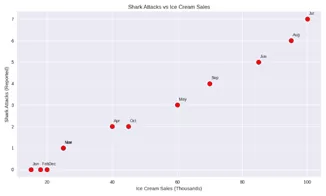
As the summer season approaches, many of us look forward to indulging in our favorite frozen treat – ice cream. But did you know that there is a surprising correlation between ice cream sales and shark attacks? Yes, you read that right. According to a study, both ice cream sales and shark attacks increase during the summer months. However, before we jump to any conclusions, it is important to understand the difference between correlation and causation.
Correlation refers to a relationship between two variables, where a change in one variable is associated with a change in the other variable. On the other hand, causation refers to a direct cause-and-effect relationship between two variables. In simpler terms, just because two things happen at the same time, it does not necessarily mean that one causes the other.
The statistical association between ice cream sales and shark attacks is indeed very clear. But does this mean that eating ice cream leads to an increase in shark attacks? Of course not. It is important to look at other factors that may be influencing this correlation.
Firstly, let’s consider the time of year. As mentioned earlier, both ice cream sales and shark attacks increase during the summer months. This is because people tend to spend more time at the beach during this time, leading to an increase in both ice cream consumption and shark attacks. It is not the ice cream that is causing the shark attacks, but rather the increase in beach activities.
Moreover, the increase in ice cream sales and shark attacks can also be attributed to the weather. During the summer, the weather is warmer, making it the perfect time to enjoy a cold treat like ice cream. Similarly, the warm weather also attracts more people to the beach, increasing the chances of a shark attack.
Another factor to consider is the media. Whenever a shark attack occurs, it receives a lot of media coverage, creating a sense of fear and panic among the public. This fear may lead to a decrease in beach visits and a decrease in ice cream sales. On the other hand, when there are no shark attacks reported, people feel safer and are more likely to visit the beach and indulge in ice cream.
It is also important to note that correlation does not always imply causation. There are many examples of correlations that have no causal relationship. For instance, the number of storks in a country is positively correlated with the number of babies born. However, this does not mean that storks bring babies. The real reason behind this correlation is that both storks and babies are found in areas with a high population.
So why is it important to understand the difference between correlation and causation? The answer is simple – to avoid making false assumptions and drawing incorrect conclusions. In the case of ice cream sales and shark attacks, assuming that one causes the other can lead to unnecessary fear and panic. It is important to look at the bigger picture and consider all the factors before jumping to any conclusions.
Moreover, confusing correlation with causation can also have serious consequences in the field of research. It can lead to incorrect findings and conclusions, which can have a significant impact on society. Therefore, it is crucial for researchers to carefully analyze data and consider all possible factors before drawing any conclusions.
In conclusion, the correlation between ice cream sales and shark attacks is a classic example of confusing correlation with causation. While it may seem like there is a direct relationship between the two, it is important to consider other factors that may be influencing this correlation. As we enjoy our favorite summer treat, let’s not forget to use critical thinking and avoid jumping to conclusions based on mere correlations. After all, as the saying goes, “correlation does not imply causation.”
