


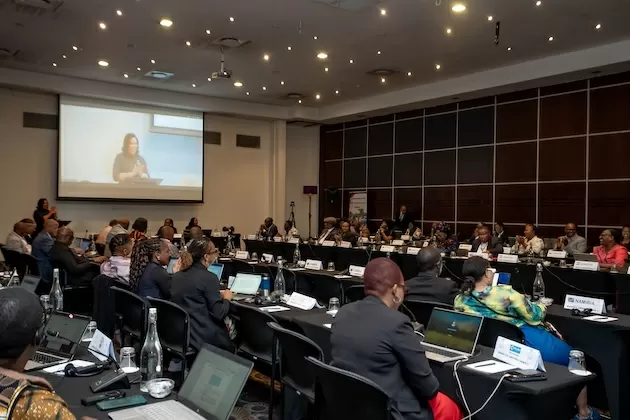
Closing the Chapter on Child Marriages: A Distant Ambition for the SADC Region
Despite significant progress in developing and passing legislation to eradicate child marriages, the Southern African Development Community (SADC) region still faces numerous challenges in putting an end to this harmful practice. According to Equality Now, a leading human rights organization, existing and emerging drivers continue to make youngsters vulnerable to child marriages, hindering efforts to close this chapter.
The SADC region, which comprises 16 countries, has the highest prevalence of child marriages in the world. Every year, an estimated 726,000 girls under the age of 18 are married off, often against their will. This not only violates their basic human rights but also has devastating consequences on their health, education, and future prospects.
One of the key drivers of child marriages in the SADC region is poverty. Many families see their daughters as a burden and marrying them off at a young age is seen as a way to reduce their financial burden. In some cases, families receive a bride price or dowry, which is seen as a source of income. This perpetuates the cycle of poverty and reinforces the belief that girls are not as valuable as boys.
Lack of education, particularly for girls, is another contributing factor. When girls are not educated, they are more likely to be married off at a young age. This is often due to a lack of awareness about the harmful effects of child marriages and the importance of education for girls. Girls who are not in school are also more vulnerable to other forms of exploitation and abuse.
Traditional and cultural practices also play a significant role in perpetuating child marriages in the SADC region. Some communities have deep-rooted beliefs that girls should be married off at a young age to preserve their purity and ensure their obedience to their husbands. These harmful beliefs are often passed down from one generation to the next, making it difficult to break the cycle.
Despite these challenges, there have been significant efforts by governments and civil society organizations to address child marriages in the SADC region. Many countries have developed and passed laws to protect children from early marriage, and some have even set minimum age requirements for marriage. However, the implementation and enforcement of these laws remain a challenge.
Moreover, as efforts to eradicate child marriages continue, new drivers are emerging, making it even more challenging to achieve the goal of ending this practice. One such driver is the COVID-19 pandemic, which has disrupted the lives of millions of people in the SADC region. With schools closed and families facing economic hardships, there is a higher risk of girls being forced into marriage to alleviate financial burdens or to ensure their safety.
In light of these challenges, it is clear that closing the chapter on child marriages in the SADC region is still a distant ambition. However, it is not an impossible one. To achieve this goal, there needs to be a multi-faceted approach that addresses the root causes of child marriages.
First and foremost, education must be a priority. Girls must have access to quality education that empowers them and helps them understand their rights. This will not only increase their chances of escaping child marriages but also equip them with the skills and knowledge to break the cycle of poverty.
Secondly, there needs to be a change in attitudes and beliefs surrounding child marriages. This can be achieved through community awareness campaigns, engaging with traditional and religious leaders, and promoting positive role models who have succeeded despite being married at a young age.
Lastly, governments must ensure the effective implementation and enforcement of laws and policies that protect children from child marriages. This includes providing support and resources to law enforcement agencies and working closely with civil society organizations to monitor and report cases of child marriages.
In conclusion, while the journey towards ending child marriages in the SADC region may be long and challenging, it is crucial that we continue to work towards this goal. Every child has the right to a childhood, an education, and the chance to reach their full potential. By closing the chapter on child marriages, we can make this a reality for millions of children in the SADC region. Let us all join hands and work towards a future where child marriages are a thing of the past.
