


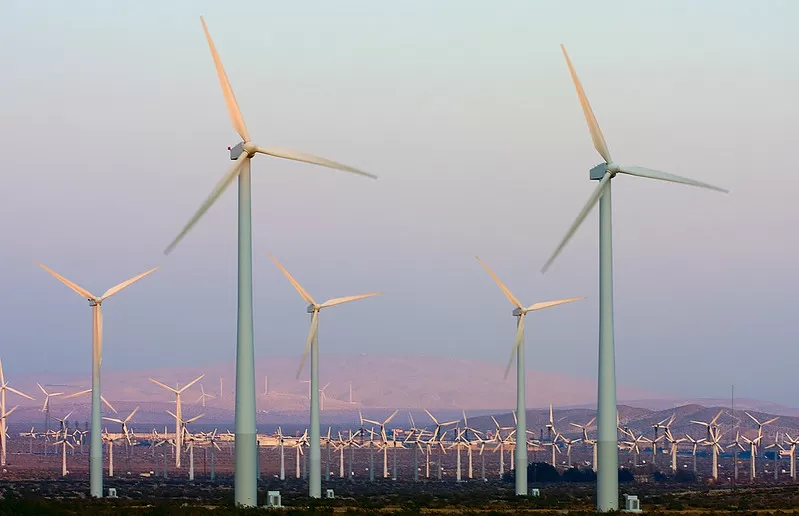
Bruce Douglas, the CEO of the Global Renewables Alliance, believes that the world is hungry for change. The need for countries to decarbonize at a faster pace has never been greater. However, despite this urgency, most developing countries’ commitments to reduce emissions, known as Nationally Determined Contributions (NDCs), are conditional on financial support. This poses a significant challenge that must be addressed in order to achieve our global climate goals.
The Paris Agreement, adopted in 2015, marked a historical moment in the fight against climate change. It was a universal call to action, with 195 countries signing on to limit global warming to well below 2 degrees Celsius above pre-industrial levels. The agreement also recognized the need for global cooperation and financial support to help developing countries mitigate and adapt to the impacts of climate change.
Since then, there has been a surge in commitments to transition towards renewable energy sources and reduce carbon emissions. Developed countries have taken the lead in this transition, with many implementing robust policies and investing heavily in renewable energy technologies. However, developing countries still face significant challenges in implementing their NDCs, primarily due to a lack of financial resources.
This is where the crucial challenge lies. The developing world needs financial support to carry out their commitments to decarbonize. Without it, their ambitious goals may remain just that – ambitious goals. The Global Renewables Alliance, led by Bruce Douglas, recognizes the importance of tackling this challenge and is working towards finding solutions.
One of the key reasons for the dependence of developing countries on financial aid is the high cost of transitioning to renewable energy sources. Unlike developed countries, where the shift to renewables is more affordable, developing countries often face barriers such as lack of infrastructure, technology, and expertise. This makes their transition a costly affair, with many unable to bear the burden alone.
To address this issue, the Global Renewables Alliance is advocating for the establishment of a fund specifically for developing countries to support their transition to renewable energy sources. This fund would be financed by developed countries, as per their commitment under the Paris Agreement. The Alliance’s CEO, Bruce Douglas, has been a vocal supporter of this idea, emphasizing the need for developed countries to fulfill their financial obligations in order to accelerate the global transition to clean energy.
But financial support alone is not enough. To truly achieve our climate goals, there needs to be a holistic approach. This includes building capacity and providing technical assistance to developing countries, enabling them to effectively implement their NDCs. It also requires developed countries to transfer technology and knowledge to developing nations, fostering a spirit of cooperation and collaboration.
The Global Renewables Alliance, under the leadership of Bruce Douglas, is also working towards creating partnerships between businesses and governments in developing countries. These partnerships would not only bring in the much-needed financial support but also help in technology transfer and skill development. This would create a win-win situation, where businesses get access to new markets, and developing countries get the support they need to transition to renewable energy.
The urgency to decarbonize our world has never been greater. Climate change is a global crisis that requires a collective effort to address. Developing countries play a crucial role in this effort, and their commitments must be supported. Bruce Douglas, along with the Global Renewables Alliance, is committed to finding solutions to the financing challenges faced by developing countries. But this is not something that can be achieved by one entity alone. It requires global cooperation and political will.
It is time for developed countries to step up and fulfill their financial commitments. We must recognize that the fight against climate change is not a burden, but an opportunity to create a more sustainable and prosperous world for all. As Bruce Douglas aptly puts it, “The world is hungry for change, and we must feed that hunger with action.” Let us join hands and work towards a cleaner, greener future for generations to come.
