


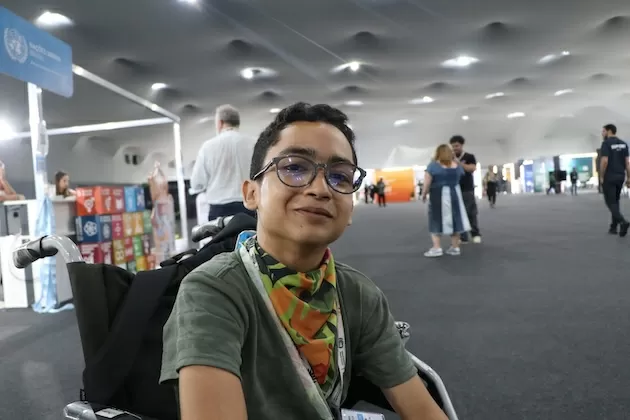
At the UN Climate Conference venue in Belém, Brazil, all eyes are on 16-year-old activist João Victor da Costa da Silva. Hailing from the city of Belém, Da Silva is passionate about making a difference in the world, and he is determined to make his voice heard by the negotiators present at the conference.
Da Silva is not your average 16-year-old. He is a young man with a mission, and that mission is to bring attention to the needs of young people with disabilities in the face of climate change. For Da Silva, this is not just a personal cause, but a matter of climate justice.
As Da Silva explains, “Climate change affects everyone, but it has a disproportionate impact on those who are already marginalized, such as young people with disabilities. We need to address this issue through the lens of climate justice, where the most vulnerable and marginalized communities are given a voice and their needs are taken into account in climate policies.”
Da Silva’s passion and knowledge on this issue are evident as he speaks to the press and negotiators at the conference. He is well-informed about the challenges faced by young people with disabilities in his home country and around the world. He is also armed with solutions and recommendations on how to address these challenges in a way that is fair and just.
One of Da Silva’s main requests to the parties at the conference is for them to include the voices of young people with disabilities in the decision-making process. “We cannot talk about climate justice without including the voices of those who are most affected. Young people with disabilities have valuable insights and experiences that can contribute to finding sustainable solutions to the climate crisis,” he emphasizes.
In addition to representation, Da Silva also calls for concrete actions that address the specific needs of young people with disabilities. This includes providing accessible and inclusive education and employment opportunities, as well as ensuring that climate adaptation and mitigation strategies consider the needs of this vulnerable group.
The young activist’s message is gaining traction and support from other attendees at the conference, including delegates from other youth organizations. “João’s passion and dedication to this cause is inspiring. As young people, we need to come together and demand that our voices are heard in these important discussions,” says fellow youth activist, Maria Fernanda.
Da Silva’s efforts have not gone unnoticed. He has been invited to speak at several side events and panels at the conference, where he continues to advocate for the inclusion of young people with disabilities in climate policies. He has also met with government representatives and policymakers to discuss his proposals and recommendations.
But Da Silva’s activism does not end at the conference. He plans to continue his efforts back in his hometown of Belém, where he hopes to raise awareness and mobilize young people with disabilities to join the fight against climate change. “We may face unique challenges, but we are not helpless. Young people with disabilities have a lot to contribute to the fight against climate change, and we must be included in the conversation,” he says.
As the UN Climate Conference in Belém comes to a close, Da Silva’s message has resonated with many, and his call for climate justice for young people with disabilities has been heard. But this is just the beginning. Da Silva’s determination and passion show that young people have the power to bring about real change and make a difference in the world. As we look towards a more sustainable future, let us not forget the voices and needs of those who are often left behind. Let us listen to the words of João Victor da Costa da Silva and work towards a more just and inclusive world for all.
