


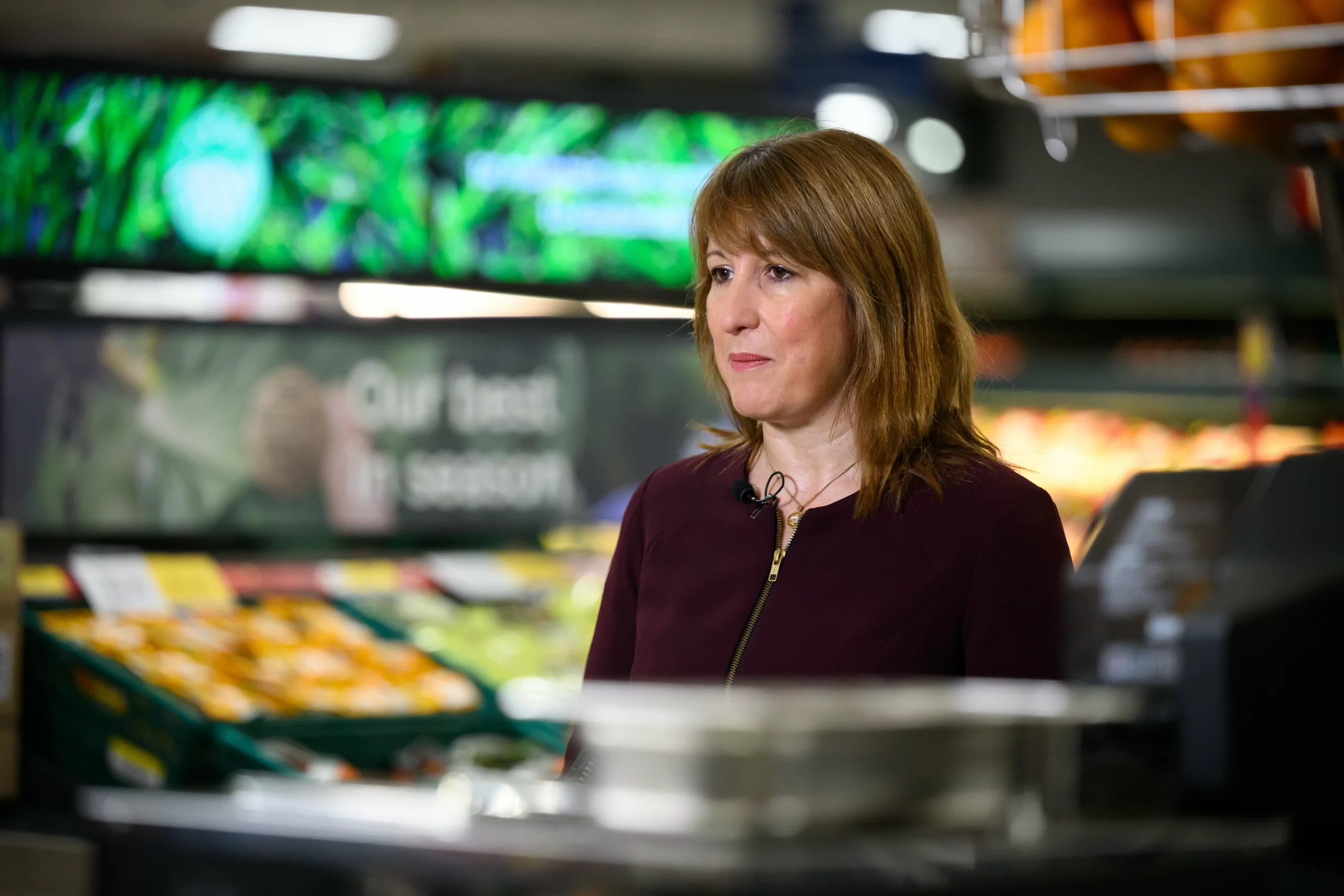
On Friday, Rachel Reeves made a visit to a Tesco in London, just days before the highly anticipated Budget announcement. However, the backdrop for this crucial event was far from ideal for the Chancellor. The Office for National Statistics revealed that the government has borrowed £10 billion more than originally forecasted this year. This is almost the exact amount of fiscal headroom that Reeves had left herself at last year’s Budget. In simple terms, she has run out of money.
As she prepares to deliver her second Budget on Wednesday, these figures only serve as further evidence of the deep financial hole that Reeves finds herself in. Nick Ridpath of the Institute for Fiscal Studies stated that this overspend is a result of lower-than-expected tax receipts and higher-than-expected borrowing by local councils and other bodies outside of central government control.
This grim data only confirms the immense economic and political challenge that Reeves faces in order to balance the books without damaging Labour’s standing in the country. Despite her well-documented U-turn on plans to raise income tax, it is clear that the Budget will still contain some difficult decisions for a population already struggling with a cost of living crisis. And with constant speculation about Reeves’ political future, as well as that of her boss Keir Starmer, many Labour MPs are bracing themselves for what could be a challenging Budget.
One backbencher told HuffPost UK, “We need her to succeed because if she flops then we end up in a doom loop about how long she’ll last and how low Keir will last. We need to try and move on from all of that. She needs to get this one right and the next one right because we want to go into the next election being able to offer voters some goodies.”
There has been much speculation about a “smorgasbord” of smaller tax increases, rather than one big one, to raise around £30 billion. However, this has many in Labour anxious about a repeat of George Osborne’s disastrous Budget in 2012. The Tory chancellor’s attempt to boost the Treasury coffers backfired spectacularly, with measures such as the infamous “pasty tax” causing a public backlash and eventually leading to a U-turn.
To avoid a similar situation, Reeves has brought back Neil Foster, a former trade union official who advised her in opposition. He is now working to identify and remove any policies that could have unintended consequences. Foster was also the original architect of Labour’s pre-election pledge to remove VAT on fuel bills, leading to speculation that the chancellor could announce this measure as a way of putting more money in people’s pockets.
In a move that will be welcomed by Labour MPs, Reeves has confirmed that the two-child benefit cap will be scrapped. However, this comes with a hefty price tag of £3 billion per year. To cover this cost, she is expected to increase the tax paid by gambling companies, despite warnings from the industry that this could lead to job losses and an increase in illegal betting.
There has been a lot of discussion among Labour MPs about the possibility of a 2% tax on those with assets over £10 million, an idea that Reeves has already rejected. However, this idea is gaining traction among an increasing number of Labour MPs, including some who are not typically seen as left-wing. One moderate backbencher stated, “We need a wealth tax because it’s the right thing to do and because it helps us where the actual threat is.” This refers to the challenge Labour faces on the left from the Green Party and the Liberal Democrats.
Another MP expressed their hopes for the Budget, saying, “We need to see demonstrable investment across the UK, including in every English region from the south west to the north east. Look at how the Tories delivered in government from 2010 to 2015 – pick a story and stick with it. If it’s infrastructure, then be bold, but don’t do lots of politically damaging little tax rises. I’d like to see big wins for clean energy infrastructure. Make the threat from reform to jobs real and tangible.”
A Whitehall source suggested that the government’s unpopularity and the widespread acceptance that the economy is struggling may actually work in Reeves’ favor. “Expectations for the Budget are low, people know it’s going to be hard,” the insider said. “The main risks for Rachel are that the figures are worse than the market has already priced in, or that some of the smaller tax
