


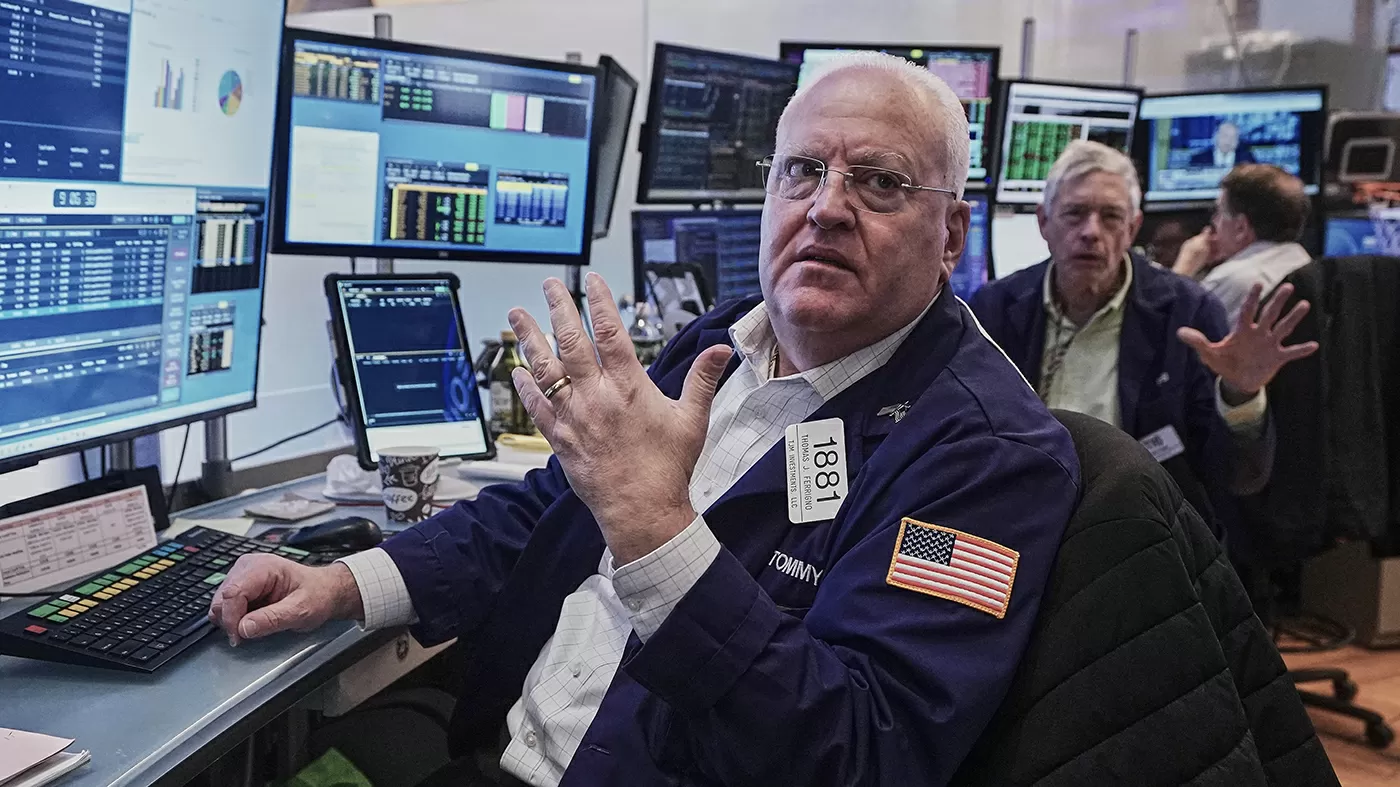
Sharp swings in financial markets have become a common occurrence in recent weeks, leaving investors feeling uneasy and uncertain. The combination of a potential artificial intelligence (AI) bubble and speculation about the Federal Reserve’s upcoming interest rate decision has sparked a wave of volatility in the markets. While the AI trade has been thriving for the past three years, since the release of ChatGPT, some are now questioning how sustainable this trend is and whether it may be nearing its peak.
The rise of AI technology has been a game-changer in the world of finance. With its ability to analyze vast amounts of data and make predictions, AI has been instrumental in helping investors make more informed decisions and generate higher returns. This has attracted significant investments, with firms pouring billions of dollars into AI research and development. However, as with any rapidly growing sector, concerns about a potential bubble are beginning to emerge.
The recent fluctuations in the market have only intensified these concerns. As share prices of AI companies soar, some investors are starting to question whether these valuations are justified or if they are simply a result of hype and speculation. With market corrections and sell-offs becoming more frequent, it’s understandable that shareholders may start to get nervous about the return on their investments.
At the same time, investors are also closely monitoring the Federal Reserve’s next move. The central bank’s interest rate decisions can have a significant impact on the markets, and investors are looking for clues to determine how the Fed’s actions will affect their portfolios. The recent uncertainty surrounding the timing and pace of rate hikes has only added to the market’s volatility.
However, despite these concerns, there is no denying the potential of AI in the finance industry. The use of AI technology has already proven to be beneficial in streamlining processes, reducing costs, and increasing efficiency. It has also been a significant factor in the success of many companies, leading to higher profits and returns for investors.
Furthermore, the AI revolution is just getting started. With advancements in technology and increasing adoption of AI in various industries, the potential for growth is immense. This means there is still a lot of room for AI companies to expand and generate more returns for their shareholders.
Moreover, the concerns about a potential bubble may be unwarranted. While the market may be experiencing some volatility, it’s important to remember that this is a normal part of any investment cycle. As with any new technology, there will be ups and downs, but ultimately the market will stabilize and continue to grow.
Additionally, the Federal Reserve’s decisions are based on various economic factors, not just the performance of AI companies. As long as the economy remains strong and stable, the Fed’s actions are unlikely to have a significant impact on the overall success of AI companies.
In conclusion, while the recent market swings and speculation about a potential AI bubble may be causing some concern among investors, it’s important to maintain a positive outlook. The AI trade has been thriving for the past three years and shows no signs of slowing down. With its potential to revolutionize the finance industry and bring about significant returns, it’s no wonder that firms are investing heavily in AI. Instead of viewing the recent volatility as a cause for alarm, investors should see it as an opportunity to capitalize on the potential of this rapidly growing sector.
