


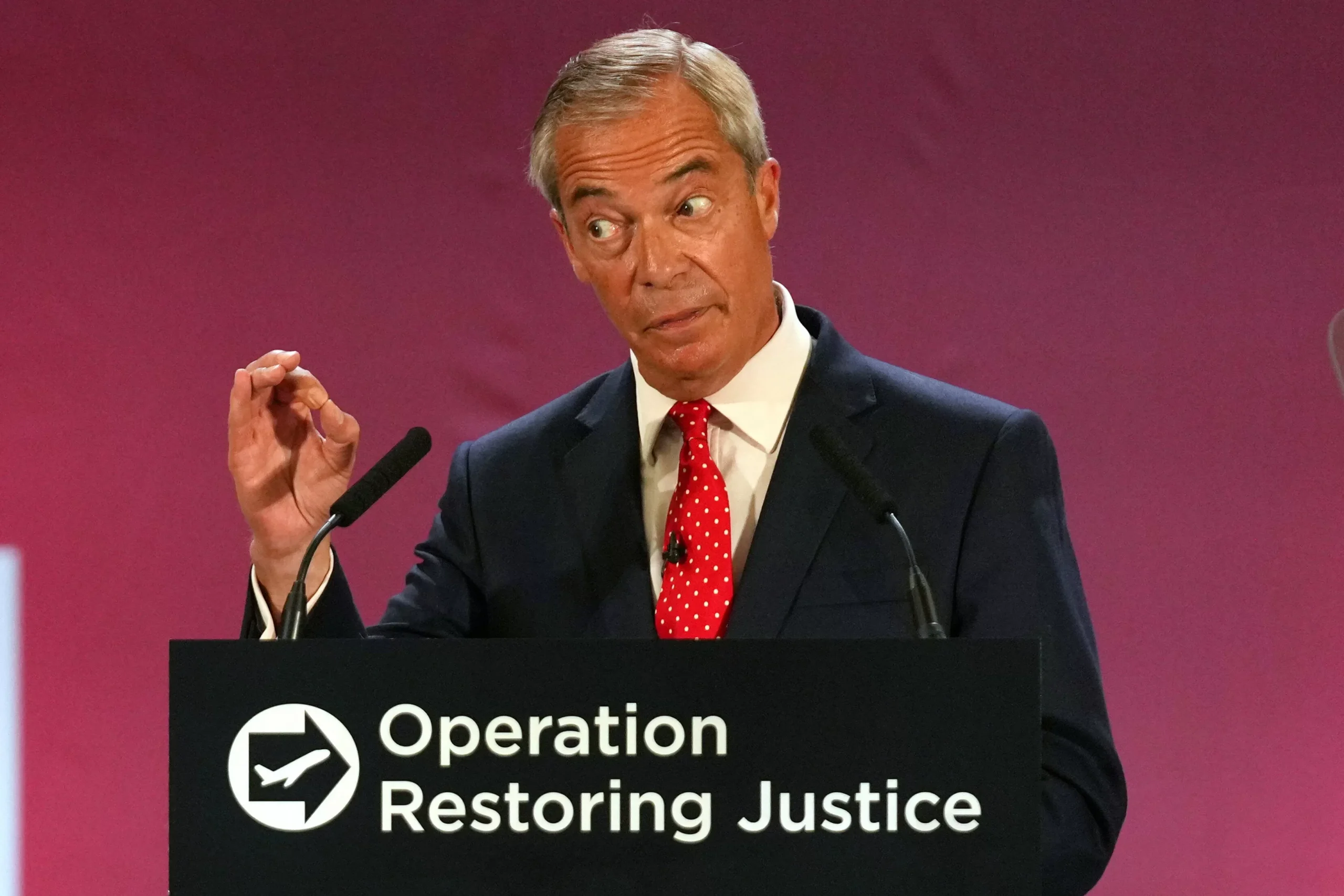
Reform Party Leader Nigel Farage: A Force to be Reckoned With
Nigel Farage, the leader of the Reform Party, has always been a controversial figure in British politics. But this week, he seemed to attract even more attention than usual – and not exactly the kind he likes.
The Guardian revealed that 28 witnesses have now accused Farage of making anti-semitic and racist remarks while he was at school. And according to the Financial Times, he told donors that he expected to make a merger or a pact with the Tories before the next election.
Farage has denied these allegations, only admitting to engaging in “banter in a playground” and dismissing the FT’s story completely. But the reports clearly got to him. In a press conference on Thursday, he launched into a furious rant against the BBC and ITV, accusing them of “hypocrisy”.
He also vehemently denied any possibility of a deal with the Conservatives, calling such allegations “ludicrous”. However, he did suggest that the Reform Party could engineer a “reverse takeover” by winning over defectors from the Tories.
Farage insisted that “a deal with them as they are would cost us votes”. And it seems that he may be right. Despite the recent racism row, the Reform Party is still ahead in the polls. In fact, a September mega-survey of 20,000 Brits by More in Common predicted that the next general election could be theirs to lose.
And the recent scandal has not put a major dent in their consistent poll lead. According to YouGov, the party is still ahead on 25% as of December 1, with Labour on 22% and the Tories on 19%. If the Reform Party were to join forces with the Conservatives, their combined votes would give them a very generous lead in the polls (44%, according to YouGov).
But Farage’s apparent dismay over the idea of working with the Conservatives ignores an obvious fact – his party is already made up of former Tories. In fact, since the 2024 general election, 21 individuals who were previously elected as Conservative MPs have joined the Reform Party.
One of the most high-profile defections was Danny Kruger, who was serving in the shadow cabinet when he crossed the floor to join Reform in September. And in April, former Tory minister Andrea Jenkyns became Reform’s first mayor when she was elected to represent Greater Lincolnshire. Other notable defectors include ex-culture secretary Nadine Dorries, former deputy party chair Jonathan Gullis, Lia Nici, and Chris Green.
In fact, the party’s first MP was Lee Anderson, the former deputy chairman for the Tories who defected to Reform in early 2024. And even Farage himself was a Tory until 1992. The party leader has even failed to rule out accepting right-wing Conservative shadow justice secretary Robert Jenrick into the fold at some point in the future.
Farage has justified accepting former Tory MPs by saying that people who have been in government can help strengthen the party. But this strategy may be backfiring, as it positions the Reform Party’s success directly against the Conservatives’ decline – even if unintentionally. In fact, just this week, when playing down reports of a merger, Farage said: “We will ensure [the Tories] cease to be a national party in May.”
But one more prominent voice has tried to draw a distinct line between the two blue parties. Reform’s head of policy, Zia Yusuf, had to reassure supporters that grassroots members would get priority over “washed up” ex-Tory MPs. He said: “I’ve had many messages from Reform grassroots worried about former Tory MPs joining our party. I want to be clear to our Reform grassroots: YOU will be prioritised in candidate selection for our next class of MPs, NOT failed former Tory MPs.”
This wariness from Yusuf about becoming the Tories 2.0 may be well-placed. Chris Hopkins, political research director of pollsters at Savanta, told HuffPost UK that the Reform Party risks starting to look like the same sort of party that the public is rejecting.
He said: “Nigel Farage remains Reform’s greatest, and arguably sole, electoral weapon. It is he, and not really the infrastructure behind him, increasingly comprising of former Tories, that cements Reform’s appeal as an anti-establishment force. Providing he remains dominant at the top of the party, Reform will
