


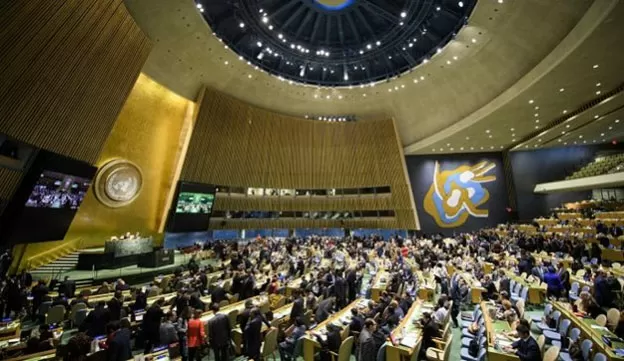
From its inception, the UN General Assembly (UNGA) has strived to improve its working methods, constantly keeping in mind the words of former President of the General Assembly, Ambassador Samir Shihabi of Saudi Arabia, who warned of the increasing length of sessions and the tendency towards prolonged debates back in 1949. Over the years, the General Assembly has taken significant steps to streamline its procedures and increase the efficiency of its sessions, ultimately working towards fulfilling its mandate of maintaining international peace and security.
The General Assembly is the main deliberative, policymaking and representative organ of the United Nations. With 193 member states, it is the largest and most diverse body within the UN system. As such, it is faced with the challenging task of addressing a wide range of global issues while ensuring that the voices of all its members are heard. This is why it constantly strives to improve its working methods, to ensure that all member states can actively participate in the decision-making process.
One of the key tools used by the General Assembly to improve its working methods is the adoption of resolutions and decisions. These are formal expressions of the views of the member states on a particular issue. By adopting resolutions and decisions, the General Assembly not only sets out its position on a topic, but it also provides a basis for future action. Over the years, the General Assembly has adopted numerous resolutions and decisions aimed at improving its working methods and making its sessions more efficient.
One notable example is the adoption of the “Revitalization of the work of the General Assembly” resolution in 1991. This resolution aimed to streamline the work of the General Assembly by reducing the number of agenda items and committees, as well as limiting the length of statements delivered by member states. It also introduced the practice of thematic debates, which allowed for in-depth discussions on specific topics, thus reducing the need for lengthy debates during the general debate.
Another important aspect of the General Assembly’s efforts to improve its working methods is the establishment of the Main Committees. These are six committees that deal with different areas of the UN’s work, including disarmament, economic and financial matters, and human rights. By dividing the workload among these committees, the General Assembly is able to focus on specific issues and increase its productivity. This also allows for greater participation from all member states, as smaller committees are more conducive to meaningful discussions and negotiations.
In addition to these measures, the General Assembly has also made significant strides in utilizing technology to improve its working methods. The adoption of electronic voting in 2001 has significantly reduced the time spent on voting during sessions, allowing more time for discussions and debates. The establishment of a webcasting system has also provided a more transparent and accessible platform for member states to follow the proceedings of the General Assembly.
Furthermore, the General Assembly has placed great importance on strengthening its relationship with other bodies within the UN system, such as the Security Council and the Economic and Social Council. Through regular consultations and joint meetings, these bodies are able to coordinate their actions and streamline their work, ultimately enhancing the impact of the UN in addressing global challenges.
Under the leadership of current President of the General Assembly, H.E. Mr. Tijjani Muhammad-Bande of Nigeria, the General Assembly continues to work towards further improving its working methods. As part of his priorities for the 74th session, President Muhammad-Bande has emphasized the need for multilateralism and inclusive decision-making, with a focus on delivering tangible results for the people on the ground. By engaging in meaningful dialogue and promoting cooperation, the General Assembly is well on its way to achieving its goals of promoting peace, prosperity, and sustainable development for all.
In conclusion, the UN General Assembly has come a long way since its inception, with the goal of improving its working methods always at the forefront. Through the adoption of resolutions, the establishment of Main Committees, and the use of technology, the General Assembly has made great strides in streamlining its procedures and increasing its efficiency. As it continues to adapt to the changing global landscape, the General Assembly remains committed to fulfilling its mandate and ensuring that the voices of all its member states are heard.
