


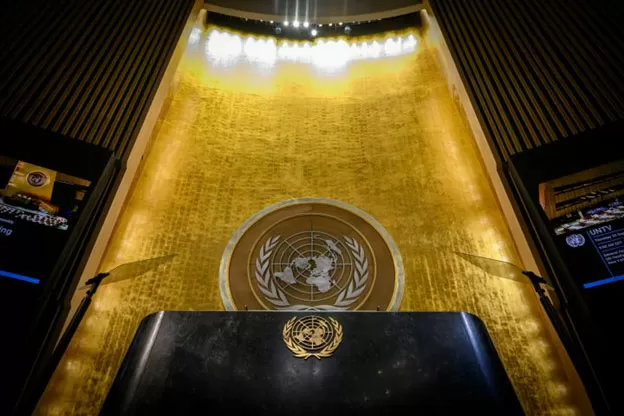
Let’s face it, the United Nations (UN) has been facing some major financial challenges lately. In fact, the organization is not just facing a mere financial crisis, it is actually broke – with arrears sitting at a staggering $1.586 billion. And while many may argue that this has been a long time coming, with the UN constantly struggling to reform and stay relevant, the current situation has forced the organization’s hand to finally take action and push for real change.
But let’s not be overly cynical and assume that the UN only decided to reform because it was forced to do so due to its financial troubles. Instead, let’s focus on the positive and see this as an opportunity for the UN to become a more efficient and effective international organization.
It’s no secret that the UN has been facing criticism for its bureaucracy and inefficiency for a long time. With multiple agencies, overlapping mandates, and a complex decision-making process, it is no wonder that it has been struggling to keep up with the changing needs and challenges of the world.
However, the current financial crisis has served as a wake-up call for the UN to finally address these issues and take concrete steps towards reform. The organization’s leadership has recognized the urgent need for change and has been actively pushing for initiatives to streamline its operations and improve its effectiveness.
One of the major reform efforts is the Secretary-General’s plan to restructure the UN, which includes simplifying and consolidating the different agencies and departments under one cohesive structure. This will not only reduce duplication of work and increase efficiency, but also save costs in the long run.
Another crucial step towards reform is the focus on results and accountability. The UN has been criticized for not delivering on its promises and for lacking transparency and accountability. To address this, the organization has initiated a results-based management system, which will ensure that its activities are aligned with its goals and objectives, and that progress is measured and reported on.
Moreover, the UN is also looking to diversify its funding sources, with a greater emphasis on partnerships with the private sector and other non-traditional donors. This will not only help alleviate some of the financial pressures but will also bring new perspectives and resources to the table.
But perhaps the most significant aspect of this reform process is the engagement of member states. The financial crisis has brought to light the need for stronger partnerships and cooperation among member states. The UN cannot function without the support and commitment of its member states, and it is heartening to see that many of them are actively involved in the reform efforts and committed to finding sustainable solutions.
The fact is, the UN cannot continue to operate the way it has in the past. The world is changing rapidly, and the UN must adapt to remain relevant and effective. The current financial crisis has only highlighted the urgency of this need for change.
So let’s not lament the UN’s brokenness but instead focus on the opportunities it presents. This is a chance for the organization to shed its image of being slow and bureaucratic and emerge as a lean, dynamic, and efficient organization that is better equipped to tackle the challenges of the 21st century.
The UN may be broke, but it is not broken. With bold and decisive action, and the support of its member states and other stakeholders, the UN can emerge from this crisis stronger and better than ever. The reform efforts must continue, and we must all do our part in supporting and promoting positive change within the UN.
Let’s just say the quiet part out loud – the UN is not reforming because it’s suddenly inspired by efficiency, it’s reforming because it has no other choice. And that’s not necessarily a bad thing. It’s an opportunity for the UN to become the global organization that we need it to be – one that is able to effectively address the pressing issues of our time and create a better world for all. Let’s seize this opportunity and work together towards a stronger and more successful United Nations.
