


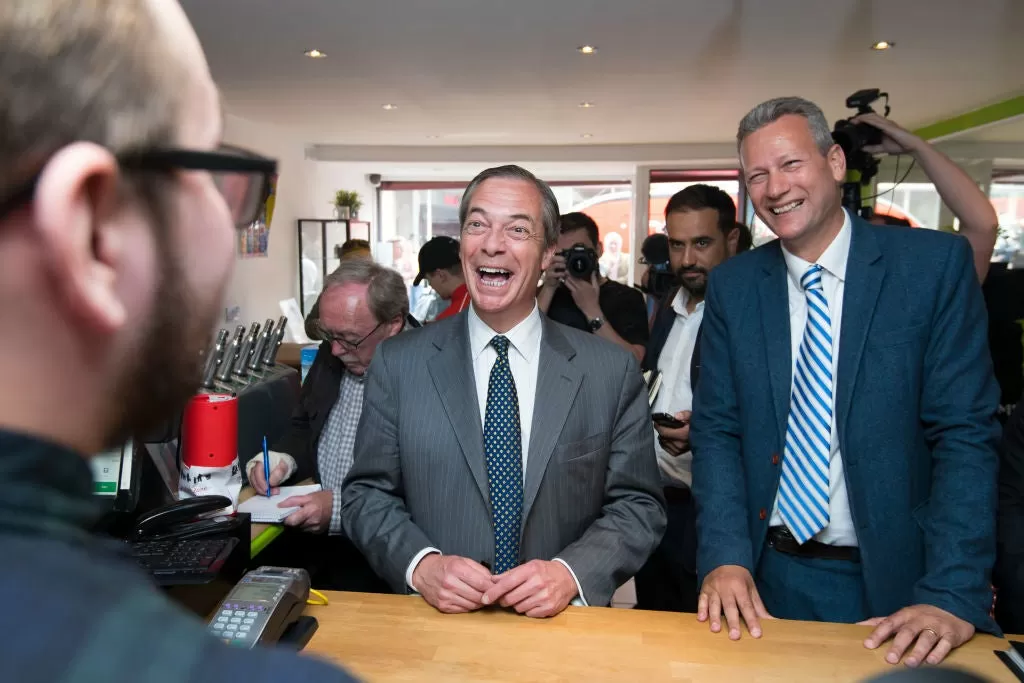
Nigel Farage and Nathan Gill Campaign for the Brexit Party in 2019: A Call for Vigilance in Protecting Our Democracy
As the world watched with bated breath, the United Kingdom made the historic decision to leave the European Union in 2016. And at the forefront of this movement was the charismatic and controversial figure of Nigel Farage, who spearheaded the campaign for Brexit. Fast forward to 2019, and Farage was once again making headlines, this time as the leader of the newly formed Brexit Party, alongside his ally Nathan Gill.
However, recent events have cast a shadow over the Brexit Party and raised concerns about the potential threat to our democracy. In May 2021, Nathan Gill, the former leader of the party in Wales, was sentenced to 10-and-a-half years in prison for accepting bribes from Russia. He pleaded guilty to eight counts of bribery between 2018 and 2019, admitting that he had accepted substantial sums to make pro-Russian remarks both to the media and to the European Parliament when he was a MEP for UKIP and the Brexit Party.
This shocking revelation has sparked a call for vigilance in protecting our democracy, with cabinet minister Steve Reed declaring that voters should be “worried” about the prospect of Nigel Farage becoming prime minister. Reed, who is leading an independent review of foreign financial interference in UK politics, has called for Farage to launch a full investigation into any other links between his party and the Kremlin.
In an interview with HuffPost UK, Reed expressed his surprise that Farage has not taken any action to investigate the matter. He stated, “I think it’s very surprising that Farage hasn’t ordered an internal party investigation into what was going on with that individual and the way in which he was acting in hock to the Kremlin.”
Reed also raised concerns about Farage’s personal sympathies towards Russian President Vladimir Putin, pointing out that Farage had appeared on the Russian propaganda TV channel Russia Today. He further questioned whether Farage would be a threat to national security if he were to become prime minister.
These concerns are not unfounded, as the case of Nathan Gill has shown that foreign interference in our democracy is a very real threat. Reed emphasized the need for a thorough investigation, stating, “We don’t fully understand what went on and I would once again push Nigel Farage to open an investigation in his own party into how it could be that the leader of Reform UK is now doing a 10-year stretch in jail for treachery to the United Kingdom.”
In response to these calls for an investigation, Farage has stated that he “doesn’t have a police force” and therefore cannot launch an internal investigation. However, this response has been met with criticism, with Reed stating, “If that doesn’t bother Nigel Farage enough to want to run an investigation, then I think questions need to be asked about why Nigel Farage doesn’t want to find out what went wrong in that case.”
In light of these events, the government has launched an independent review of foreign interference in UK politics, to be chaired by former top civil servant Philip Rycroft. In a statement to the Commons, Reed emphasized the need to remove the stain of foreign interference from our democracy, stating, “The facts are clear. A British politician took bribes to further the interests of the Russian regime, a regime which forcefully deported vulnerable Ukrainian children and killed a British citizen on British soil, using a deadly nerve agent.”
This review has been welcomed by Labour MP Rachel Blake, who stated, “The Nathan Gill case was a shocking breach of public trust and a clear warning about the threat of foreign interference. Our democracy is under threat and I welcome the government’s decision to launch this review. It’s right the government is acting now to strengthen safeguards and make absolutely clear that British democracy is not for sale.”
As we move forward, it is crucial that we remain vigilant in protecting our democracy from foreign interference. The case of Nathan Gill serves as a stark reminder of the potential consequences of turning a blind eye to such threats. We must come together as a society to ensure that a case like this never happens again.
In the words of Steve Reed, “The independent review will work to remove that stain.” Let us hope that this review will bring about the necessary changes to safeguard our democracy and prevent any further breaches of public trust. And let us also hope that Nigel Farage will take the necessary steps to address any potential links between his party and the Kremlin
