


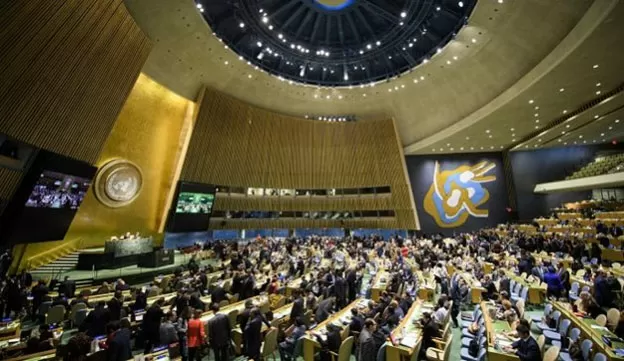
In 1949, the United Nations General Assembly (UNGA) recognized the need to improve its working methods in order to effectively address the pressing issues of the world. Since then, the UNGA has made significant strides towards achieving this goal, guided by the words of the legendary Ambassador Samir Shihabi of Saudi Arabia, who served as President of the General Assembly in the 1970s. With his leadership, the UNGA has become a more efficient and effective forum for international cooperation and decision-making.
The UNGA was established in 1945 as the main deliberative, policymaking, and representative organ of the United Nations. It consists of all 193 member states, making it the most democratic and inclusive body within the UN system. The UNGA has the power to discuss and make recommendations on any issue within the scope of the UN Charter, including peace and security, development, human rights, and international law.
However, in its early years, the UNGA faced several challenges, including lengthy sessions and prolonged debates that hindered its ability to address urgent global issues. In response to these challenges, the UNGA has continuously worked towards improving its working methods, with the aim of making its sessions more concise, effective, and result-oriented.
One of the major changes introduced by the UNGA was the adoption of a more structured agenda. This enabled the UNGA to prioritize and focus on key issues, thereby avoiding unnecessary and time-consuming debates. In addition, the UNGA has also established various committees and subsidiary bodies to address specific issues, such as the First Committee on Disarmament and International Security and the Third Committee on Social, Humanitarian, and Cultural Issues. These committees have helped to streamline discussions and facilitate better decision-making.
Another significant improvement made by the UNGA is the introduction of the “silence procedure.” This procedure allows the UNGA to adopt resolutions without a vote, as long as there are no objections from any member state. This has greatly reduced the time and effort required to adopt resolutions, thereby enabling the UNGA to address a larger number of issues in a shorter period of time.
Furthermore, the UNGA has also introduced the practice of thematic debates, which focus on a specific theme or issue of global concern. These debates provide an opportunity for member states to engage in a more focused and interactive discussion, leading to more concrete and actionable outcomes. Thematic debates have also increased the participation of civil society organizations, academia, and other stakeholders in the work of the UNGA, making it a more inclusive and transparent forum.
The UNGA has also made efforts to enhance its communication and outreach activities. This includes live webcasting of its sessions, press briefings, and social media engagement. These efforts have helped to increase public awareness and understanding of the UNGA’s work, as well as promote greater accountability and transparency.
The UNGA has also taken steps to improve the efficiency of its decision-making process. This includes limiting the number of resolutions to be adopted during each session and reducing the number of speakers during debates. These measures have helped to avoid repetition and redundancy, and have saved valuable time and resources.
In addition, the UNGA has improved its relationship with other UN bodies, such as the Security Council and the Economic and Social Council, through increased cooperation and coordination. This has enabled the UNGA to better address issues of peace and security, development, and human rights, in a comprehensive and coordinated manner.
The UNGA’s efforts to improve its working methods have been widely recognized and appreciated by member states and the international community. It has become a more dynamic and responsive forum, capable of addressing the complex and evolving challenges of the world. The leadership of Ambassador Samir Shihabi of Saudi Arabia played a crucial role in this transformation, and his legacy continues to inspire and guide the UNGA in its work.
In conclusion, the UNGA has come a long way since its inception in 1945. With its continuous efforts to improve its working methods, it has become a key platform for international cooperation and decision-making. As we look towards the future, the UNGA must continue to adapt and evolve, in order to effectively address the ever-changing global landscape. It is through its commitment to continuous improvement that the UNGA will remain a vital force for peace, development, and human rights in the world.
