


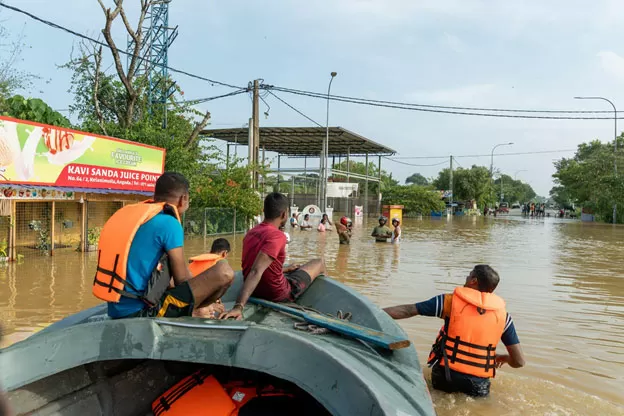
In late November, Cyclone Ditwah made landfall in Sri Lanka and southern India, bringing with it heavy rainfall that triggered widespread flooding and devastating landslides. The storm caused extensive damage to civilian infrastructure and resulted in a significant loss of life. The impact on communities has been severe, with limited access to essential services, while humanitarian agencies face numerous challenges in providing aid and assistance.
The cyclone, which originated in the Bay of Bengal, rapidly intensified before making landfall in Sri Lanka. The country, already struggling with the effects of the ongoing COVID-19 pandemic, was ill-prepared for the destructive force of Cyclone Ditwah. The heavy rains caused rivers to overflow, submerging entire villages and displacing thousands of people. The strong winds uprooted trees and caused widespread power outages, leaving many without electricity and communication.
The situation was no different in southern India, where the cyclone caused widespread destruction and loss of life. The state of Tamil Nadu was particularly hard hit, with reports of landslides and flooding in several districts. The coastal areas were also severely affected, with many fishing communities losing their homes and livelihoods.
The aftermath of Cyclone Ditwah has been devastating, with many families left homeless and struggling to survive. The destruction of vital infrastructure, such as roads, bridges, and communication networks, has made it difficult for aid and relief to reach the affected areas. The lack of access to clean water, food, and medical assistance has further worsened the situation, leaving many vulnerable and in urgent need of help.
Humanitarian agencies have been working tirelessly to provide aid and assistance to those affected by the cyclone. However, they too have faced numerous challenges in their efforts. The heavy rains and strong winds have made it difficult for relief teams to reach the affected areas, and damaged infrastructure has hindered their movements. The ongoing pandemic has also posed additional challenges, with the need to adhere to safety protocols and social distancing measures.
Despite these challenges, the response from both local and international humanitarian organizations has been commendable. They have been working round the clock to provide essential supplies, such as food, water, and shelter, to those in need. Medical teams have been deployed to provide much-needed healthcare services, while search and rescue teams have been working tirelessly to locate and assist those trapped in the aftermath of the cyclone.
The government of Sri Lanka and India have also been actively involved in providing relief and support to the affected communities. They have set up emergency shelters and relief centers to provide temporary housing and basic necessities to those who have lost their homes. The armed forces have also been mobilized to assist in rescue and relief efforts, showcasing their unwavering commitment to serving their people in times of crisis.
In the face of this natural disaster, the resilience and strength of the affected communities have been truly remarkable. Despite losing their homes and possessions, they have shown great courage and determination in rebuilding their lives. The spirit of unity and solidarity has been evident, with people coming together to support and help each other in any way they can.
As we move forward from the aftermath of Cyclone Ditwah, it is essential to remember the lessons learned and take necessary measures to better prepare for future disasters. This includes investing in disaster-resistant infrastructure, early warning systems, and disaster management plans. It is also crucial to address the underlying issues, such as climate change, that contribute to the severity of natural disasters.
In conclusion, while Cyclone Ditwah has caused immense devastation and loss, it has also brought out the best in humanity. The outpouring of support and aid from individuals, organizations, and governments has shown that in times of crisis, we can come together and make a positive difference. Let us continue to support and uplift the affected communities and work towards building a more resilient and prepared society for the future.
