

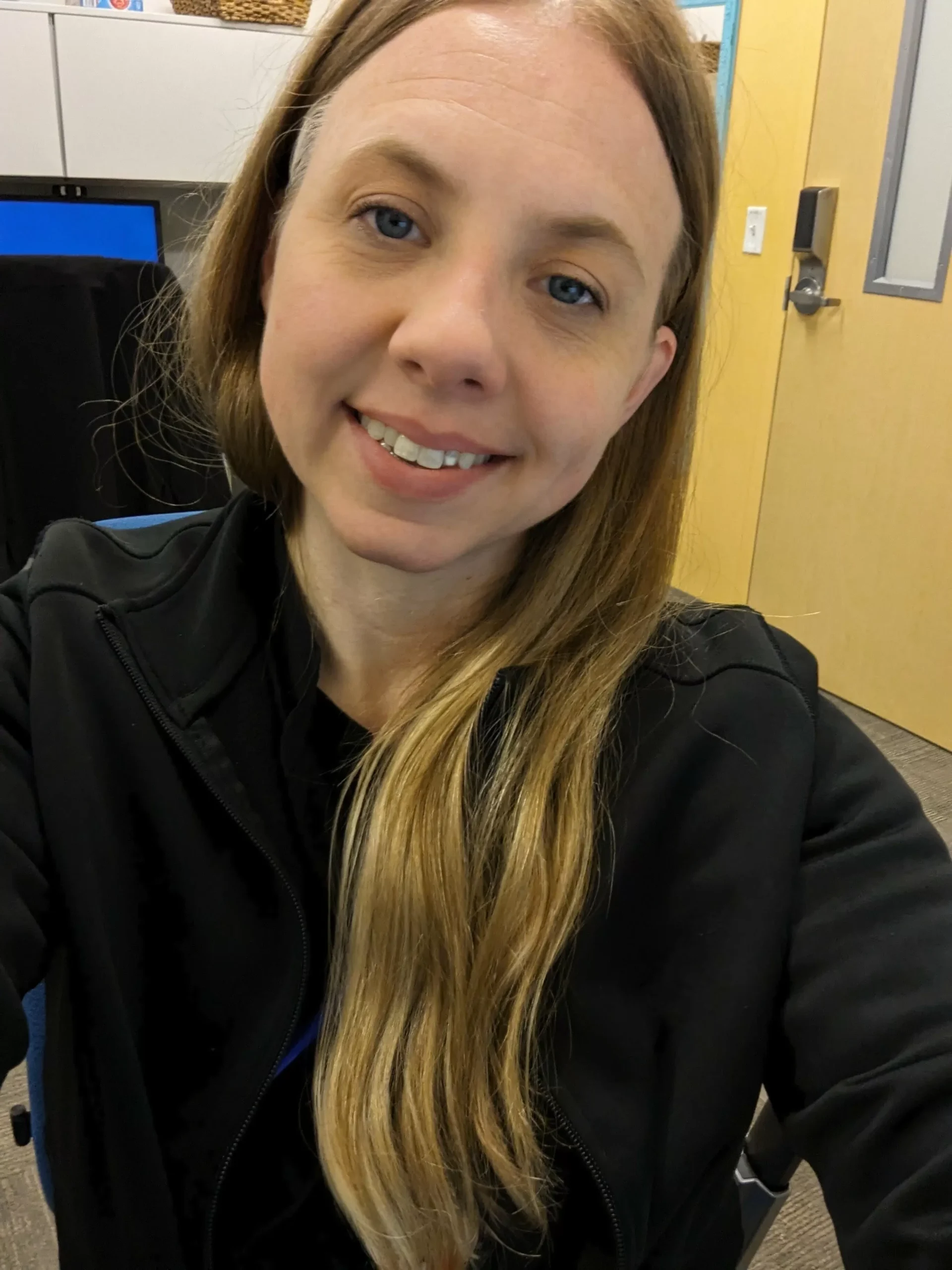
Working as a nurse in a hospital is an experience that is almost impossible to fully understand unless you have lived it. It is a career that involves immense physical, mental and moral exhaustion, making it hard to explain to those who have not experienced it firsthand. I, as an author, know this all too well as I have spent many years working as a nurse in various roles and settings. But there is one particular moment that stands out to me – a moment captured in a photograph of me in the office, during my time as a house supervisor.
When I first graduated from nursing school, I knew it was going to be difficult, but I didn’t realize just how challenging it would be. My first job in a medical-surgical unit showed me just how intense the workload can be. We were expected to care for eight patients each, while also juggling administrative tasks and charting. Breaks were rare and going to the bathroom was a luxury. It was physically and mentally draining, leaving me unable to function during my days off.
But the most difficult part was the moral exhaustion. I remember one instance where a fellow nurse accidentally gave the wrong medication to a patient due to the overwhelming workload. Instead of addressing the root cause and finding a solution, our manager blamed the nurse for not being capable enough. That was when I realized that hospital culture often prioritizes endurance over honesty and safety. Speaking up about real problems was seen as a burden, and vulnerability was not welcomed. This moment stayed with me for years, highlighting the disconnect between what is said and what is actually practiced in the healthcare industry.
After a few years, I moved on to work in paediatrics. While the patient load was better, the emotional toll was still immense. Children can deteriorate quickly, and parents often need reassurance and explanations of what is happening. But when the pressure mounted, communication was always the first thing to suffer. I vividly remember one night when a child went into surgery and never returned to the room. The parents were left waiting, unaware that their child had been transferred to the intensive care unit. I had to break the news to them, and it was heartbreaking. I couldn’t help but question why no one had kept them informed. The answer I received was that “someone, somewhere, was handling it.” But that didn’t feel like an answer at all.
Feeling disillusioned, I took on a leadership role as a house supervisor. I thought that if I could understand the system at a higher level, maybe I could make a difference and fix what was breaking. However, I soon realized how powerless we truly were in the face of bureaucracy and red tape. I was stuck in between floor nurses and upper management, constantly having to justify my decisions and unable to provide the support that was needed. Enforcement of policies that I didn’t believe in was the hardest part of the job. I remember one night when a family begged me to let both of their children stay with their hospitalized sibling, as one couldn’t be left alone at home. But I was forced to separate the family, just because the rulebook said so. That was the moment I knew I wasn’t practicing nursing anymore – I was enforcing rules that lacked human sensibility.
Burnout crept up on me slowly, manifesting in physical symptoms such as chest tightness and panic attacks. I tried to seek help, but the healthcare system failed me yet again by not recognizing or acknowledging the dangers of burnout. That was when I realized I needed a change. I didn’t need to switch units or specialties; I needed a new life.
I left the hospital and embarked on a journey of building a peaceful life in the woods. I became a public health nurse in a rural community, where I finally found the fulfilling aspect of nursing that I had been seeking for so long. I started to make real connections with the people I was serving, helping them with water access, housing instability, and other issues. But just when I thought I had found my place, funding cuts and political upheavals threatened to dismantle the public health system that I was a part of. The pandemic only added to the chaos, and it was clear that I couldn’t keep practicing nursing in a system that was falling apart.
I may have stepped to the side of nursing, but I have not left the profession entirely. I am still a nurse at heart, and I always will be. But I had to remove myself from the toxic
