


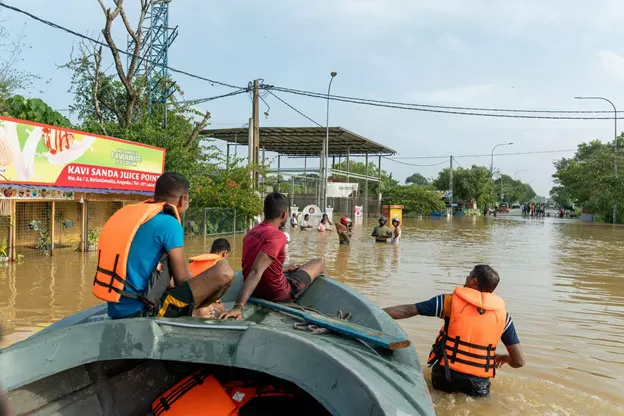
In late November, Cyclone Ditwah made landfall in Sri Lanka and southern India, leaving behind a trail of destruction and devastation. The powerful storm, with winds reaching up to 120 km/h, brought heavy rainfall that triggered widespread flooding and devastating landslides. As a result, several communities in the affected areas have been severely impacted, with limited access to essential services. The storm also caused extensive damage to civilian infrastructure and resulted in a significant loss of life.
The cyclone, which formed in the Bay of Bengal, made its way towards the southern coast of India before hitting Sri Lanka. It is estimated that over two million people were affected by the storm, with thousands of families being displaced from their homes. The aftermath of Cyclone Ditwah has been heartbreaking, with reports of homes being destroyed, roads and bridges being washed away, and crops being ruined. The devastation caused by the cyclone has left many struggling to cope with the aftermath and rebuild their lives.
One of the most significant challenges faced by the affected communities is the limited access to essential services. With homes and infrastructure being destroyed, many are left without access to clean water, electricity, and proper sanitation. This has not only made it challenging to meet their basic needs but has also increased the risk of waterborne diseases. The situation is particularly dire for vulnerable groups such as children, the elderly, and people with disabilities.
The humanitarian agencies working in the affected regions are also facing numerous challenges in their relief efforts. With roads and bridges being washed away, reaching the affected areas with aid has become a daunting task. The severe weather conditions have also made it difficult for helicopters to conduct rescue operations. Additionally, the ongoing COVID-19 pandemic has added another layer of complexity to the relief efforts. The need to maintain social distancing and follow safety protocols has made it challenging to provide aid and assistance effectively.
Despite these challenges, the response from the international community has been heartening. Immediately after the cyclone, several countries, including neighboring India, rushed to provide aid and support. The United Nations and other humanitarian organizations have also launched emergency responses to assist the affected communities. The Sri Lankan and Indian governments have taken swift action in coordinating rescue and relief efforts, and providing temporary shelters for those who have lost their homes.
Moreover, the resilience and spirit of the affected communities have been truly inspiring. Even in the face of such devastation, they have come together to support each other and help those in need. The acts of kindness and generosity shown by individuals and organizations have been heartwarming. It is this unity and determination that will help these communities rebuild and recover from the aftermath of Cyclone Ditwah.
The recovery process will undoubtedly be a long and challenging journey for the affected communities. However, with the support of the international community and the determination of the affected people, we can overcome this crisis. It is essential for us to continue providing aid and support to these communities, not just in the immediate aftermath of the cyclone, but in the long-term as they try to rebuild their lives.
The devastating impact of Cyclone Ditwah serves as a reminder of the urgent need to address climate change. The increasing frequency and intensity of natural disasters like cyclones, hurricanes, and floods are a clear indication that we need to take immediate action to protect our planet. We must also work towards building more resilient communities that can better withstand such natural disasters.
As we look towards the future, let us not forget those who have been affected by Cyclone Ditwah. It is our collective responsibility to stand in solidarity with them and help them recover and rebuild. Let us also remember that in the face of adversity, it is the human spirit and the power of unity that can help us overcome any challenge.
