


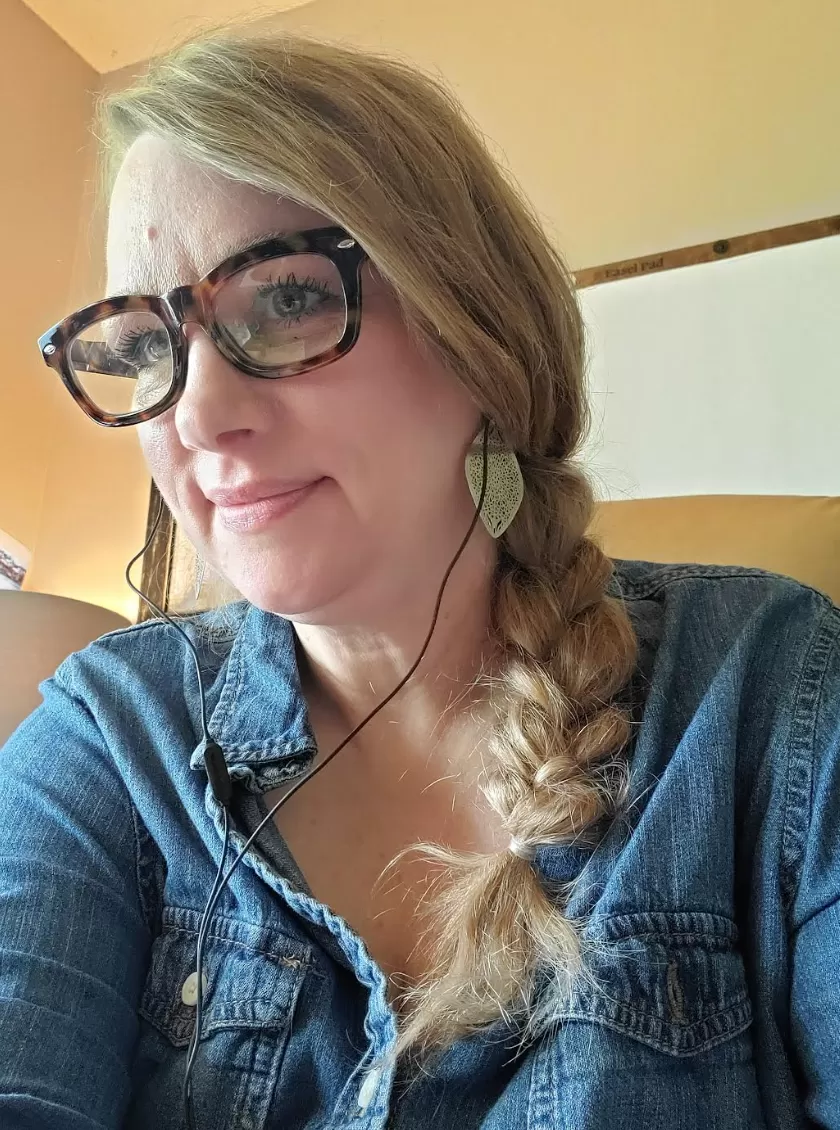
The Fog of Forgetting: My Journey with Neurodegenerative Disease
I should’ve known it was coming for me – the fog, the forgetting, the cognitive impairment. My father, his brother, their mother, their grandmother all had it… I just didn’t expect how it would come for me.
At 54, it seems my forgetting is linked to a neurodegenerative disease. But even before my own memory and language issues began, I’d written about and wondered what my own neurological inheritance might be.
In 1981, I spent several afternoons in the peacefully lamp-lit office of an elderly, retired professor and child psychologist and underwent a variety of aptitude tests and personality assessments. It turned out I was a “highly sensitive” 5th grader with the vocabulary of a high school senior.
While most of the kids in my Midwestern neighborhood rode their bikes, played flag football and Frogger, I was tucked away reading book after book. When I ran out of books, I’d spend entire afternoons seated cross-legged on the floor, poring over the pages of a set of hand-me-down Encyclopedia Britannicas. I dog-eared pages. I made notes in the margins on the Dalai Lama, the Great Alaska Earthquake of 1964 that registered a 9.2 on the Richter scale, and gladiolus — one of August’s (my) birth flowers that my paternal grandmother grew in her 4-H award-winning garden.
I’ve loved and collected words like treasures for as long as I can remember.
In March 2023, I started experiencing marked muscle weakness in several areas, most noticeably my left forearm. With any exertion, the muscles rippled beneath the skin, and my finger strokes on the keyboard weren’t landing as efficiently as they once had. Words were missing letters: Knowledge. Language. Marriage.
My struggle with short-term memory increased. I mixed up words in conversation, and it felt like words I’d used frequently had been stowed away on shelves in my brain that I could no longer reach. Then came things like walking out of the kitchen with the faucet running, leaving the refrigerator door open, forgetting the stove burners were on and, recently, putting a container of yogurt in the drawer with my Pyrex lids.
The next few months brought resting tremors and trouble swallowing. My speech grew sluggish in the evenings when I was most fatigued. Now, I’m also experiencing more consistent, significant autonomic dysfunction, with a myriad of other symptoms.
In May 2024, almost exactly two years after I’d completed my midlife MFA in creative writing at 50, I was diagnosed with mild to moderate cognitive impairment. This brain – which I’ve filled with 10 years of study in higher education, ideas for essays, books yet to be written, language, memories of my children, their children, my parents when we were all much younger – is forgetting.
The first results read something like, “On the WMS-IV Logical Memory Subtest, immediate recall for two short stories was in the low average range. Delayed recall was impaired. Retention of information was impaired. On a 15-word list-learning task (RAVLT), she demonstrated a fluctuated learning curve and an impaired total learning score. Immediate recall was impaired. Delayed recall was impaired. Phonemic verbal fluency (FAS) was impaired. Semantic verbal fluency was impaired.” Impaired. Impaired. Impaired. Where did my words go?
The most recent results revealed “frontal subcortical dysfunction likely consistent with Multiple System Atrophy” – the neurodegenerative disease I was diagnosed with late last summer. Multiple System Atrophy, or MSA, is like if the worst forms of Parkinson’s Disease and ALS bore offspring. There’s no cure, and little treatment. It’s considered a terminal diagnosis with a life expectancy of five to eight years from symptom onset, maybe 10 if you’re… lucky? I’ve been told and read that every patient progresses differently. I’m nearing the three-year mark since my initial symptoms started.
I rebel against the forgetting, rebel against the losing – when I remember to. I pray. I meditate. I play word games on my cell phone well into most nights, as I’ve lost the ability to sleep for more than an hour or two in a stretch. Scrabble
