


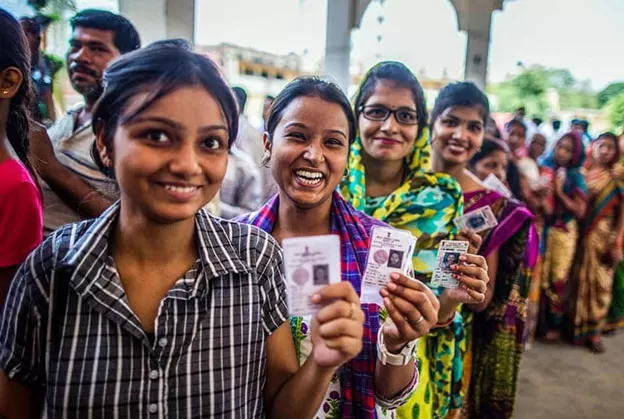
As the world continues to grapple with political and social challenges, the concept of democracy is facing increasing pressure. Many countries are experiencing a decline in trust in their governments, while others are struggling to uphold democratic values and principles. In this uncertain global landscape, the idea of a citizen-elected world parliament is gaining significant support.
A recent global survey commissioned by Democracy Without Borders has revealed that citizens in a vast majority of countries are in favor of establishing a citizen-elected world parliament to address global issues. The survey was conducted across 101 countries, representing 90% of the world’s population. This overwhelming support for a world parliament highlights the growing desire for more democratic and inclusive global governance.
The survey results are a clear indication that people around the world recognize the need for a strong and effective global institution that can address pressing global issues such as climate change, human rights violations, and economic inequalities. With the rise of globalization, these issues require a unified and coordinated approach, which can only be achieved through a world parliament.
The idea of a world parliament is not a new one. It has been discussed for decades, but the recent survey results show that it has gained significant momentum in the public consciousness. The concept of a world parliament is based on the principle of democratic representation, where citizens from all countries have an equal say in global decision-making processes. This would ensure that the interests and concerns of all people, regardless of their nationality, are taken into account.
One of the key benefits of a world parliament is its potential to promote peace and stability. As countries become more interconnected, the decisions made by one nation can have far-reaching consequences for others. A world parliament would provide a platform for open and transparent dialogue, allowing for the peaceful resolution of conflicts and disputes.
Additionally, a world parliament would also help to address the growing distrust in international law. In recent years, we have witnessed a rise in authoritarian regimes and a disregard for international norms and agreements. A citizen-elected world parliament would not only uphold the rule of law but also hold governments accountable for their actions on a global scale.
Moreover, a world parliament would give a voice to marginalized and underrepresented communities, ensuring that their concerns are heard and addressed. This would contribute to a more equitable and inclusive global society, where every individual has a say in shaping their future.
Of course, the establishment of a world parliament would not happen overnight. It would require significant political will and cooperation among nations. However, the survey results show that the majority of people are ready for such a change. It is now up to world leaders to listen to the voices of their citizens and take action towards a more democratic and united world.
Some may argue that a world parliament would be too complex and cumbersome to implement. However, the survey results show that citizens are willing to invest in a more democratic and inclusive global governance system. The benefits of a world parliament far outweigh any logistical challenges that may arise.
In conclusion, the support for a citizen-elected world parliament is a clear indication that people around the world are ready for a more democratic and inclusive global governance system. As democracy faces pressure and trust in international law drops, a world parliament offers a promising solution. It is time for world leaders to listen to their citizens and take the necessary steps towards a more democratic and united world.
