


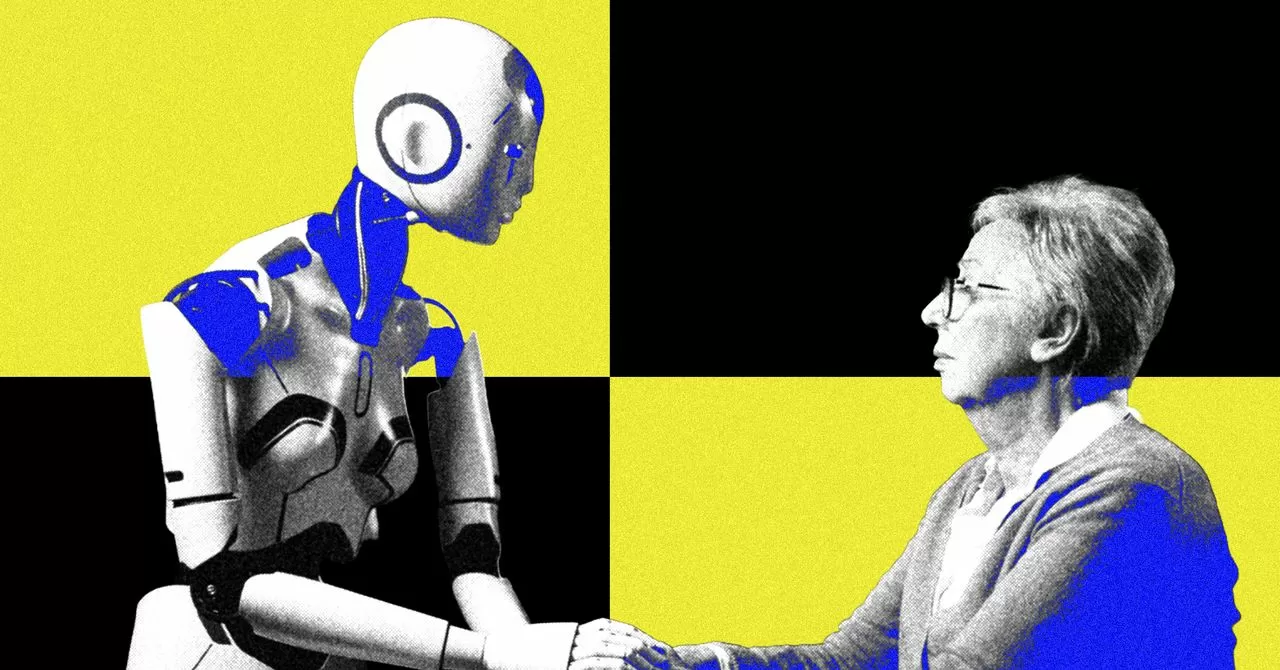
In his latest book, A World Appears, bestselling author Michael Pollan takes a deep dive into the world of artificial intelligence (AI) and its capabilities. While many may believe that AI has the potential to replace humans in various tasks, Pollan argues that it can never truly be a person.
Pollan’s book is a thought-provoking and insightful exploration of the ever-evolving field of AI. He delves into the history of AI, from its beginnings in the 1950s to its current state, and examines the various ways in which it has impacted our lives. From self-driving cars to virtual assistants, AI has become an integral part of our daily lives, and its advancements continue to amaze and astound us.
However, despite its impressive capabilities, Pollan makes a compelling case for why AI can never replace humans. He argues that while AI can perform many tasks with incredible efficiency and accuracy, it lacks the essential qualities that make us human – emotions, consciousness, and creativity.
One of the key points Pollan makes is that AI is programmed by humans, and therefore, it can never truly be independent. It may be able to learn and adapt, but it will always be limited by its programming. Humans, on the other hand, have the ability to think critically and make decisions based on our own experiences and emotions. This is what sets us apart from AI and makes us unique.
Another crucial aspect that Pollan highlights is the lack of consciousness in AI. While AI can mimic human behavior and even pass the Turing test, it does not have a sense of self-awareness. It cannot experience emotions or have a moral compass like humans do. This is why AI can never truly be a person, as it lacks the fundamental qualities that define us as human beings.
Pollan also raises concerns about the potential dangers of AI. As we continue to rely on AI for various tasks, we must also consider the ethical implications of its use. Will AI be used to control and manipulate us? Will it lead to job loss and economic inequality? These are crucial questions that we must address as AI becomes more integrated into our society.
However, despite these concerns, Pollan remains optimistic about the potential of AI. He believes that it can be a powerful tool for human progress and can assist us in solving some of the world’s most pressing issues. With its ability to process vast amounts of data and perform complex tasks, AI can help us make significant advancements in fields such as medicine, climate change, and space exploration.
In conclusion, Michael Pollan’s A World Appears is a thought-provoking and insightful read that challenges our perceptions of AI. While it may be able to do many things, it can never truly be a person. As we continue to embrace and integrate AI into our lives, we must also remember the qualities that make us human and use AI as a tool to enhance our abilities, rather than replace them.
