


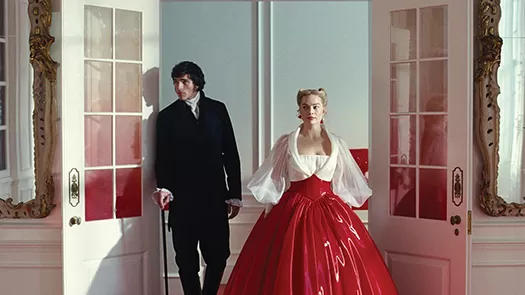
The latest adaptation of Wuthering Heights by director Emerald Fennell has been the talk of the town, with many praising its bold and emotional portrayal of the classic story. However, one aspect that has not received as much attention is the accents delivered by the talented actors, Margot Robbie and Jacob Elordi. While Jacob’s Yorkshire accent has been met with mixed reviews, Margot’s Received Pronunciation (RP) accent has been widely praised. And according to research from language learning app Babbel, these accents are not only pleasing to the ear, but they also add depth and dimension to the characters on screen.
Babbel recently conducted a poll of 2,000 adults and found that the sexiest accents include Northern Irish, Welsh, Scouse (Liverpool), and yes, even Yorkshire accents. These accents have a certain charm and character that captivate audiences, and in the case of Wuthering Heights, they play a crucial role in shaping the perceptions of the characters.
To better understand the significance of accents in film and TV, HuffPost UK spoke exclusively with Babbel’s cultural and linguistic expert Noel Wolf. According to Wolf, accents are powerful tools that provide insight into a character’s background and personality. In Wuthering Heights, director Emerald Fennell uses accents as a form of character development, allowing the audience to learn more about Cathy and Heathcliff simply through their voices.
Margot Robbie’s polished RP accent perfectly embodies Cathy’s gentility and control, reflecting her upbringing and desire to belong to a more refined world. On the other hand, Jacob Elordi’s Yorkshire accent grounds Heathcliff in the wildness and isolation of the moors. It carries a grit and passion that is inseparable from the landscape itself. These accents not only add authenticity to the characters, but they also enhance the emotional impact of the story.
One thing that may have caught some viewers off guard is the change in Cathy’s accent throughout the film. As she grows older, her accent gradually shifts towards RP, indicating her attempt to rise above her roots and conform to societal expectations. Wolf explains that this is a clever storytelling technique, as the change in her accent reflects her internal conflict. The refinement of her speech shows her transformation and loss of spontaneity, signaling the growing distance between her and Heathcliff. In this way, accents become a type of emotional barometer, giving us insight into the characters’ development.
And speaking of Heathcliff, Jacob Elordi’s Yorkshire accent has certainly made an impact on audiences. His portrayal of the passionate and tormented character has drawn many viewers to develop a newfound crush on him. Wolf believes that this is due to the awareness of linguistic nuances among modern audiences. We are subconsciously attuned to the cues that accents provide, and in the case of Heathcliff, his Yorkshire accent adds to the raw and unguarded nature of his character. When this collides with Cathy’s refined RP accent, it amplifies the sense of longing and impossibility between the two lovers.
In Wuthering Heights, language itself becomes part of the tension, reminding us that desire, class, and belonging are all expressed not just through what we say, but how we say it. And this is what makes the film so beautiful and captivating. The use of accents adds another layer to the emotional depth of the story, making it more relatable and relevant to modern audiences.
In a time where diversity and representation in media are crucial, the inclusion of different accents in Wuthering Heights is a refreshing and necessary choice. It not only adds authenticity to the characters and their backgrounds but also gives a voice to those who are often underrepresented in film and TV. And as Babbel’s research has shown, these accents are not only pleasing to the ear but also have the power to captivate and engage audiences on a deeper level.
In conclusion, director Emerald Fennell’s use of accents in Wuthering Heights is a testament to the importance and impact of language in storytelling. Accents are not just about how someone sounds, but they provide insight into a character’s background, personality, and emotions. They add depth and dimension to the story, making it more relatable and engaging for audiences. And in the case of Wuthering Heights, they have succeeded in creating a beautiful and powerful adaptation of the classic novel.
