


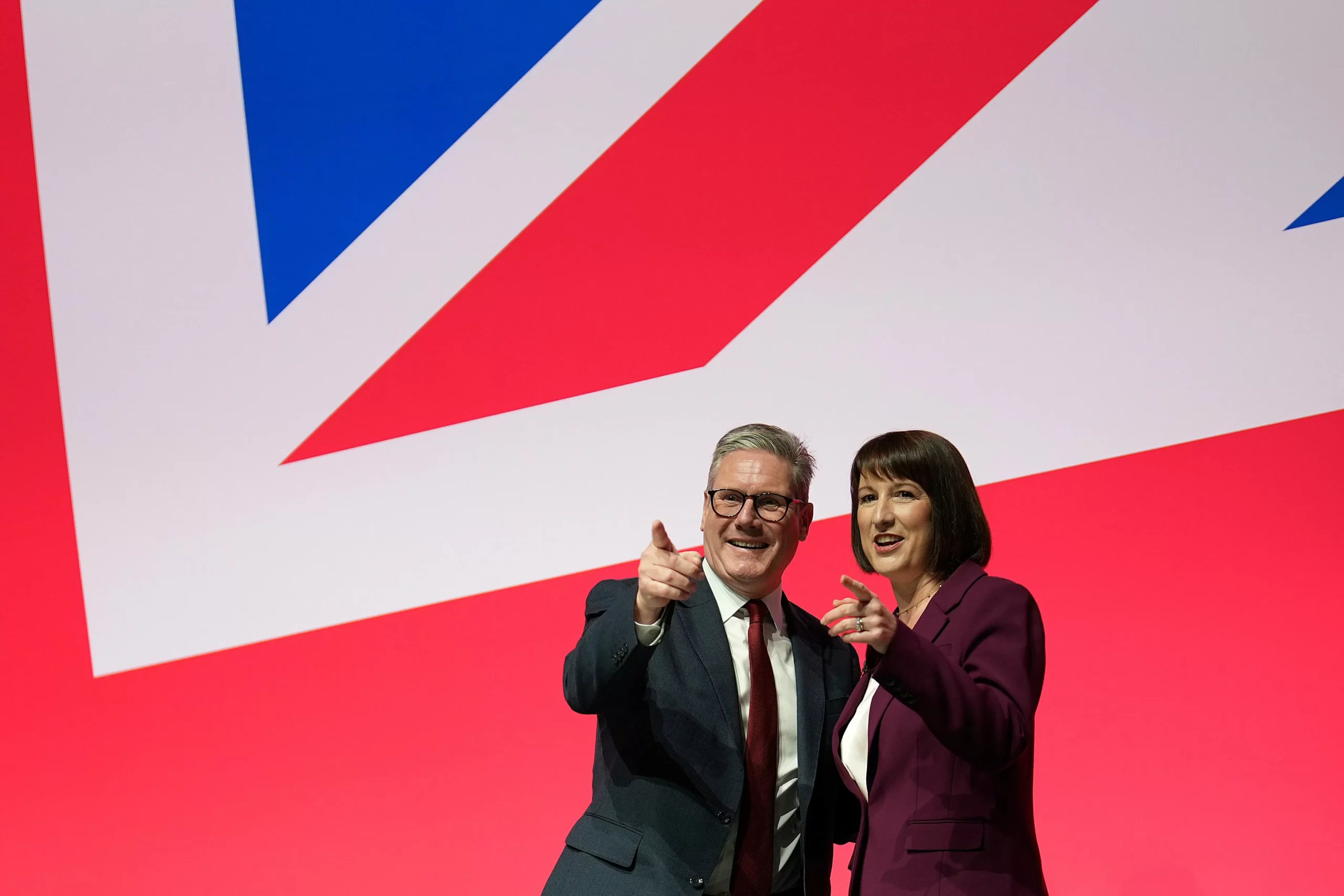
On Monday, September 23, 2024, Prime Minister Keir Starmer and Britain’s Chancellor of the Exchequer Rachel Reeves stood together at the Labour Party Conference in Liverpool, England. As they gestured for the cameras, the duo presented a united front for the future of Britain’s economy. However, behind the scenes, tensions were brewing as reports emerged that Reeves was planning to unveil the largest cuts to public spending since the introduction of austerity 15 years ago.
According to the Guardian, the chancellor’s plan would see departmental budgets reduced by up to 7% over the next four years, in her Spring Statement on Wednesday. This announcement came after a period of stagnant growth and a decline in gross domestic product in January, which were not in line with Labour’s expectations.
The government had already made controversial decisions such as cutting the welfare bill by £5 billion, reducing foreign aid to increase defense spending, and removing the winter fuel allowance for 10 million pensioners. These measures had drawn criticism from within the Labour party itself, with many backbenchers arguing that they went against the party’s core principles. The prospect of more cuts has sparked comparisons with the Conservative government’s austerity measures that were introduced to help the UK recover from the global financial crash.
Theresa May had officially declared an end to the era of austerity in 2018, but many are now questioning if it has returned under a Labour government. However, some argue that the current situation is not as severe as the austerity measures of the 2010s.
Researchers at the Institute for Public Policy Research (IPPR) have stated that while it is difficult to predict the exact impact of Reeves’ announcements on public services, the current cuts are not as deep as those implemented in 2010. Moreover, the Guardian also reported that some departmental budgets would see a modest increase of 1.1% after 2025-26, which is slightly lower than the 1.3% increase promised by Labour in their October Budget. This means that overall spending is still higher than during David Cameron’s time in office and is even expected to increase in real terms. However, the government will still spend £4 billion less than it had promised just five months ago.
Despite this, the situation remains worrying for public services. The sector is still recovering from the last period of austerity, as well as facing challenges from COVID-19, inflation, and the energy crisis caused by the ongoing conflict in Ukraine.
Pranesh Narayanan, a research fellow at the IPPR, cautioned that further cuts are not the right solution for the UK and will not boost productivity as Labour hopes. He told HuffPost UK, “The government is in a bind – facing unprecedented challenges due to geopolitical tensions and economic uncertainty caused by the Trump administration. While more spending is needed on defense, it should be accompanied by adequate funding to fix public services for the long term.”
Narayanan added, “The widely reported rumors of cuts suggest that they won’t be as severe as the austerity measures of the 2010s, but that does not mean they are the right option for the UK today. It is crucial to improve public sector efficiency, but this is rarely achieved through slashing budgets. Ministers should recognize the unprecedented nature of these times and seriously consider raising revenues through taxes.”
While Labour’s cuts may not be as deep as those of the previous Conservative government, some argue that the spirit of austerity is still present. Hannah Peaker, deputy chief executive of the New Economics Foundation, stated, “No serious person can believe that taking support away from disabled people will fix our economy, or that they are to blame for the current economic situation. That is the fault of austerity, which not only made people poorer and sicker, but also did nothing to reduce public debt.”
Peaker continued, “This government is pursuing the same policy of austerity and hoping for a different outcome.” Former MP and leader of the Green Party, Caroline Lucas, reacted to the Guardian report by stating that “austerity does not work.” She believes that more cuts are “economically illiterate and morally indefensible” and added, “People did not vote for Labour to get more Tory austerity. Instead of slashing public services, they should tax extreme wealth.”
Even within the Labour party, there are concerns that the government is moving towards austerity. Suspended MP Zarah Sultana warned on social media, “Austerity with a red ro
