
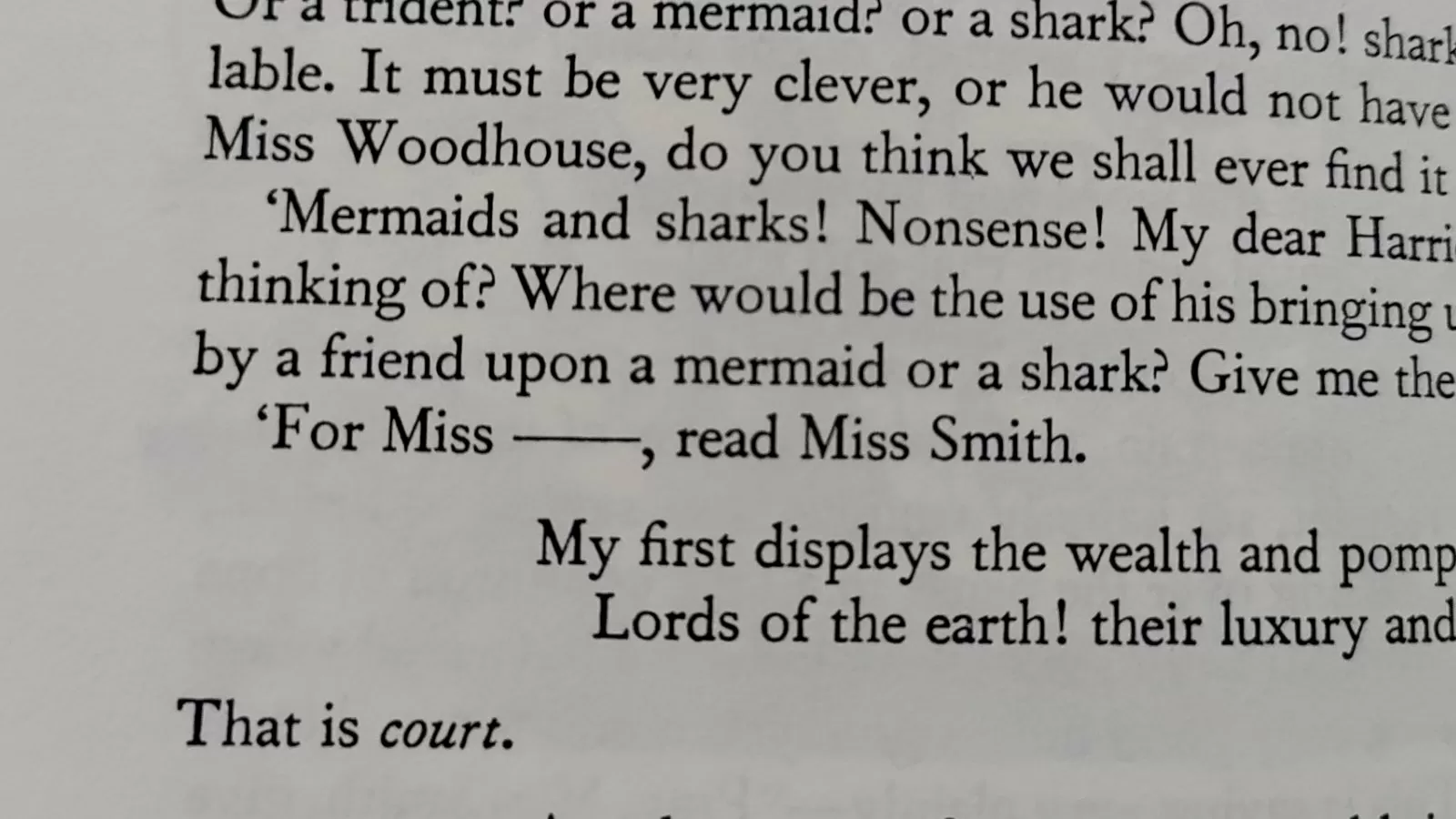
Jane Austen is a name that is synonymous with classic literature and timeless romance. Her novels have been beloved for centuries, and her characters continue to capture the hearts of readers around the world. One such character is the titular character of her novel Emma. In this article, we will be taking a closer look at one particular aspect of Austen’s writing – her use of mysterious blanks where names should be, specifically in reference to a “Miss —-” in Emma.
Firstly, let us take a trip back in time to the year 2005. It has been 20 years since the release of the film adaptation of Pride and Prejudice, and the new Netflix adaptation of Wuthering Heights is gaining popularity. This has led to a resurgence of interest in Austen’s works, and many readers (myself included) have returned to these beloved novels. However, a recent scroll through Reddit’s r/janeausten subreddit has brought to light a common question among readers – what is the significance of the blanks in Austen’s writing?
To get to the bottom of this mystery, we spoke to Professor Janet Todd from Cambridge University. She is the author of the recently released Living With Jane Austen, which coincides with Austen’s 250th birthday, as well as The Cambridge Introduction to Jane Austen. According to Professor Todd, the use of blanks in Austen’s writing serves as a device to make the story seem more real.
But Austen is not the only writer to use this technique. In fact, it has been found in other works such as Mary Shelley’s Frankenstein and even in real-life newspapers from the 19th century. As Professor Todd explains, these blanks were used to create the illusion of reality, making the work seem more authentic and believable. It also served as a way for the author to avoid referencing real people or places, which may have caused trouble or hurt feelings.
Furthermore, Professor Todd suggests that this technique may have also saved Austen the trouble of coming up with names for her characters. As any writer can attest, coming up with names for a large cast of characters can be a daunting task, so using blanks may have been a practical choice for Austen.
But she is not the only one who believes this. In a 1967 article for The Atlantic, John Barth shared his thoughts on the use of blanks in 19th century fiction. He states that these were often substituted for proper names to enhance the illusion of reality. He also suggests that it may have been a way for the author to avoid legal or personal repercussions.
In the case of Austen’s Emma, we can see how this technique may have been particularly useful. The novel is said to be loosely based on Austen’s own experiences and the people she knew. By using blanks, she may have been able to protect the identities of those involved while still drawing inspiration from them.
In conclusion, the use of blanks in Austen’s writing may have served multiple purposes. It not only added an air of authenticity to her work but also helped her avoid any potential conflicts or legal issues. And as Professor Todd suggests, it may have also saved Austen the trouble of coming up with names for her characters. So the next time you come across a “Miss —-” in one of Austen’s novels, remember that it is not just a mere blank, but a clever writing device used by one of the greatest authors of all time.
