


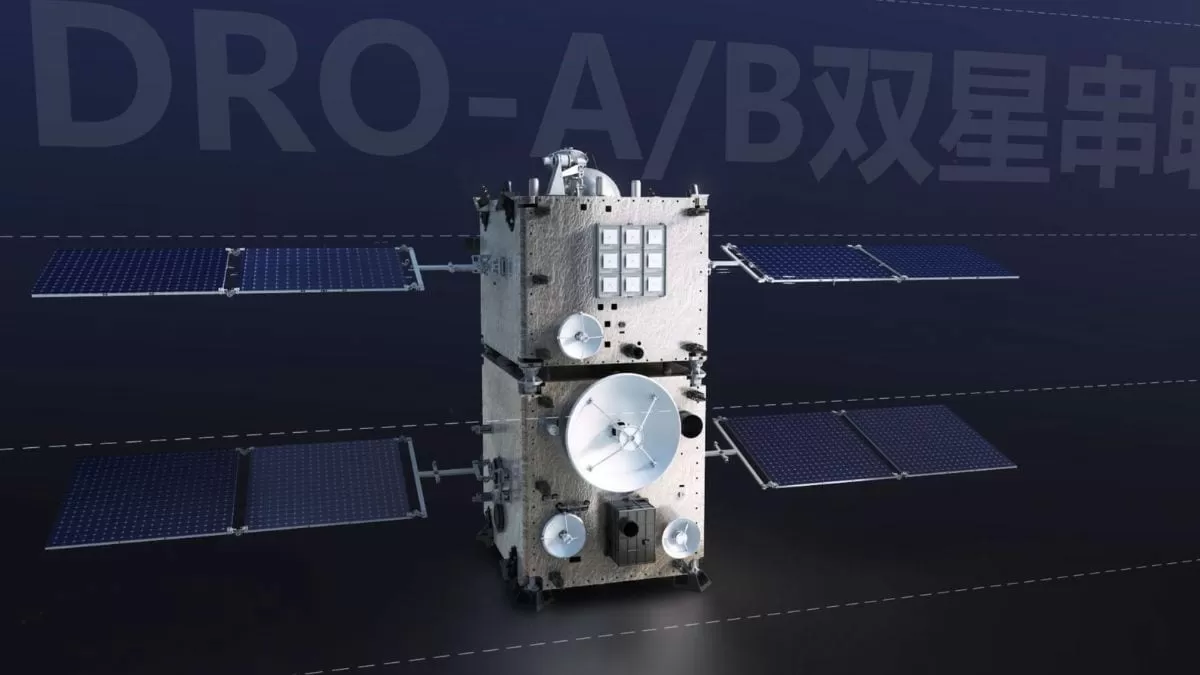
In a remarkable display of engineering prowess and determination, Chinese engineers have successfully rescued two satellites that were left spiralling in the wrong orbit after a rocket malfunction. This 123-day rescue mission, which utilized gravitational slingshot manoeuvres, not only restored the satellites to their intended orbit but also advanced China’s ambitions in space autonomy.
The incident occurred on April 9, 2021, when a Long March 4B rocket carrying two satellites, the Yaogan-34 and Tianhui-1, failed to reach its designated orbit. The satellites were meant to be placed in a sun-synchronous orbit, which is crucial for remote sensing and surveillance missions. However, due to the malfunction, they were left in a highly elliptical orbit, making it impossible for them to perform their intended tasks.
This unexpected setback could have been a major blow to China’s space program, which has been rapidly expanding in recent years. However, the Chinese engineers did not give up. Instead, they quickly devised a plan to rescue the satellites using gravitational slingshot manoeuvres.
Gravitational slingshot, also known as a gravity assist, is a technique used by spacecraft to gain speed and change direction by utilizing the gravitational pull of a planet or other celestial body. This technique has been used in the past by various space agencies, including NASA and ESA, but this was the first time it was attempted by China.
The rescue mission began on April 12, when the Long March 4B rocket was used to adjust the orbit of the satellites, bringing them closer to Earth. Then, on April 15, the satellites were sent on a trajectory towards the Moon, which acted as a gravitational slingshot, accelerating them and changing their direction towards the intended orbit.
This was just the beginning of a series of complex manoeuvres that the Chinese engineers had to perform to ensure the satellites reached their desired orbit. Over the next few months, the satellites were sent on multiple slingshot trajectories, utilizing the gravitational pull of Earth, the Moon, and even Mars.
The rescue mission was not without its challenges. The engineers had to carefully calculate the timing and trajectory of each slingshot manoeuvre to ensure the satellites did not collide with any other objects in space. They also had to constantly monitor the satellites’ health and make adjustments to their plan accordingly.
After 123 days of intense and meticulous work, the rescue mission was finally completed on August 10, 2021. The Yaogan-34 and Tianhui-1 satellites were successfully placed in their intended sun-synchronous orbit, and they are now fully functional and ready to carry out their missions.
This successful rescue mission is a testament to the expertise and determination of Chinese engineers. It not only saved the two satellites but also showcased China’s growing capabilities in space technology. The use of gravitational slingshot manoeuvres in this mission has also opened up new possibilities for future space missions, demonstrating China’s commitment to advancing its space autonomy.
This achievement is a significant milestone for China’s space program, which has been making rapid progress in recent years. In 2020, China became the first country to successfully land a spacecraft on the far side of the Moon, and it also launched its first Mars mission, Tianwen-1, in the same year. With this successful rescue mission, China has once again proven its capabilities in space exploration and solidified its position as a major player in the global space race.
The successful rescue of the Yaogan-34 and Tianhui-1 satellites is a moment of pride for China and a source of inspiration for the rest of the world. It is a reminder that with determination, innovation, and teamwork, even the most challenging obstacles can be overcome. This achievement will undoubtedly motivate and encourage China to continue pushing the boundaries of space exploration and achieving new milestones in the future.
