

A French Egyptologist has made a groundbreaking discovery that sheds new light on the reign of Pharaoh Ramesses the Great. According to the Egyptologist, hidden hieroglyphs have been found on the Luxor Obelisk in Paris, which praise the Pharaoh as being divinely chosen by the gods. These encrypted messages were allegedly meant for Egyptian nobility arriving at Luxor Temple during ancient rituals.
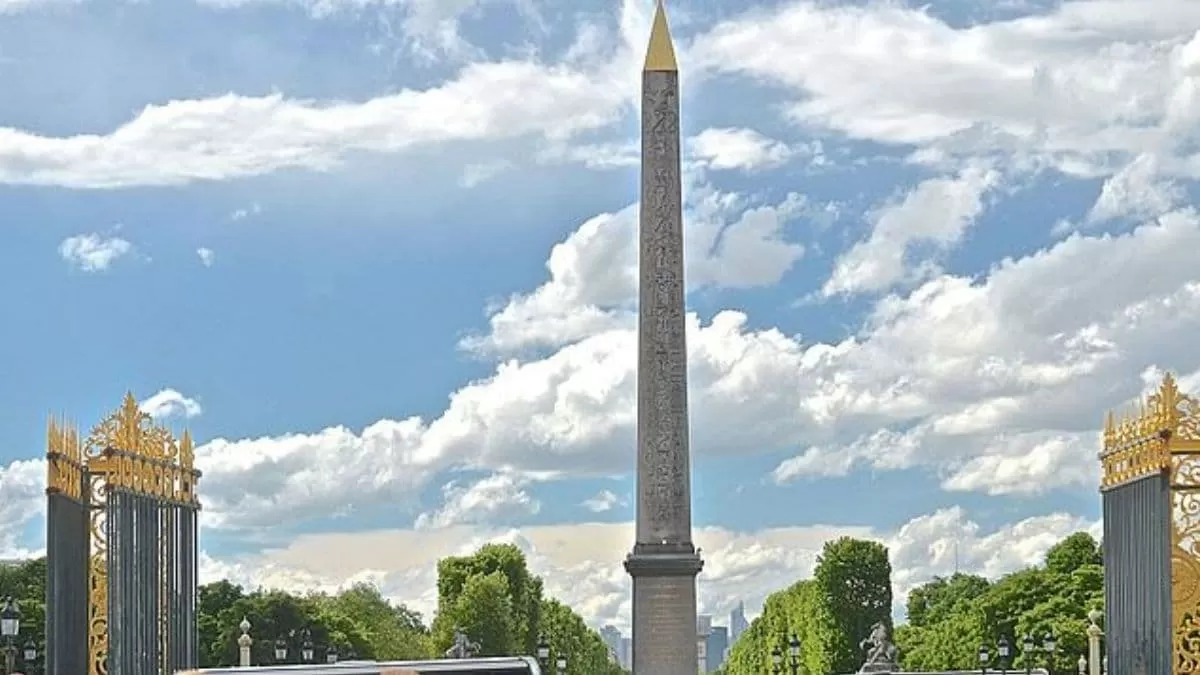
The Luxor Obelisk, also known as the Obelisk of Ramses II, has been standing in the Place de la Concorde in Paris since 1836. It was originally erected by Pharaoh Ramesses the Great in the 13th century BC at the entrance of the Luxor Temple in Egypt. The obelisk is 23 meters tall and weighs over 230 tons, making it one of the largest ancient Egyptian obelisks in the world.
For centuries, the Luxor Obelisk has been a symbol of the strong ties between France and Egypt. However, it was not until recently that its true significance was uncovered. The French Egyptologist, who wishes to remain anonymous, has spent years studying the obelisk and its inscriptions. And his efforts have finally paid off.
Through careful observation and analysis, the Egyptologist discovered that the hieroglyphs on the obelisk were not just decorative, but they were actually encrypted messages. These messages, which were only visible from a specific angle, were meant to be seen by the Egyptian nobility who arrived at Luxor Temple during ancient rituals.
The encrypted messages on the obelisk praise Pharaoh Ramesses the Great as being chosen by the gods to rule over Egypt. This is a significant finding as it provides a new perspective on the Pharaoh’s reign. It suggests that he was not just a powerful ruler, but also a divine figure chosen by the gods themselves.
This discovery also sheds light on the ancient rituals that took place at Luxor Temple. It is believed that during these rituals, the Egyptian nobility would gather at the temple to pay homage to the Pharaoh and reaffirm his divine status. The encrypted messages on the obelisk were a way to remind them of the Pharaoh’s divine connection and to reinforce his authority.
The French Egyptologist’s discovery has been met with great excitement and praise from the archaeological community. It has opened up new avenues for research and has sparked a renewed interest in ancient Egyptian rituals and beliefs. It also highlights the importance of preserving and studying ancient monuments, as they hold valuable information about our past.
The Luxor Obelisk has always been a popular tourist attraction, but now it holds even more significance. Visitors can now see the obelisk in a new light, knowing that it contains hidden messages that were meant for the eyes of the Egyptian nobility. It is a testament to the advanced knowledge and skills of the ancient Egyptians and their deep reverence for their rulers.
The French Egyptologist’s discovery is a reminder that there is still so much to uncover and learn about ancient civilizations. It also serves as a reminder of the strong cultural ties between France and Egypt. The Luxor Obelisk stands as a symbol of this connection, and now, with the discovery of the hidden hieroglyphs, it holds an even deeper meaning.
In conclusion, the discovery of encrypted messages praising Pharaoh Ramesses the Great on the Luxor Obelisk in Paris is a significant breakthrough in the field of Egyptology. It offers a new perspective on the Pharaoh’s reign and provides valuable insights into ancient Egyptian rituals and beliefs. This discovery is a testament to the enduring legacy of the ancient Egyptians and their remarkable achievements.
