


Google, the world’s leading tech giant, has once again made headlines with its latest announcement. On Tuesday, the company revealed that it will be expanding its AI chatbot, Gemini, to more Android devices. This exciting news was shared during The Android Show: I/O Edition, which is a buildup to Google’s highly anticipated annual event, Google I/O 2025, happening next week.
The Mountain View-based company has always been at the forefront of innovation, constantly pushing the boundaries of technology. With the expansion of Gemini, Google is once again proving its commitment to providing its users with cutting-edge features and services.
So, what exactly is Gemini? It is Google’s in-house AI chatbot, designed to make our lives easier and more convenient. With Gemini, users can have natural conversations with their devices, making it feel like they are talking to a real person. This revolutionary technology has been available on Google’s Pixel smartphones since 2019, and now, it will be accessible on even more Android devices.
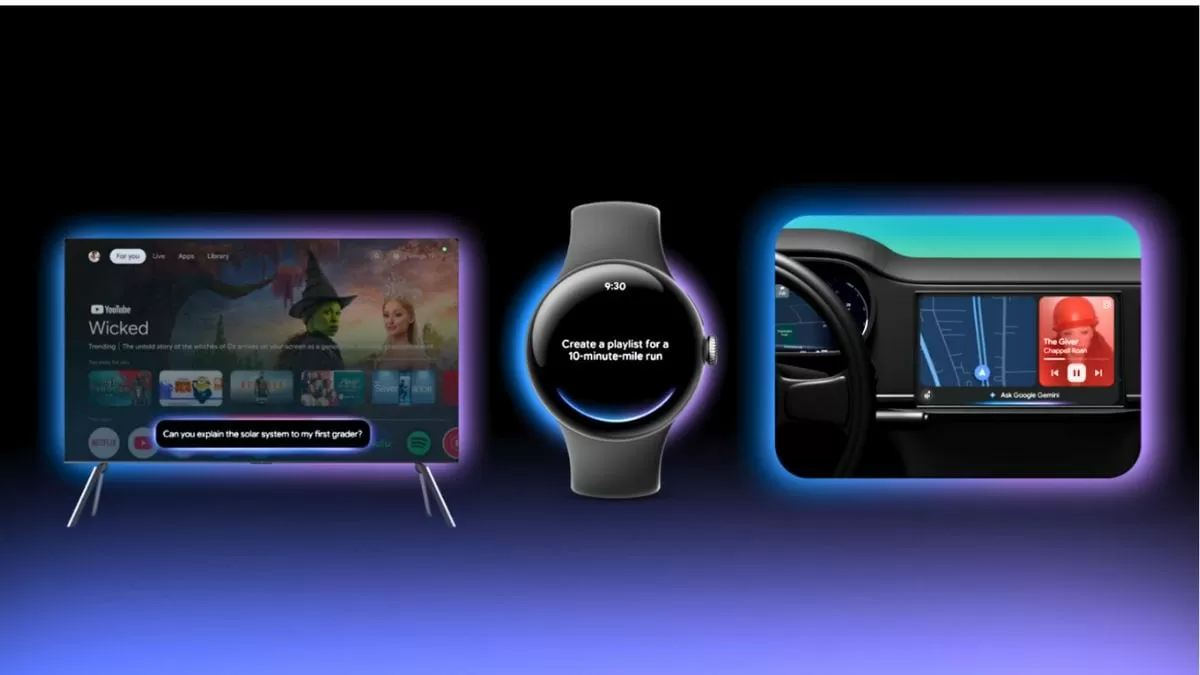
The expansion of Gemini to other Android devices, including smartwatches (via Wear OS), smart TVs (via Android TV), and in-car infotainment systems (via Android Auto), will bring this advanced AI technology to the fingertips of millions of users worldwide. This move by Google is a significant step towards making AI more accessible and integrated into our daily lives.
One of the most exciting aspects of this expansion is the integration of Gemini into Wear OS, Google’s operating system for smartwatches. With Gemini, users can now use their smartwatches to perform various tasks, such as setting reminders, checking the weather, and even ordering food. This will undoubtedly make our lives more efficient and convenient, as we can now do more with just a flick of our wrist.
But that’s not all, as Gemini will also be available on Android TV, Google’s operating system for smart TVs. This means that users can now control their TVs using voice commands, making the viewing experience even more enjoyable. Imagine being able to change channels, adjust the volume, and search for your favorite shows, all without having to lift a finger.
In addition to smartwatches and smart TVs, Gemini will also be integrated into Android Auto, Google’s in-car infotainment system. This will allow drivers to use voice commands to make calls, send messages, and even play music, all while keeping their hands on the wheel and eyes on the road. This feature will not only make driving safer but also more convenient for users.
The expansion of Gemini to more Android devices is a testament to Google’s commitment to making AI more accessible and user-friendly. With this move, the company is bringing the future closer to us, making our lives more connected and convenient.
But that’s not all, as Google also announced that it will be adding new features to Gemini, making it even more advanced and efficient. These new features include improved natural language processing, better understanding of context, and the ability to handle multiple tasks simultaneously. With these enhancements, Gemini will be able to provide users with a more personalized and seamless experience.
The expansion of Gemini to more Android devices is just the beginning, as Google has even bigger plans for its AI chatbot. The company has stated that it will continue to invest in AI and explore new ways to integrate it into our daily lives. This is an exciting time for technology, and Google is leading the way towards a more connected and intelligent future.
In conclusion, the expansion of Gemini to more Android devices is a significant milestone for Google and the world of AI. With this move, the company is making AI more accessible and user-friendly, bringing us one step closer to a more connected and convenient future. We can’t wait to see what other innovations Google has in store for us at Google I/O 2025.
