


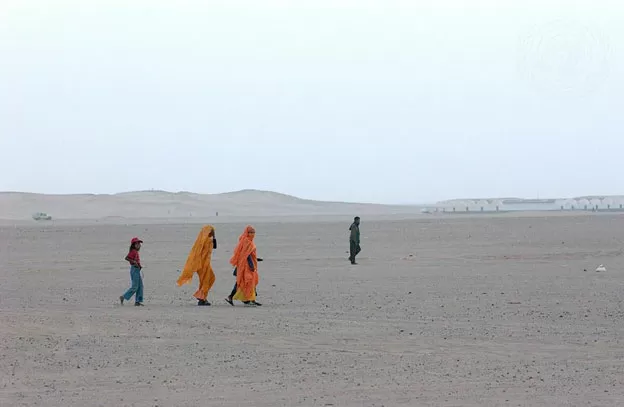
For over 50 years, the Sahrawi refugees have been living in a collection of refugee shelters in the Tindouf province of Algeria. This was a result of the Western Sahara War in 1975, which forced thousands of Sahrawi people to flee their homes and seek refuge in neighboring countries. Since then, these communities have been struggling to develop self-sufficiency and have been solely dependent on humanitarian aid for survival, making it one of the most protracted refugee crises in the world.
The Sahrawi people, also known as the Western Sahara people, are an indigenous group who have been fighting for their right to self-determination and independence for decades. The Western Sahara War, also known as the Sahrawi War, was a conflict between the Sahrawi people and Morocco, which resulted in the occupation of Western Sahara by Morocco. As a result, many Sahrawi people were forced to flee their homes and seek refuge in neighboring countries, with the majority settling in Tindouf, Algeria.
For over 50 years, these Sahrawi refugees have been living in harsh conditions, with limited access to basic necessities such as food, water, and healthcare. The refugee camps in Tindouf, known as Smara, Awserd, Dakhla, and Laayoune, are home to over 170,000 Sahrawi refugees. These camps were initially meant to be temporary shelters, but due to the ongoing conflict and lack of a resolution, they have become a permanent home for the Sahrawi people.
The Sahrawi refugees have faced numerous challenges in these camps, including extreme weather conditions, limited access to education and job opportunities, and a lack of infrastructure. However, despite these challenges, the Sahrawi people have shown resilience and determination to build a better future for themselves and their children.
One of the main challenges faced by the Sahrawi refugees is the lack of self-sufficiency. Due to the harsh desert climate, it is difficult to grow crops or raise livestock, making it challenging for the refugees to provide for themselves. As a result, they have been heavily reliant on humanitarian aid for their survival. Organizations such as the United Nations High Commissioner for Refugees (UNHCR) and the World Food Programme (WFP) have been providing food, water, and other essential supplies to the refugee camps. However, this aid is not sustainable in the long run, and the Sahrawi people need a more permanent solution to become self-sufficient.
Despite these challenges, the Sahrawi refugees have been working towards self-sufficiency through various initiatives. One such initiative is the establishment of cooperatives, where the refugees work together to produce goods such as handicrafts and traditional clothing, which are then sold to generate income. These cooperatives not only provide a source of income but also help preserve the Sahrawi culture and traditions.
Education is also a top priority for the Sahrawi refugees, with a strong emphasis on providing education to girls. The Sahrawi women have been at the forefront of the education movement, with many of them becoming teachers and educating the younger generation. The Sahrawi refugees have also established a university, the University of Tifariti, which offers courses in various fields, including medicine and engineering.
Despite the challenges and limited resources, the Sahrawi refugees have shown remarkable resilience and determination to build a better future for themselves and their families. They have not let their circumstances define them, but instead, they have used their skills and creativity to overcome the challenges they face.
The international community has also been providing support to the Sahrawi refugees, with various countries and organizations providing aid and advocating for their rights. However, the Sahrawi people need a more permanent solution to their displacement. The United Nations has been working towards a peaceful resolution to the Western Sahara conflict, and it is crucial for all parties involved to come to a peaceful and just resolution that will allow the Sahrawi people to return to their homeland and live in dignity.
In conclusion, the Sahrawi refugees have been living in refugee camps in Tindouf, Algeria, for over 50 years, making it one of the most protracted refugee crises in the world. Despite the challenges they face, the Sahrawi people have shown resilience and determination to build a better future for themselves and their families. It is time for the international community to work towards a peaceful resolution
