


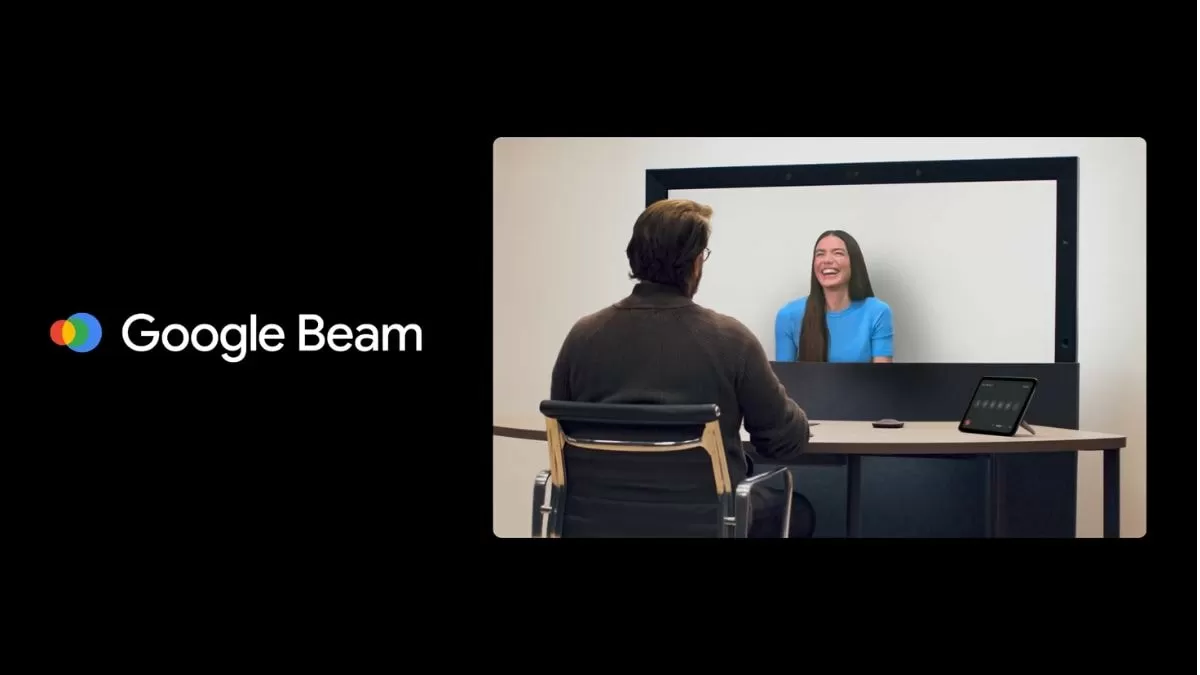
Google, the tech giant known for its innovative products and services, has once again made a groundbreaking announcement at its annual developer conference. The company has revealed that it is rebranding its Project Starline and transforming it into a 3D video communication platform called Beam. This new platform is set to revolutionize the way we connect with each other, making it more intuitive and immersive.
The idea behind Beam is to bridge the gap between physical and virtual communication. With the rise of remote work and virtual meetings, the need for a more realistic and engaging communication experience has become more apparent. And that’s where Beam comes in. It leverages the power of Google Cloud platform and advanced 3D technology to create a lifelike experience for users.
So, what exactly is Beam and how does it work? Well, imagine having a video call with someone and being able to see them in 3D, as if they were sitting right in front of you. That’s exactly what Beam offers. It uses high-resolution cameras and depth sensors to capture a person’s movements and facial expressions in real-time. This data is then processed and rendered into a 3D image, creating a sense of depth and presence.
But Beam is not just about the visuals. It also incorporates spatial audio, which means that the sound will come from the direction of the person you are talking to, just like in a real-life conversation. This adds to the immersive experience and makes it feel like you are actually in the same room as the other person.
One of the most impressive features of Beam is its ability to turn 2D video streams into 3D experiences. This means that even if the person you are talking to doesn’t have a 3D camera, you can still see them in 3D. This is made possible by using machine learning algorithms to analyze the 2D video and create a 3D representation of the person. This is a game-changer as it eliminates the need for expensive 3D cameras, making Beam accessible to a wider audience.
But that’s not all. Beam also allows for real-time collaboration, making it perfect for virtual meetings and presentations. Users can share and manipulate 3D models, documents, and even holographic images, making it feel like everyone is in the same room, even if they are miles apart.
The potential applications of Beam are endless. It can be used for remote work, virtual events, education, and even healthcare. Imagine being able to consult with a doctor in 3D, where they can examine you and provide a diagnosis without you having to leave your home. This has the potential to revolutionize the healthcare industry and make quality healthcare more accessible to everyone.
Google has always been at the forefront of innovation, and Beam is no exception. The company has been working on this technology for years, and now, with the rebranding of Project Starline, it is ready to bring it to the masses. And with the power of Google Cloud platform behind it, Beam is set to deliver a seamless and high-quality experience to its users.
The announcement of Beam has generated a lot of excitement and anticipation among tech enthusiasts and industry experts. Many are hailing it as the future of communication, and it’s not hard to see why. With its advanced technology and user-friendly interface, Beam has the potential to change the way we connect with each other.
In conclusion, Google’s rebranding of Project Starline into Beam is a significant step towards creating a more immersive and realistic communication experience. With its 3D technology, spatial audio, and real-time collaboration features, Beam has the potential to revolutionize the way we work, learn, and interact with each other. And with Google’s commitment to innovation and excellence, we can expect to see even more exciting developments in the future. So, get ready to say goodbye to 2D video calls and hello to the world of 3D communication with Beam.
