


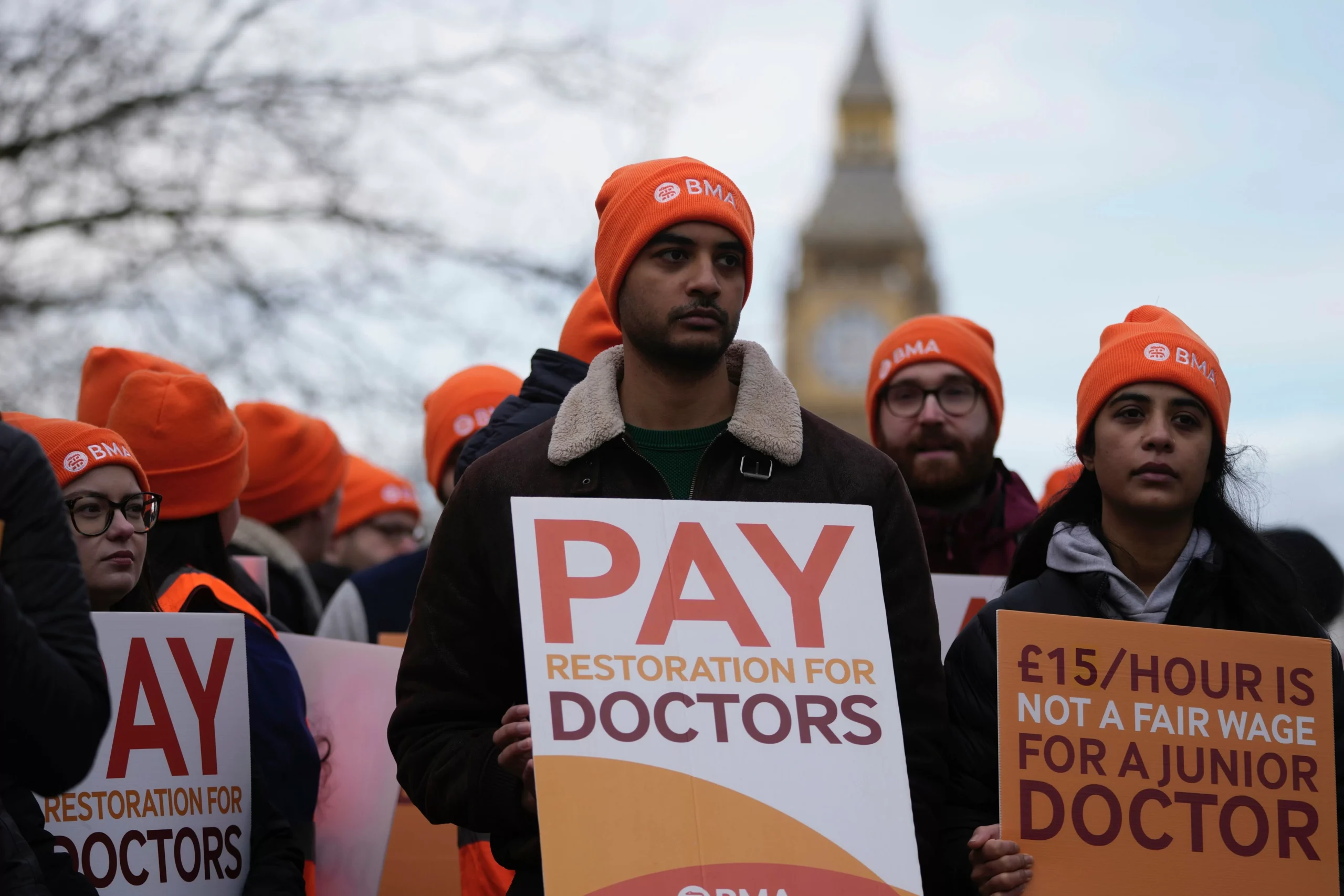
Last year, members of the British Medical Association (BMA) made headlines as they went on strike outside of Parliament. The reason? They were protesting against the government’s “woefully inadequate” pay offer. And now, as the government has announced a 4% pay increase for junior doctors, the BMA has warned that they are prepared to strike again.
The BMA, which represents junior doctors, has expressed their disappointment and frustration with the government’s offer. They argue that the increase is not enough to make up for the years of pay freezes and below-inflation increases that they have endured. This sentiment is shared by other public sector workers, such as teachers, who were also told they would have to find savings to fund their own 4% pay rise.
This is not the first time that junior doctors have taken action over pay. Under the previous Tory government, they staged a series of walkouts, but called them off after the Labour government awarded them pay rises following the general election. However, the BMA has made it clear that they are not satisfied with the current offer and are willing to strike again if necessary.
Professor Philip Banfield, chair of the BMA council, has issued a warning to Health Secretary Wes Streeting, stating that their members are ready to take industrial action unless a better offer is made. He emphasized that the only way to avoid strike action is for the government to negotiate and agree on a path towards full pay restoration.
Meanwhile, other NHS workers in England, including nurses, midwives, and physiotherapists, will receive a 3.6% pay increase, effective from April 1st. However, this offer has also been met with criticism from unions, who argue that it is not enough to address the recruitment and retention crisis in the public sector.
Daniel Kebede, general secretary of the National Education Union, has warned that the government’s failure to fully fund the pay rise could result in cuts to services, job losses, and increased workloads for teachers. He has also stated that the NEU will register a dispute with the government and campaign to ensure that the impact of a cut in school funding is understood by all.
Paul Nowak, general secretary of the Trades Union Congress, has called for the government to work with unions to address the root causes of the recruitment and retention crisis in the public sector. He has emphasized the need for a long-term strategy to improve public sector pay, as well as other important issues such as working hours, workloads, and flexible working options.
It is clear that there is a growing frustration among public sector workers over the government’s handling of pay. After years of pay freezes and below-inflation increases, they feel undervalued and overworked. It is time for the government to listen to their concerns and take action to address the recruitment and retention crisis in the public sector.
Unions are ready to work with the government to find solutions, but they need to be involved in the decision-making process. It is not enough for the government to simply make an offer and expect unions to accept it. A collaborative approach is needed to ensure that public sector workers are fairly compensated for their hard work and dedication.
In the end, it is not just about pay. It is about ensuring that our public services have the resources and support they need to provide the best possible care and education for all. The government must prioritize the well-being of public sector workers and work towards a fair and sustainable solution for all. Only then can we truly say that we value the hard work and dedication of those who keep our society running.
