


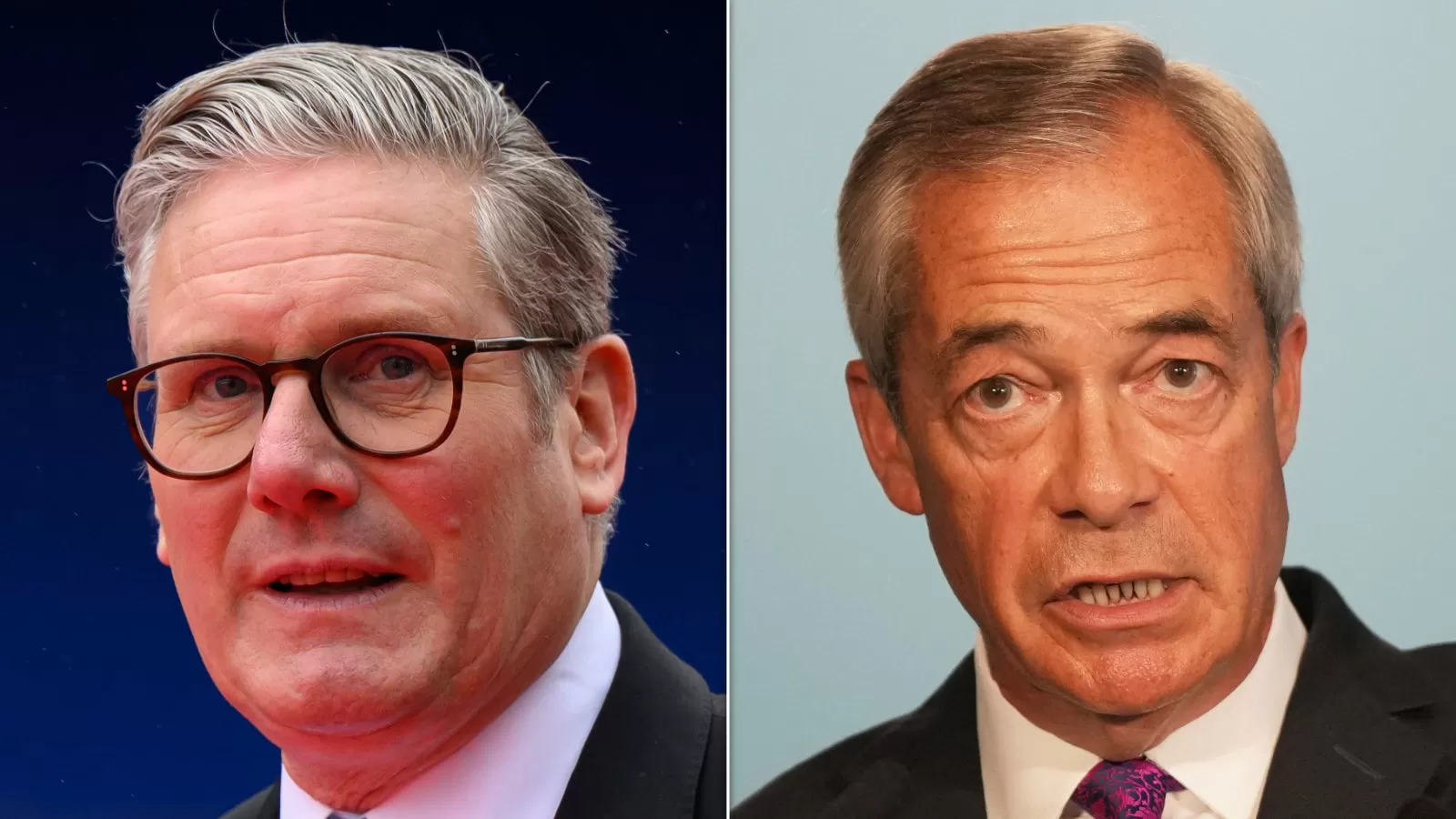
Keir Starmer and Nigel Farage: A Clash of Economic Ideologies
In the world of British politics, two names have been making headlines recently: Keir Starmer and Nigel Farage. These two leaders have different political ideologies and have been at odds with each other on various issues. However, one topic that has brought them into the spotlight is their economic policies.
Recently, Keir Starmer, the leader of the Labour Party, warned the public about the potential dangers of Nigel Farage’s economic plan. In a speech delivered on Thursday, Starmer criticized Farage’s “fantasy” economics, stating that it would be just as damaging for the country as Liz Truss’s controversial budget.
Truss, the current Chancellor of the Exchequer, has been under fire for her proposed budget, which includes significant tax cuts and spending cuts. Many critics have argued that these policies will harm the economy and leave the public to bear the financial burden. Starmer and the Labour Party have been vocal in their opposition to Truss’s budget, and they have now turned their attention to Farage’s economic plan.
The leader of the Reform UK party has been targeting traditional Labour voters, claiming that the current government is “unpatriotic” and “out of touch.” In his speech, Farage promised to scrap two of Starmer’s most unpopular policies: the two-child benefit cap and the restrictions on winter fuel payments for pensioners. He also pledged to eliminate income tax for anyone earning less than £20,000, a move that the Institute for Fiscal Studies estimates could cost up to £80 billion.
According to the latest YouGov poll, support for Reform UK is at 29%, eight points ahead of Labour and ten points in front of the Conservatives. This rise in popularity has caught the attention of Starmer, who is now speaking out against Farage’s economic plan.
In his speech at a manufacturing business in the North West, Starmer stated, “In opposition, we warned that Liz Truss’s economic policies would crash the economy and leave the public to pick up the bill. We were right, and we were elected to fix that mess. Now, in government, we are once again fighting against the same fantasy – this time from Nigel Farage.”
Starmer went on to say, “Farage is making the exact same bet Liz Truss did – that you can spend tens of billions on tax cuts without a proper way of paying for it. And just like Truss, he is using your family finances, your mortgage, and your bills as a gambling chip on his mad experiment. The result will be the same.”
He then reminded the public of Truss’s failed attempt at implementing unfunded tax cuts, which resulted in a £45 billion deficit and a struggling economy. Starmer emphasized that the consequences of Farage’s economic policies would be no different.
When questioned by reporters about how he plans to fund his policies, Farage dismissed the concern, stating, “You can argue about numbers adding up. You can probably argue that at no point in the history of any form of government has anybody ever thought their numbers added up.”
However, Starmer was quick to point out the flaws in this approach, stating, “We cannot afford to play games with our economy. The livelihoods of hard-working citizens are at stake here. We need a responsible and realistic economic plan, not a reckless gamble.”
Farage, on the other hand, defended his policies, saying, “We take a fresh approach to everything. I think what I’ve done today is to give you an idea of the direction of policy, of priorities, of what we think is important, what we think it is going to cost, and how we think we’re going to pay for it.”
He added, “I don’t think anybody, at this stage, with a general election some years away, could frankly do more than that. And I believe what I have presented today is credible.”
However, many experts and economists have raised concerns about the feasibility of Farage’s economic plan. They have compared it to “Trussonomics on steroids” and have warned that it could lead to a similar disastrous outcome.
Moreover, a recent poll has shown that Farage is the last choice for voters to be the Prime Minister, indicating that the public is not convinced by his economic policies.
In conclusion, the clash between Keir Starmer and Nigel Farage’s economic ideologies has become a hot topic in British politics. While Starmer and
