


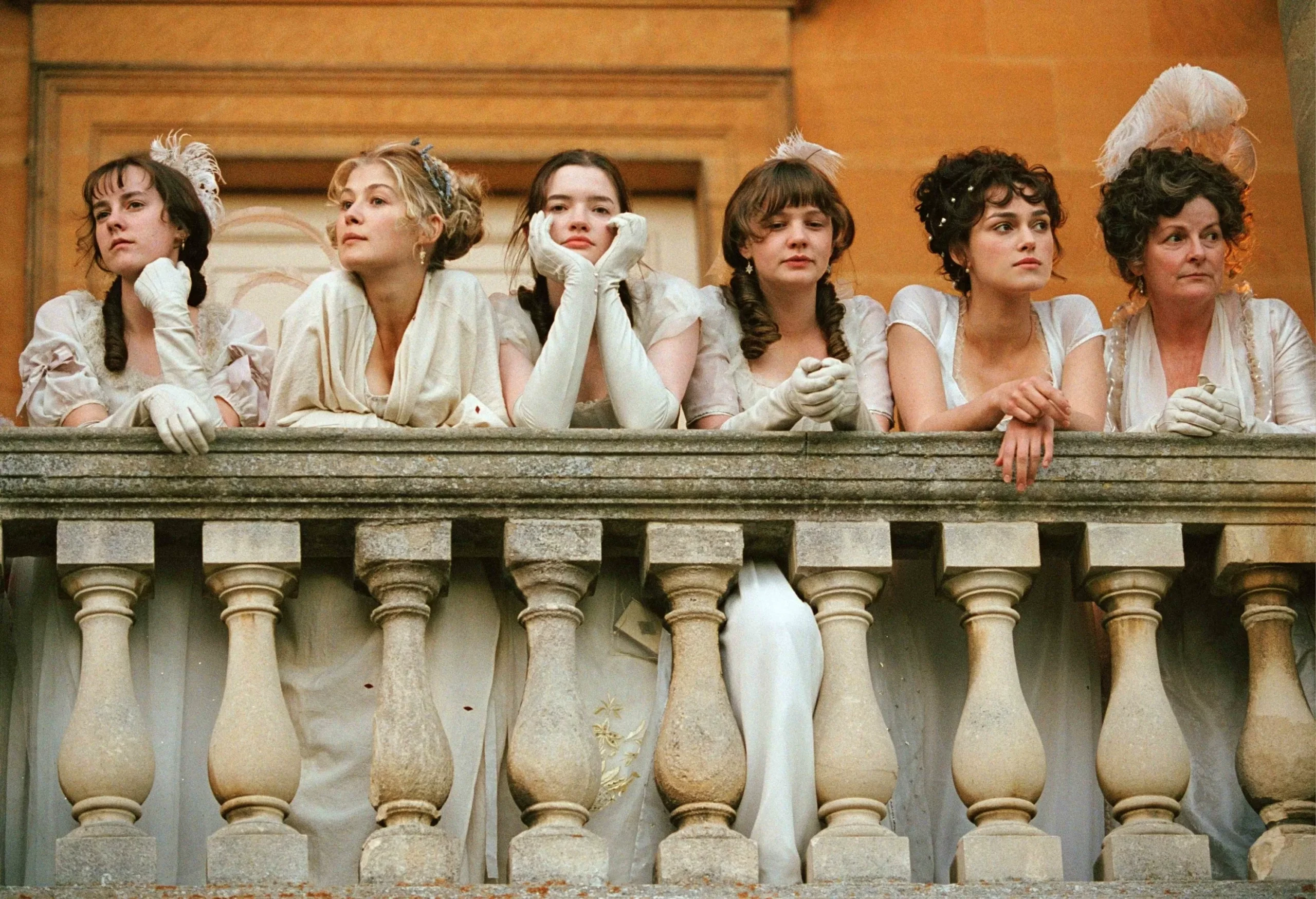
2005’s Pride And Prejudice: A Timeless Classic That Continues To Captivate Audiences
At this year’s Hay Festival, Jane Tranter – former executive vice-president of programming and production at the BBC and current producer of Austen adaptation The Other Bennet Sister – shared her thoughts on the challenges of bringing Pride And Prejudice to life on screen. She noted that actors often struggle with the language and mannerisms of the era, leading to a “fetishised approach” that can create a barrier between the audience and the story.
But what is it about this particular story that continues to captivate audiences, even after 200 years? And why is it important to accurately portray the language and accents of the time?
To answer these questions, we spoke to author and historian Katie Kennedy, known for her viral Instagram account @TheHistoryGossip and her new series on SKY History, History Crush. Kennedy sheds light on the issue of homogenized accents in period dramas and the impact it has on our understanding of history.
The tendency to speak in a “posh” accent is not limited to just period dramas, Kennedy tells us. It is a reflection of the larger issue of class representation in the entertainment industry. A 2024 study by the Sutton Trust found that people from working-class backgrounds are four times less likely to work in any creative industry compared to their middle-class peers. Additionally, BAFTA-nominated actors are five times more likely to have attended private school than the general public.
“This not only perpetuates the issue of class inequality, but it also heavily influences how history is portrayed on screen,” Kennedy explains. “We have been sold the idea that everyone in the past was polished and polite, and we have equated that with the classic RP (received pronunciation) accent.”
However, this is not an accurate representation of history. In fact, it erases the diversity and complexity of accents and voices that existed in the past. This is particularly evident in adaptations of the Brontë sisters’ works, where the characters are often portrayed with soft-spoken middle-class accents, despite the fact that their father was Irish.
Kennedy points to the 2022 film Emily as an example. “The Brontës most likely would have had an Irish or at least an Irish/Yorkshire mixed accent, but in the film, they are portrayed with soft-spoken middle-class voices,” she shares. This is supported by accounts from Charlotte Brontë’s friend Mary Taylor, who described the author as having a strong Irish accent.
The issue of homogenized accents in period dramas is not just about historical accuracy, but also about the message it sends to viewers. “A lot of the time, the working-class accent is attributed to comic relief or a character who has had a troubled life,” Kennedy explains. “When everyone in a period drama speaks the same, you’re not just losing historical accuracy, but you’re also reinforcing the idea that the only ‘serious’ or ‘worthy’ people in history were the ones who ‘spoke properly.’”
This is a dangerous narrative that perpetuates classism and undermines the contributions and experiences of those from working-class backgrounds. It also limits our understanding of history and the diverse voices and perspectives that existed in the past.
So, what can be done to address this issue? Kennedy suggests that it starts with diversifying the entertainment industry and giving opportunities to actors from all backgrounds. It also involves challenging the idea that a certain accent or way of speaking is more “proper” or “correct” than others.
In the end, it is important to remember that Pride And Prejudice is not just a love story, but a commentary on class and societal expectations. By accurately portraying the language and accents of the time, we can better understand the nuances and complexities of the story and its characters.
As we continue to celebrate and revisit this timeless classic, let us also strive for a more inclusive and accurate representation of history in our media. After all, as Jane Austen herself once wrote, “The power of doing anything with quickness is always prized much by the possessor, and often without any attention to the imperfection of the performance.” Let us strive for a more nuanced and diverse representation of history, and in doing so, honor the legacy of Pride And Prejudice.
