


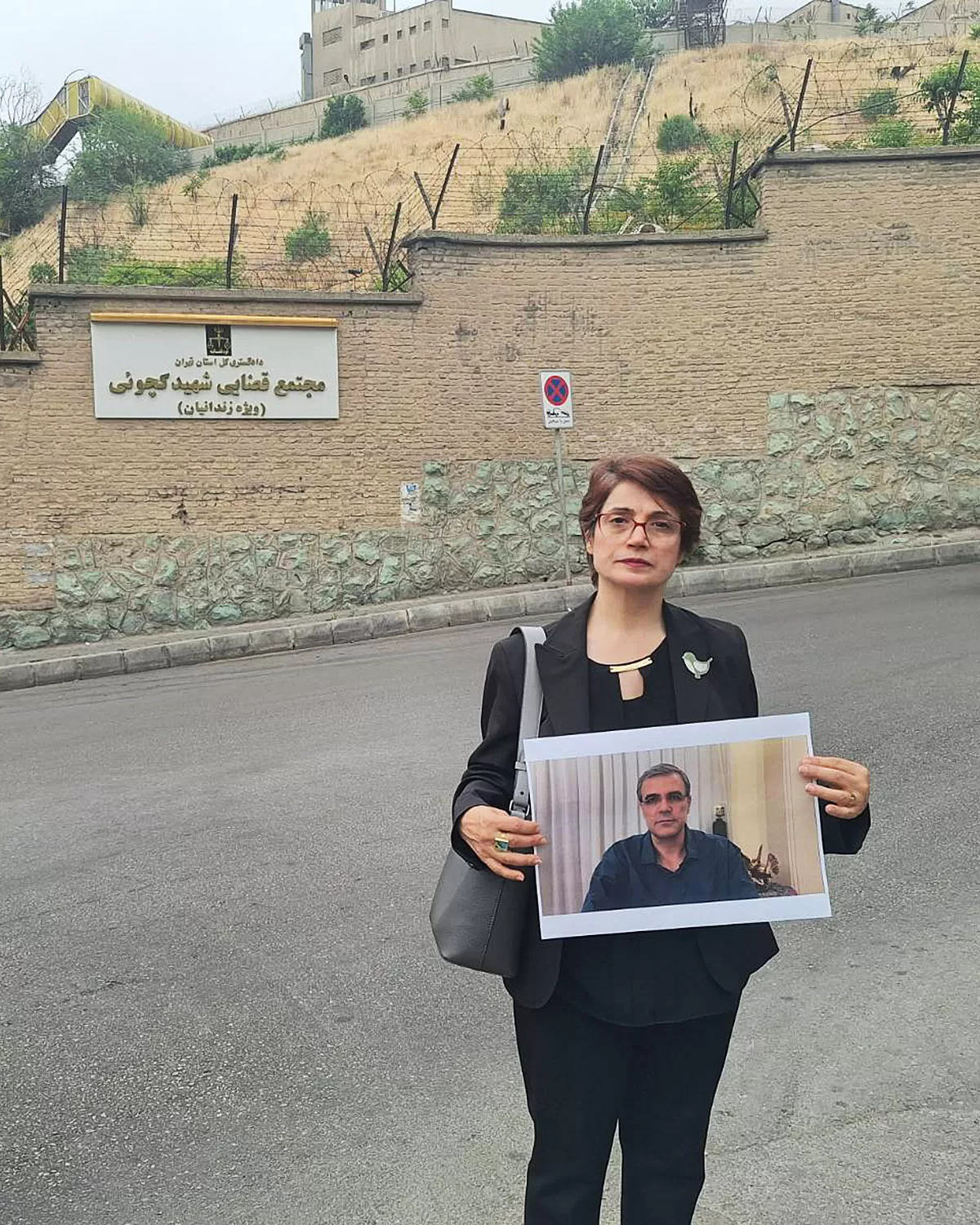
Raza Khanadan is a name that has become synonymous with human rights activism in Iran. His relentless fight for justice and freedom has earned him widespread recognition and admiration both at home and abroad. However, what sets him apart from other activists is the fact that he has been at the forefront of the struggle for human rights while serving time in one of Iran’s most notorious prisons – Evin Prison.
Evin Prison has gained notoriety for its inhumane conditions and the use of torture against political prisoners. It is known as the isolated confinement unit used for political prisoners, and it is where Raza Khanadan has spent a significant portion of his life. Born in Tehran in 1969, Khanadan was a student of political science at the University of Tehran. His passion for social justice led him to become an active member of the Human Rights Activists in Iran (HRAI) organization, where he worked tirelessly to defend the rights of the Iranian people.
In 2004, Khanadan was arrested and charged with activities related to undermining national security. He was sentenced to six years in prison, and subsequently, he was transferred to Evin Prison. During his time in prison, Khanadan continued his fight for human rights, both inside and outside of the prison walls. Along with other political prisoners, he organized protests, hunger strikes, and other forms of resistance, all while facing the constant threat of violence and torture from prison authorities.
One of the main causes that Khanadan has championed in recent years is the fight against mandatory hijab laws in Iran. These laws require women to cover their heads and bodies in public, and those who do not comply face fines, imprisonment, or even physical punishment. In 2018, Khanadan joined forces with prominent human rights activist, Narges Mohammadi, and lawyer, Nasrin Sotoudeh, to launch the ”White Wednesdays” campaign. This campaign encouraged women to protest against the mandatory hijab law by wearing a white headscarf or removing it altogether every Wednesday.
The campaign was met with a fierce backlash from the Iranian government, with Khanadan and his fellow activists facing intimidation, harassment, and even imprisonment. However, they refused to back down, and their bravery and determination inspired many others to join the cause. The campaign gained widespread attention worldwide, with #WhiteWednesdays and #MyStealthyFreedom trending on social media, and many international organizations expressing solidarity with the cause.
In 2019, Khanadan and his colleague Narges Mohammadi were convicted of ”spreading propaganda against the regime” and sentenced to 10 and 16 years in prison, respectively. However, Khanadan continues to be a vocal advocate for human rights, and even in prison, he has found ways to speak out against injustice. In a letter he wrote from Evin Prison, Khanadan stated, ”I do not want to be a symbol of oppression or a symbol of freedom, but I owe it to my nation, to my homeland, to my children, and to myself to speak the truth.”
Despite the harsh conditions and constant threats, Raza Khanadan remains a symbol of hope and resilience for many in Iran. His courage and unwavering determination in the face of adversity have made him an inspiration to all those who fight for justice and human rights. His life in Evin Prison has not been easy, but he continues to hold on to the belief that one day, Iran will be a free and democratic country where all citizens can exercise their basic human rights without fear of persecution.
As we celebrate Raza Khanadan’s unwavering spirit, we must also remember that he is just one of many Iranian activists who have sacrificed their freedom for the sake of a better future for their country. It is crucial that we continue to support and amplify the voices of these brave men and women who are standing up against oppression and injustice. Their fight is not just for themselves but for the rights and freedoms of all Iranians.
In conclusion, Raza Khanadan’s life and struggles in Evin Prison serve as a reminder that the fight for human rights is a constant battle that requires courage, resilience, and unwavering determination. His story is a testament to the power of the human spirit and the impact that one person can have in creating change. We must continue to stand in solidarity with him and all those who are fighting for a better future for Iran. As Khanadan himself said,
