


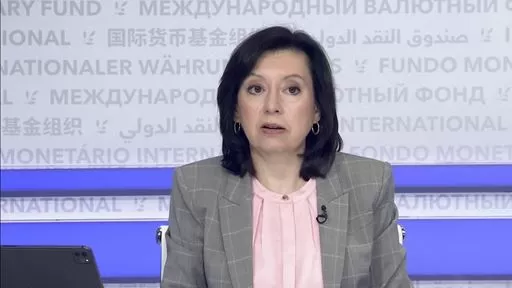
The International Monetary Fund (IMF) has recently released its latest World Economic Outlook report, and it has highlighted the challenges that the global economy is facing. According to the report, uncertainty and trade tensions are making it difficult to forecast global growth. However, amidst these challenges, there have been some positive developments that give hope for a brighter future.
The IMF’s report paints a picture of a global economy that is facing a high degree of uncertainty. This uncertainty is mainly due to the ongoing trade tensions between major economies, particularly the United States and China. These tensions have led to an increase in tariffs and other trade barriers, which have disrupted global trade and supply chains. As a result, businesses are facing higher costs and are hesitant to invest, which is affecting economic growth.
The IMF has also noted that this uncertainty is making it difficult to predict the future of the global economy. In fact, the report states that the growth forecast for 2019 and 2020 has been revised down to 3.3% and 3.6%, respectively. This is a significant decrease from the previous forecast of 3.5% and 3.7%. The report also warns that if the trade tensions continue to escalate, it could have a more significant impact on the global economy.
Despite these challenges, the IMF has also highlighted some positive developments that are worth noting. One of the most significant developments is the recent trade agreement between the United States, Mexico, and Canada. This agreement, known as the USMCA, has replaced the North American Free Trade Agreement (NAFTA) and is expected to boost trade and investment in the region. This is a positive step towards reducing trade tensions and promoting economic growth.
Another positive development is the recent progress in the trade negotiations between the United States and China. After months of back and forth, the two countries have finally reached a phase one trade deal. This deal includes a reduction in tariffs and increased purchases of American goods by China. While the deal is not comprehensive, it is a step in the right direction and has brought some much-needed relief to the global economy.
The IMF has also noted that some emerging market and developing economies have shown resilience in the face of these challenges. For example, India’s economy is expected to grow at a rate of 7.3% in 2019 and 7.5% in 2020, making it the fastest-growing major economy in the world. This growth is driven by strong domestic demand and government reforms. Similarly, other emerging economies such as Brazil and Russia are also expected to see a modest recovery in their economic growth.
In addition to these positive developments, the IMF has also highlighted the role of monetary policy in supporting economic growth. Central banks around the world have been implementing accommodative monetary policies to stimulate economic activity. This includes cutting interest rates and providing liquidity to the financial system. These measures have helped to support economic growth and mitigate the impact of the trade tensions.
The IMF’s report also emphasizes the need for countries to work together to address the challenges facing the global economy. This includes resolving trade tensions, promoting a more open and fair trading system, and addressing issues such as climate change and income inequality. The report also calls for countries to continue implementing structural reforms to boost productivity and promote inclusive growth.
In conclusion, while the IMF’s latest report highlights the challenges facing the global economy, it also acknowledges some positive developments that give hope for a brighter future. The recent trade agreements and progress in trade negotiations are steps in the right direction, and the resilience of some emerging economies is also encouraging. However, it is essential for countries to work together and address the underlying issues to ensure sustainable and inclusive economic growth. With the right policies and cooperation, we can overcome the current uncertainties and build a stronger and more prosperous global economy.
